Contractor website design for high-ticket trades
Contractor website design from SF Web Tech is built to turn a search into a booked job, not to win a gallery contest. We design and build custom-coded websites for high-ticket home service contractors: roofers, HVAC companies, pool and deck builders, remodelers and custom home builders. The job is the same across trades, turn a visitor into a qualified call or estimate, but the proof, the pages and the calls to action change with the trade. This is website design for contractors specifically, not a template with your logo dropped on top.
Built for established contractors with real work to show, a defined service area and someone ready to answer the calls and forms a working website brings in.
Why a contractor website is a different build
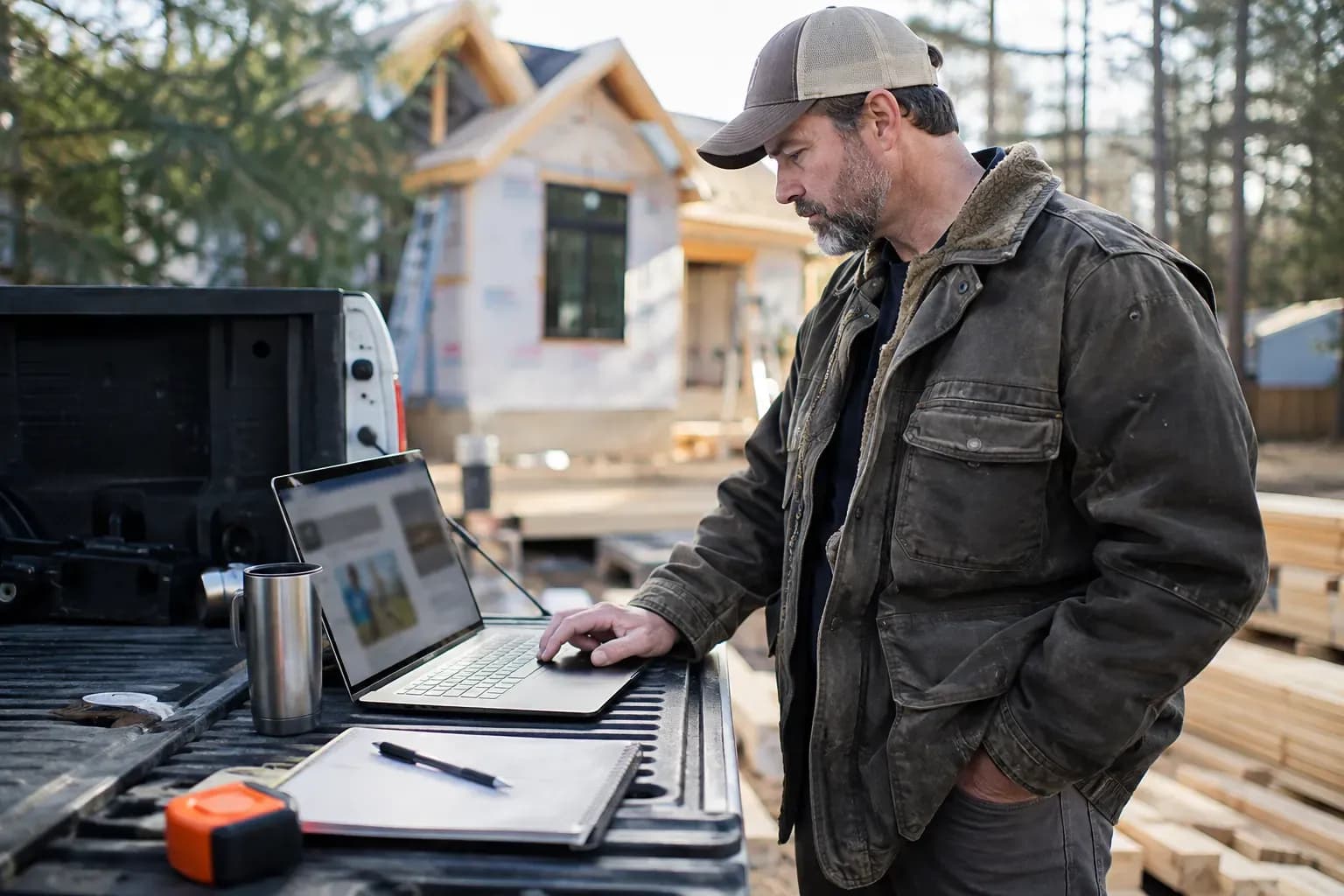
Most contractor websites are sold as a look. A homeowner choosing who to trust with a five-figure job does not buy a look, they buy proof, clarity and an easy next step. A site built like a brochure loses them to the contractor whose site answered the question first. These are the problems we see most often on contractor sites.
It looks nice and books nothing.
A gallery of pretty photos with no service pages, no proof and no clear next step reads as a brochure. The homeowner cannot tell what you do, where you work, or what happens if they call.
It is a template with a logo on top.
A theme meant for every small business ignores how a roofing buyer and a pool buyer actually decide. The same layout cannot sell an emergency repair and a months-long build.
One page tries to do everything.
A single services page lists repair, replacement, maintenance and installs, so no page ranks for anything and no visitor finds the one they came for.
The next step is a wall, not a door.
A long contact form is the only way to reach you. High-ticket buyers want to call, request an inspection or check financing first, and a single hard ask sends them back to search.
No one can tell which jobs came from the site.
Calls, forms and texts land in different inboxes, the same homeowner gets counted twice, and nobody can say whether the website produced real booked jobs.


What a high-ticket contractor website actually needs
Strip away the gallery contest and a contractor website has a clear job: prove you are real, answer the question that brought the visitor, and make the next step easy to take. Here is the anatomy we build from, with the reason each piece earns its place.
A hero that names the trade and the service area
A visitor should know within seconds that they are in the right place: what you do and where you do it. That one line, with your strongest proof beside it, is what keeps a homeowner reading instead of tapping back to the results.
Service pages that match how homeowners search
People do not search for contractor services. They search for a roof leak repair, an AC install, an inground pool or a kitchen remodel. Each service you want to sell gets its own page, with the questions a buyer asks before they call and a clear next step, so each real search has a page that answers it.
Proof a cautious buyer can check
Real reviews, licenses, insurance, certifications and warranty language, shown near the top where a nervous homeowner looks first. We never invent a review, a rating or a result, because a buyer who catches one invented claim stops trusting the rest of the page.
How contractor website design differs by trade
A roofing website and a pool builder website share one goal and almost nothing else. We design at the contractor level, then tune each build to how that trade's buyers decide. The point is never a city-swapped or trade-swapped clone.
- Roofing: storm and insurance-claim pages, financing, before-and-after proof and a free-inspection call to action, because much of the work is urgent and insurance driven. See roofing SEO and Google Ads for roofers.
- HVAC: emergency click-to-call, seasonal maintenance-plan signups and clear service-area pages, because demand spikes with the weather. See HVAC SEO and the HVAC website conversion guide.
- Pool builders: large visual galleries and project pages that sell the vision of a considered, seasonal build. See pool builder SEO.
- Deck builders and remodelers: material and room-by-room galleries with a clear estimate path for a comparison shopper. See deck builder SEO and remodeling SEO.
- General contractors and custom home builders: deeper portfolios and a process timeline for a long, high-trust decision. See general contractor SEO, custom home builder SEO and our home builder website design page.
The urgent trades win with speed and a tracked phone number. The considered trades win with portfolios and a lead path that rewards a return visit. Our guide to roofing website conversion shows how that difference plays out page by page.

A lead path built for high-ticket jobs
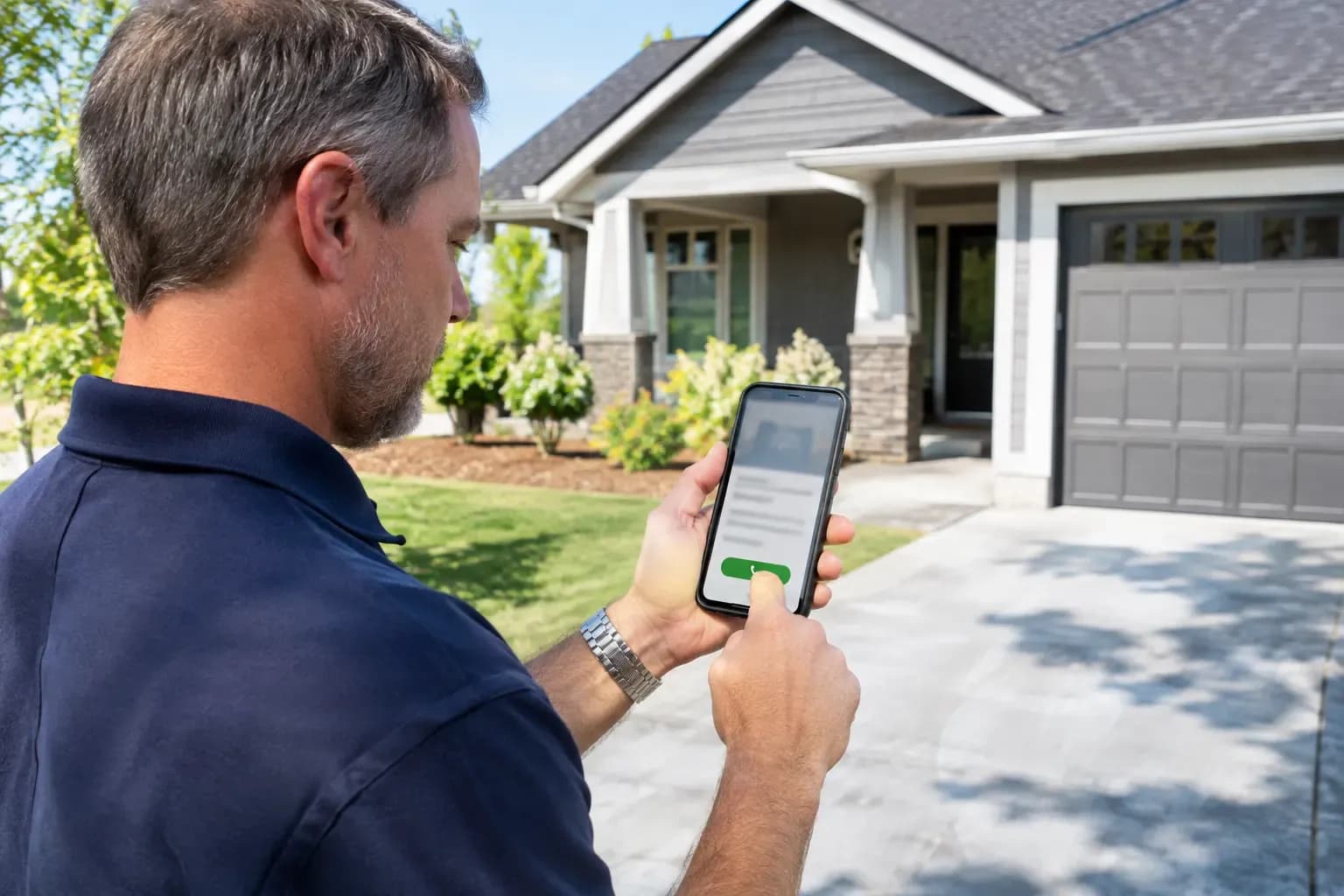
The biggest mistake on a contractor site is a single hard ask. A five-figure job is rarely won on the first visit, so the site needs a path with small steps a homeowner will actually take while they are still deciding.
Easy ways to raise a hand, then honest follow-up
We give buyers low-commitment ways to start, then follow up over the days or weeks a real decision takes. Each step is tracked, so you can see which pages and offers produce booked jobs, not just traffic.
- A sticky click-to-call button and tap-to-text on mobile, where most home service searches already happen.
- A short, multi-step quote or inspection request that asks only what you need to qualify and route the job.
- A financing or insurance-claim section where the trade calls for it, so budget never becomes a silent objection. See our contractor financing page guide.
- Soft offers for considered buyers, like saving a project or booking a consultation instead of a loud call-now bar.
- Automatic follow-up on open quotes, so a slow decision does not quietly become a lost one.
Want to see where your current site loses jobs? Book a free strategy call and we will map your pages to the steps a real buyer takes. Our estimate form walkthrough shows the forms that convert.
The pages a contractor website needs
Contractor web design works best when every page has one clear job and links to the next step a buyer takes. This is the core structure we build from, then tailor to your trade and how you sell.
- A home page that proves it in seconds, naming the trade and service area with your strongest proof and a clear path to services.
- A service page for each job you want more of, so repair, replacement, installs and maintenance each have a page that ranks and answers.
- Service-area pages only where you truly work, with real evidence, never a city-swapped clone that can hold the whole site back.
- A proof and reviews section with licenses, insurance, certifications and warranty language a cautious buyer looks up.
- A financing or insurance page where the trade calls for it, with honest ranges from your own real work.
- A clear contact and booking path with call, text, form and, where it fits, inspection or consultation scheduling.
We build the on-page SEO foundation into every one of these: clean structure, metadata, schema and internal links, so each page can be found. Our guide to service pages that rank and why a contractor website is not ranking cover the structure behind it. The ongoing search work that fills these pages with traffic is a separate job, handled by our contractor SEO agency.


A website built to support Google Ads and LSA
Most high-ticket contractors do not wait for organic search to build. They run Google Ads and Local Services Ads from day one, and the website decides whether that spend turns into booked jobs or burned budget. A great contractor website is built for paid traffic, not just organic.
Landing pages that match the ad
An ad for AC installs should land on an install page, not the home page. We build a focused page for each service you advertise, with one clear next step, so a paid click does not have to hunt for what it came for.
Tracking that ties a click to a booked job
Call and form tracking is wired in from launch, so Google Ads learns from real, de-duplicated conversions and you can see which campaigns book jobs. Local Services Ads send a lead straight to your phone, and the same tracking keeps those leads in one place with the rest. Our guide to attributing booked jobs explains how we connect a click to a signed job.
Paid ad setup, management and call tracking are part of the Founding Partner Program. See how Google Ads management works on our pricing page. Ad spend is paid separately to Google.
How we design and build your website
- 01
Strategy and conversion audit.
We review your trade, services, service area, current site and how you win work, then agree the pages, the lead path and the tracking before any design starts. The audit is free and you keep the recommendations.
- 02
Content and proof plan.
We map the services, areas and real projects to show, and agree what you supply. Photography and reviews are usually a contractor's biggest lift, so we plan them early rather than let them stall the launch.
- 03
Design sign off.
Wireframes, copy direction and a visual design for the key pages. You approve the look and the buyer path before a line of code is written.
- 04
Custom build and launch.
A custom-coded, mobile-first build with service pages, galleries, forms and tracking wired in, then launch checks against the agreed scope. The full system is live within 3 to 4 weeks.
- 05
Measure and improve.
We watch the lead path in the first weeks and tune the pages, offers and forms that are not yet pulling their weight.


Fast on mobile, and tracked to booked jobs
Most home service searches happen on a phone, often from a driveway or a kitchen table, so we build mobile-first and check performance before launch. Field performance depends on each visitor's device and network, so we never promise a specific score.
- Mobile-first layouts with launch performance and accessibility checks, because image-heavy contractor sites are easy to make slow.
- Call and form tracking from launch, so you can see which pages and campaigns book jobs, not just which get traffic.
- An on-page SEO foundation built in, so your ongoing contractor SEO has somewhere solid to stand. For the cross-trade version of this service, see our website design service.
A website and the search work behind it are different jobs. This page is the build; contractor SEO is how homeowners find it. Most high-ticket contractors need both.
Contractor website results
We report a contractor website the way an owner reads it: calls, form fills, inspection and estimate requests, and the booked jobs they turn into, tracked to the page that produced them. Every number in a report is measured, and anything we cannot measure yet is marked as missing rather than guessed.
We are not going to put another contractor's numbers on your page and call them yours. When a client agrees to share a dated, verified result, with their permission and a clear definition of what was counted, it will appear here. Until then, what we stand behind is the method and the written minimum, not a borrowed statistic.
Want to see how we would measure leads from your website? Book a free strategy call or see what each plan includes.

We are not going to put another contractor's numbers on your page and call them yours.
What a contractor website should not promise
Be careful with anyone who promises a number of booked jobs from a website, or a first-page ranking by a date. Nobody controls Google's results, and a website is one part of how a job gets won. We commit to a clear scope, honest reporting and a custom site you own. SF Web Tech works remotely with US home service businesses and never invents a local office or a fake address for your listing or ours.
Contractor website pricing
A custom website is included in the Founding Partner Program with no setup fee. Month one is free while we build, then it is $1,997 a month from month two, all in. Google Ads spend is separate, at least $1,500 a month paid to Google. See what is included and how the qualified lead guarantee works on our pricing page.
Always yours: your domain, your Google Business Profile, your Google Ads account and every lead. Yours after 90 days of paid service: the website. Always ours: our software and the accounts on it (the AI receptionist, the CRM, the call tracking numbers and SF Crew). Access to those ends when you leave.

Want homeowners to find your site too?
A great website is the start. To help homeowners find it, see our contractor SEO agency hub and the broader website design service. For the how-to detail, read why a contractor website is not ranking, the roofing and HVAC website conversion guides, and our contractor financing page guide.
Contractor website design FAQ
What is contractor website design?
How is this different from your website design service page?
Do you design websites differently for each trade?
Will the website help my Google Ads and Local Services Ads?
Do I own the website?
How long does a contractor website take to build?
What does a contractor website cost?
Is SEO included, or is that separate?
Can you redo my current site without starting over?
Do you guarantee rankings or a number of jobs?
Get a clear plan for your contractor website
Bring your trade, your services and the areas you serve. We will show you what is holding back your contractor website and the smallest useful next step.