The buyer researches for months.
People planning a new home read, save plans and shortlist builders long before they call. A site that only works for a ready-to-buy visitor meets most buyers after the shortlist is already set.
Home builder website design from SF Web Tech is built for the way people buy a new home: slowly, visually and after months of comparing. We design and build custom-coded websites for custom, semi custom and production home builders, with model galleries, plan and community pages and lead paths made for a long, considered sale. This is website design for home builders specifically, not a trades template with a builder's logo dropped on top.
A new home is one of the largest and slowest decisions a buyer ever makes. They save plans, follow communities and compare builders for months before they ever fill in a form. A website that treats that buyer like a homeowner with a burst pipe loses them early. These are the problems we see most often on builder sites.
People planning a new home read, save plans and shortlist builders long before they call. A site that only works for a ready-to-buy visitor meets most buyers after the shortlist is already set.
Beautiful exteriors with no plan, no community, no process and no clear next step look nice and convert little. The buyer cannot tell what you build, where, or what happens next.
A big click-to-call header and a one-line estimate form suit a roofer, not a builder. The considered buyer wants to browse plans and picture the build before they ever speak to you.
The pages a serious buyer wants, floor plans, communities and finished projects, sit three clicks deep or do not exist, so the site cannot answer the question that brought them.
Calls, forms and tour requests land in different inboxes, the same buyer gets counted twice, and nobody can say whether the website produced real build consultations.
Strip away the gallery contest and a home builder website has a clear job: show the vision, answer the planning questions and make it easy to take a small next step. Here is what that looks like, with the reason each piece earns its place.
Buyers decide with their eyes first, so large, fast, well-captioned galleries do the early selling. Each project reads better with its community or area, the plan or square footage, the style and a few design choices, so a browser can picture living there instead of scrolling past another stock exterior.
The pages a serious buyer actually wants are your plans and communities. A floor plan browser lets them filter by beds, size or style and open a real plan page, and a community page sells the neighborhood, not just a house. These are the pages that rank, get saved and get shared, so they deserve to be first-class, not a buried PDF.
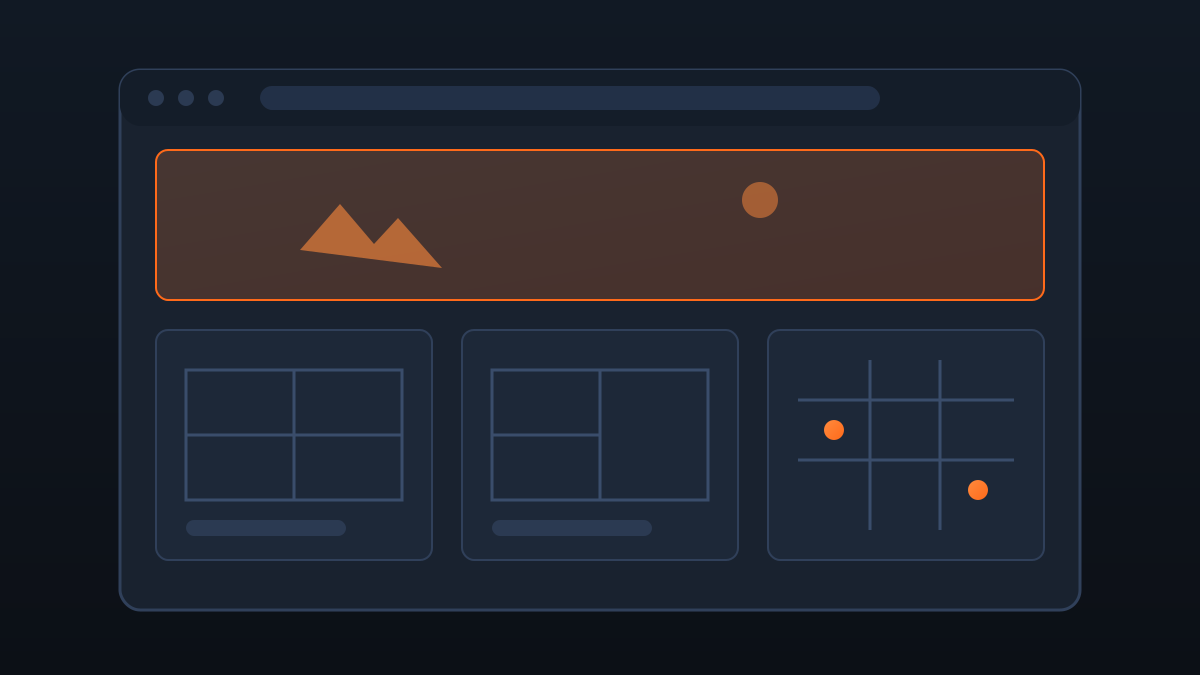
Production builders with available lots benefit from an interactive site map and quick-move-in listings, so a buyer can see what is available now. Custom builders usually do not need that inventory tooling and are better served by deeper project stories and a clear process. We build what your sales model needs and leave off the enterprise features you would never use.
We build websites across the home service trades, and a builder site is the one that breaks the usual rules the most. The difference is the buyer, and it changes almost every page.
A roofer or HVAC company wins an urgent job with a tracked phone number and a short form, because the homeowner decides fast. A builder wins a considered sale with content that earns trust over weeks, so the site has to reward a return visit, not just a first click.
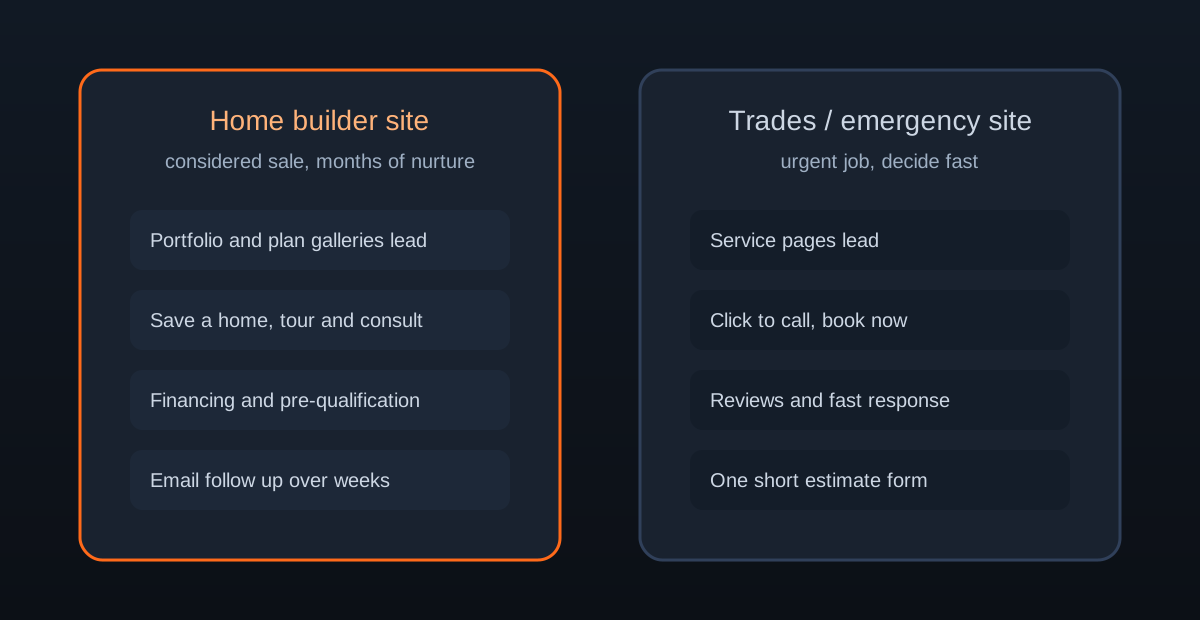
A trades site leads with services and areas. A builder site leads with proof: plans, communities and finished homes a buyer can imagine owning. The calls to action are softer too, a saved home or a tour instead of a loud call-now bar, because almost no one signs a build agreement on their first visit.
The biggest mistake on a builder site is a single hard ask. One contact form is the website equivalent of demanding a signature on the first handshake. A considered sale needs a path, with small steps a buyer will actually take while they are still deciding.
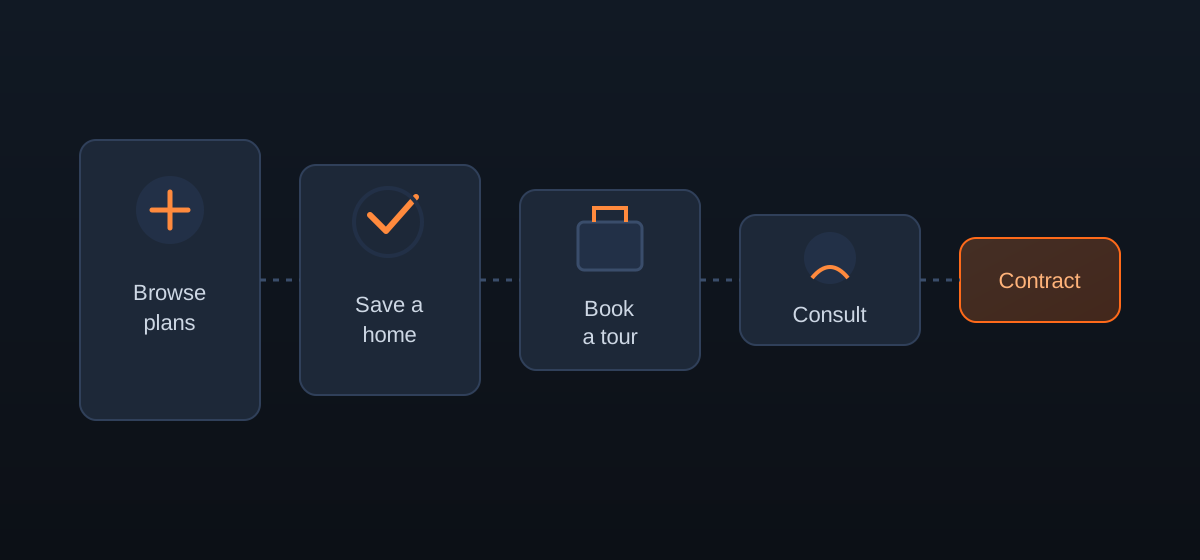
We give a buyer low-commitment ways to raise their hand, then follow up over the weeks a real decision takes. Each step is tracked so you can see which pages and offers produce consultations, not just traffic.
Want to see where your current site loses builder leads? Book a free strategy call and we will map your pages to the steps a real buyer takes.
Home builder web design works best when every page has one clear job and links to the next step a buyer takes. This is the core structure we build from, then tailor to whether you are a custom or a production builder.
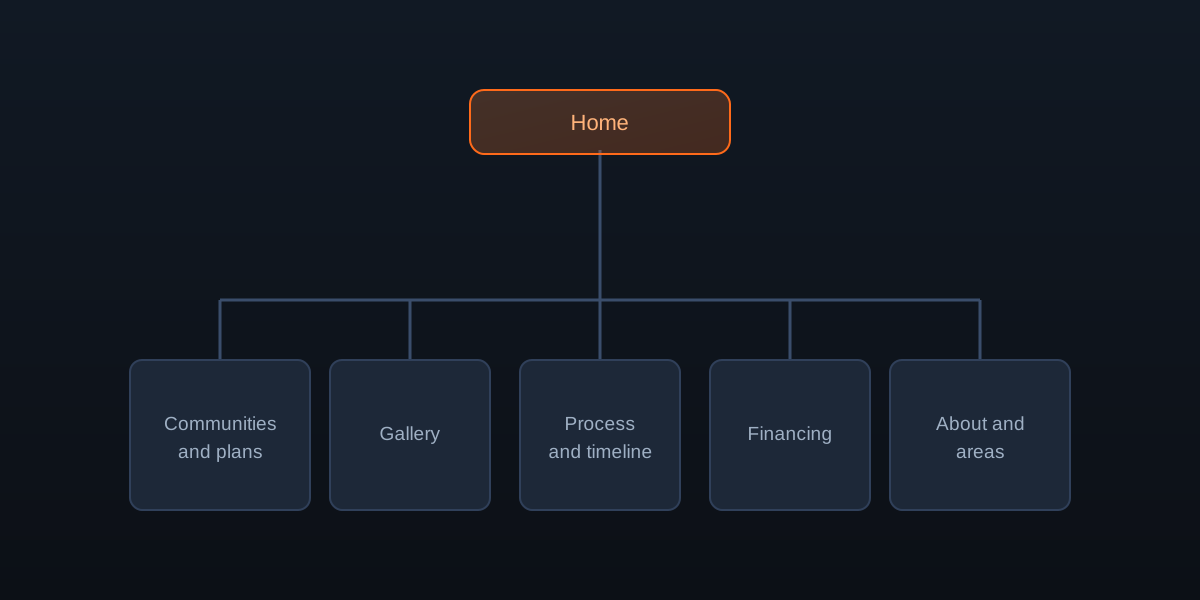
Not every builder needs the same website, and the enterprise platforms that dominate this search sell one heavy system to everyone. We match the build to how you sell.
Your buyer owns or is choosing a lot and wants a planning consultation, so the site leans on deep project stories, your process and the trust that wins a months-long decision. Inventory tooling and quick-move-in feeds would sit empty, so we leave them off.
You sell plans and communities and often have homes available now, so a plan browser, community pages and an interactive site map with quick-move-in listings earn their keep. We build only the tooling your inventory and sales team will actually use.
Not sure which fits? Book a free strategy call and we will tell you honestly, including when a lighter site is the smarter spend.
We review your plans, communities, finished work, sales process and current site, then agree the pages, the lead path and the tracking before any design starts. The audit is free and you keep the recommendations.
We map the plans, communities and projects to show and agree what you supply. Photography is usually a builder's biggest lift, so we plan it early rather than let it stall the launch.
Wireframes, copy direction and a visual design for the key pages. You approve the look and the buyer path before a line of code is written.
A custom-coded, mobile-first build with galleries, plan and community pages, forms and tracking wired in, then launch checks against the agreed scope.
We watch the lead path in the first weeks and tune the pages, offers and forms that are not yet pulling their weight.
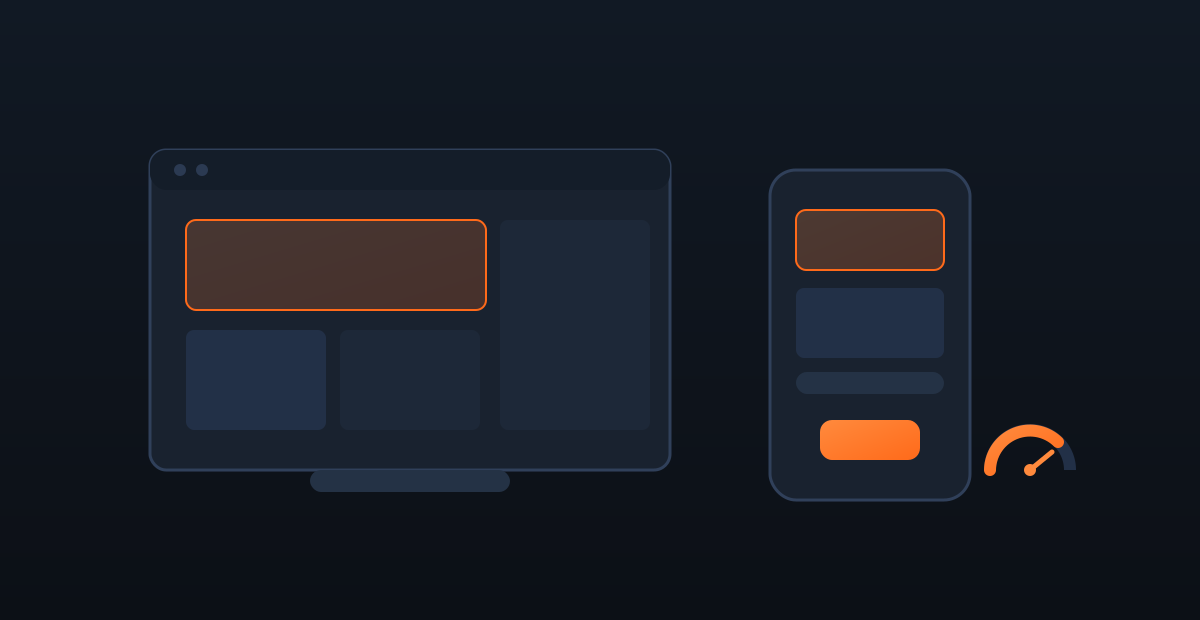
Most buyers browse plans and galleries on a phone, often from the couch over several evenings, so we build mobile-first and check performance before launch. Field performance depends on each visitor's device and network, so we never promise a specific score.
A website and the search work behind it are different jobs. This page is the build; home builder SEO is how buyers find it. Most builders need both.
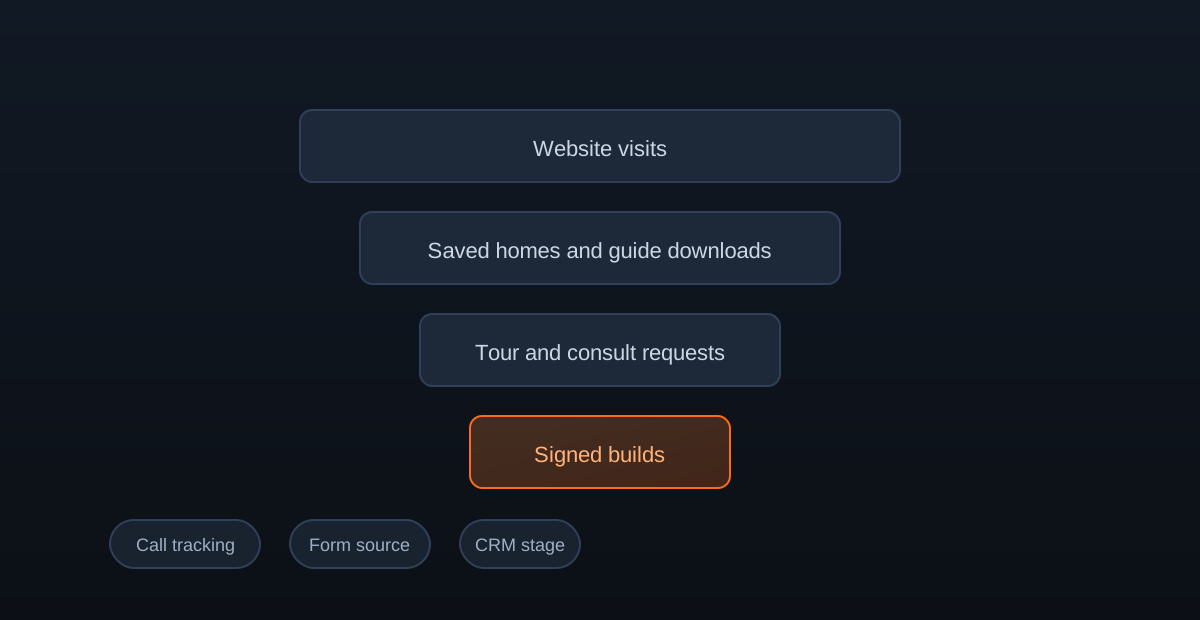
We report a builder website the way an owner reads it: saved homes, guide downloads, tour and consultation requests, and the signed builds they turn into, tracked to the page that produced them. Every number in a report is measured, and anything we cannot measure yet is marked as missing rather than guessed.
We are not going to put another builder's numbers on your page and call them yours. When a builder client agrees to share a dated, verified result, with their permission and a clear definition of what was counted, it will appear here. Until then, what we stand behind is the method and the written minimum, not a borrowed statistic.
Want to see how we would measure leads from your builder website? Book a free strategy call or see what each plan includes.
We are not going to put another builder's numbers on your page and call them yours.
Be careful with anyone who promises a number of signed builds from a website, or a first-page ranking by a date. Nobody controls Google's results, and a website is one part of a long sale. We commit to a clear scope, honest reporting and a custom site you own. SF Web Tech works remotely with US home builders and never invents a local office or a fake address for your listing or ours.
A custom website is included in the Founding Partner Program with no setup fee. Month one is free while we build, then it is $1,997 a month from month two, all in. Google Ads spend is separate, at least $1,500 a month paid to Google. See what is included and how the qualified lead guarantee works on our pricing page.
The website is yours after 90 days of paid service, and your domain, accounts and every lead are always yours.
A great website is the start. To help serious buyers find it, see our home builder SEO hub and the broader website design service. For the how-to detail, read website SEO for custom home builders, local SEO for home builders, community pages vs city pages and marketing cost per job for custom home builders.
Bring your plans, communities and finished work. We will show you what is holding back your home builder website and the smallest useful next step.