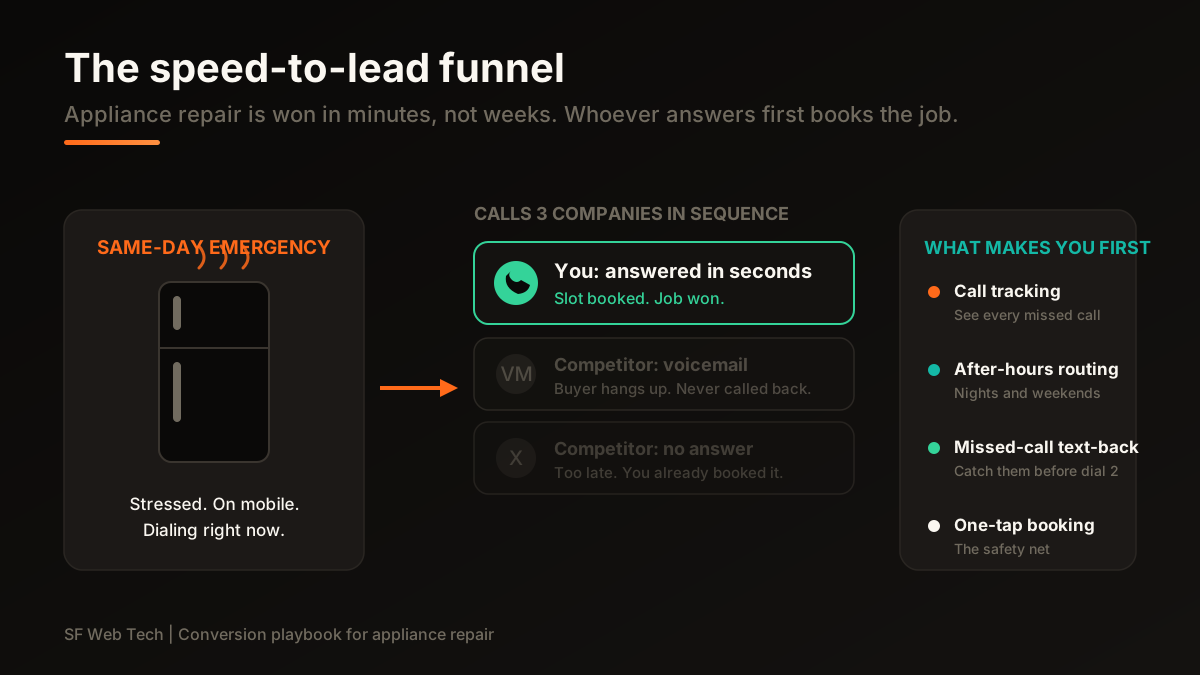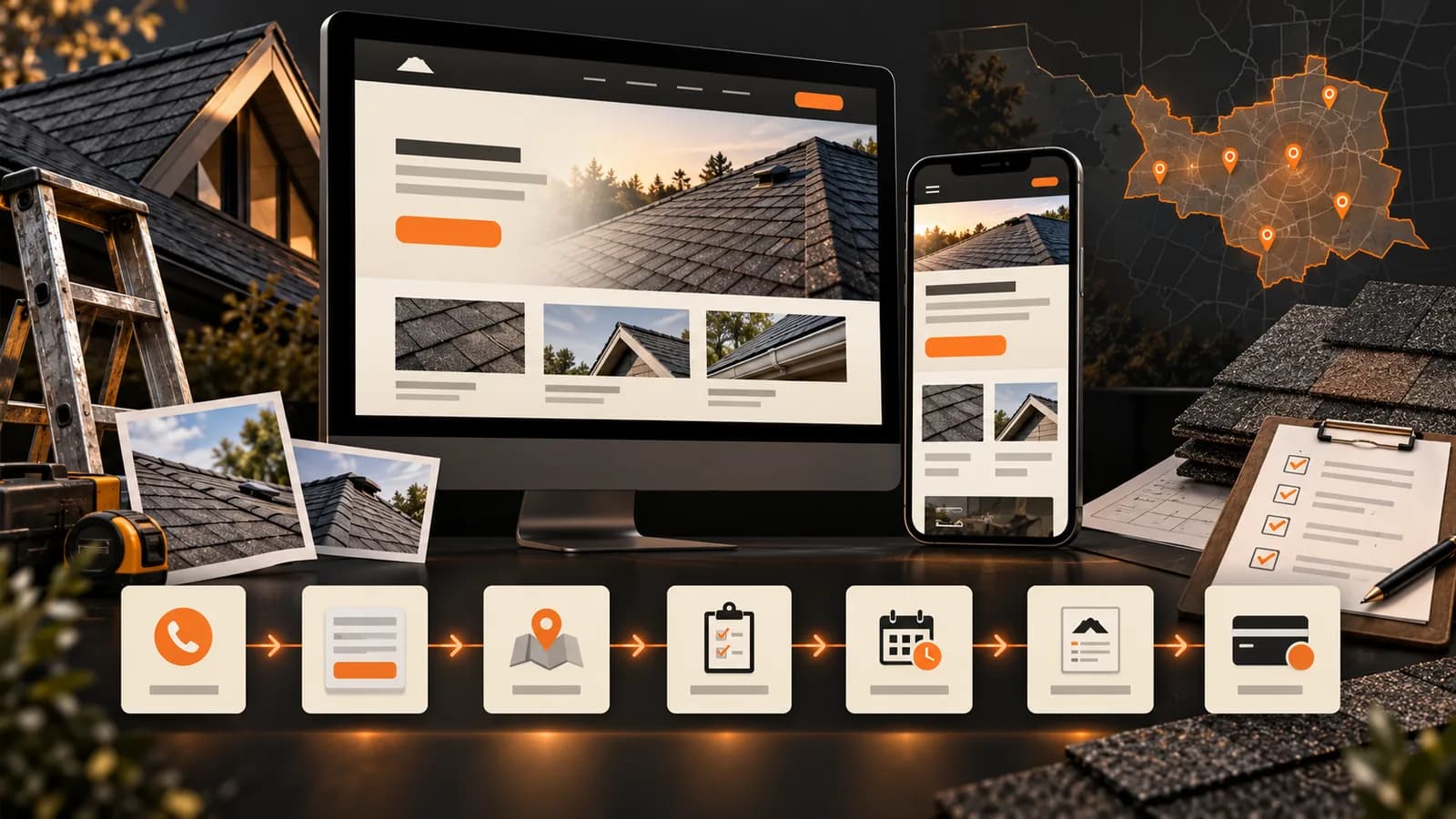
A roofing customer may be dealing with an active leak or planning a future replacement. On mobile, unclear services, a hard-to-find phone number, slow interaction, or an unreliable form can stop that person from taking the next step. Review the actual journey before deciding which page or component needs work.
Before changing the site, check both traffic quality and the inquiry path. A weak result can come from irrelevant visits, unclear scope, a broken form or poor follow-up. Use actual evidence rather than assuming the website is responsible for every missing lead.
Measure relevant visits, qualified inquiries, inspections and completed jobs separately. Neither an industry conversion average nor a generic roof price establishes the opportunity for this contractor.
Calculate the opportunity using your own numbers
Illustrative calculation: multiply relevant visits by the observed qualified-inquiry rate, then multiply qualified inquiries by the observed close rate. Compare that scenario with actual inspections, proposals, sold work, and collected payment. It is a planning model, not an expected lift from a design change.
Use the actual contribution from completed roofing work when assessing acquisition expense. Revenue, gross profit and net profit are different. A website improvement must be measured against its cost and the outcomes it supports, not a presumed average roof value.
Where a roofing website can lose qualified inquiries
Roofing visitors may be handling an urgent problem or planning a replacement. Explain real availability, inspection steps, scope and evidence. Do not assume every prospect has the same concern, budget or decision timeline.
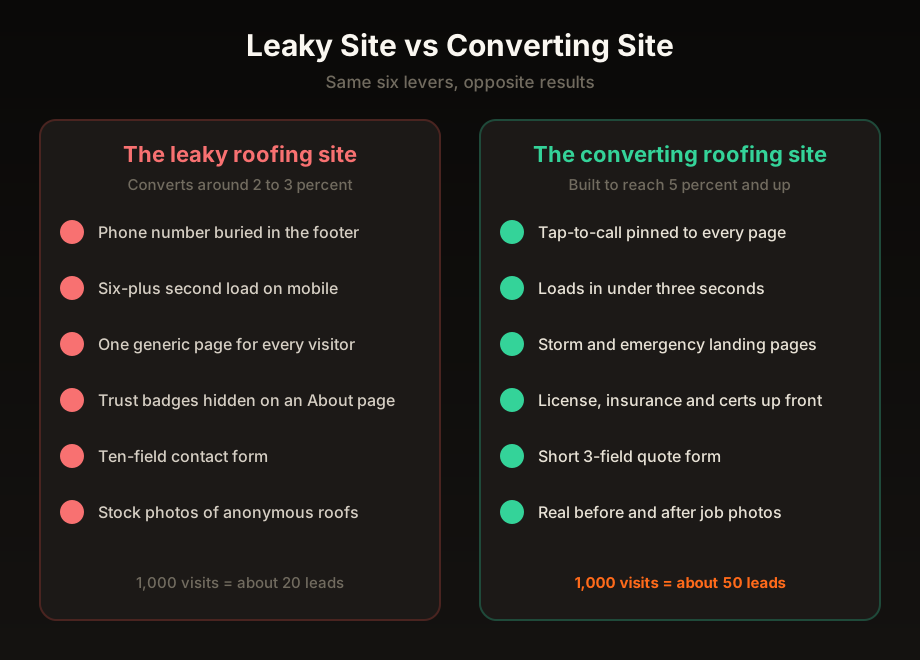
- A working mobile phone route and form path are easy to find
- Representative pages meet measured loading and interaction needs
- Distinct repair, replacement, emergency, and weather pages exist only when the services differ
- Current licenses, insurance, certifications, reviews, and warranty terms appear where relevant
- The form collects enough information to route and qualify the request
- Authorized project photos and explanations support the matching service
- Phone or form routes are hidden, broken, or unclear on mobile
- Large assets or scripts obstruct the useful content or next step
- One generic page tries to serve unrelated roofing decisions
- Credentials or claims are stale, unsupported, or difficult to verify
- The form creates unnecessary friction or lacks qualification fields
- Stock imagery replaces real scope, process, and project evidence
Review website, local search, content, technical access, and attribution work for established home-service businesses.
See the contractor website and SEO systemSix areas to review
Use this order as an investigation sequence, then change the priority when analytics, field performance, form tests, call routing, or sales records point elsewhere.
Review call and form routes first
Some roofing customers prefer to call, while others need a form because they are researching, cannot speak, or want to share project details. Make both available when the business supports them, explain response expectations accurately, and compare qualification and booking outcomes for each route.
- Use a real click-to-call link on mobile and confirm that the number reaches the intended team.
- Place the phone and form options where customers can find them without hiding important service information.
- Describe hours, emergency availability, inspection offers, and response timing only as the business can deliver them.
- Test submission, notification, persistence, spam handling, and follow-up before treating a button click as a lead.
Offer a working phone route and a reliable form path. Compare qualification and booking outcomes for each using the business’s own records. A phone lead is not universally more valuable than a form inquiry.
Keep each interaction for channel analysis while counting qualification, inspections, proposals, and sold work once.
Join roofing calls and forms to one journeyReview mobile usability and loading
Test mobile loading with representative pages and actual field data where available. Optimize large images and unnecessary scripts when they obstruct use. Historic mobile-speed statistics should not be presented as the share of this site’s leads being lost.
- Run representative pages through PageSpeed Insights and record field data when it is available.
- Resize and compress large project images without removing useful detail.
- Defer or remove scripts, video, and interface effects that obstruct content or interaction.
- Test on ordinary mobile connections and fix the specific loading or interaction problem that affects the buyer path.
Plan service structure, mobile contact paths, project evidence, and measurement around the contractor’s actual buyer journey.
Review website design for contractorsBuild pages for distinct roofing needs
Repair, replacement, emergency, weather-related, and insurance-assisted work can involve different questions and urgency. Create a separate page only when the roofer offers the service and can provide distinct scope, process, evidence, availability, and a useful next step.
- Storm or weather-related inspection, only for confirmed services and serviceable locations.
- Emergency leak response, with accurate hours, limitations, and contact expectations.
- Repair or replacement assessment, with fit, process, evidence, and estimate steps.
- Insurance assistance, only when the contractor provides it and the page explains its role accurately.
Show verifiable trust information
Roofing customers may compare local history, licenses, insurance, manufacturer credentials, project evidence, reviews, financing, and warranty terms. Show only current, applicable facts and place them near the service they support. Avoid implying that a badge, review count, or location alone proves suitability.
- The applicable contractor license or registration, when required and current.
- Insurance information the company is permitted to publish, with accurate scope.
- Current manufacturer credentials verified with the provider before displaying a badge.
- A current review link or accurately dated review evidence without self-serving markup.
- Actual operating areas and years in business, when verified.
- Workmanship and manufacturer warranty terms, with their different responsibilities explained.
“Trust information helps only when it is current, relevant to the service, and easy for the customer to verify.”
Test the form against qualification needs
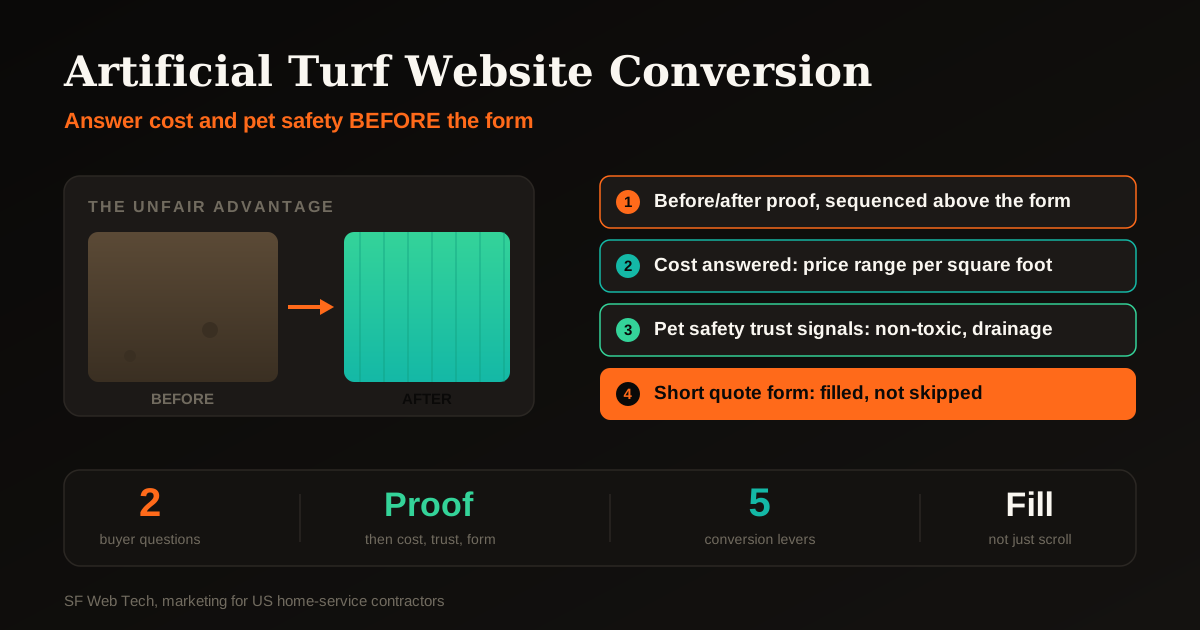
Form length is a tradeoff, not a universal rule. Ask for enough information to confirm location, service fit, urgency, and contact preference without collecting details the team does not use. Compare start, completion, acceptance, and later outcomes before removing or adding fields.
- Start with contact information and the minimum service or location details needed for routing.
- Use a button label that accurately describes the next step, such as Request an inspection review.
- Offer an estimate tool only when its assumptions, range, data handling, and follow-up are clear.
- Keep a working phone option for customers who prefer or require a conversation.
Measure paid clicks, accepted requests, inspections, proposals, and sold work as separate stages.
Connect roofing campaigns to qualified inquiriesUse permissioned project evidence
Authorized before-and-after photos can help customers understand project type, condition, material, and finished work. Add truthful captions and location context, then place the evidence near the matching service and next step. Do not imply that one project predicts another property’s condition or outcome.
Plan the first review
Start with the part of the journey that current evidence shows is broken or unclear. A working contact route may come before a speed change, while irrelevant traffic or poor follow-up may require a different fix entirely.
- Verify the mobile phone route and form submission from representative pages.
- Check PageSpeed Insights and field data where available, then fix the observed loading or interaction issue.
- Review every form field against routing and qualification needs.
- Confirm that displayed licenses, insurance, credentials, reviews, and warranties are current.
- Create one distinct service page only when the business offers it and the buyer needs different information.
- Replace generic imagery with owned or approved project evidence and accurate captions.
A roofing website can have traffic, conversion, qualification, follow-up, or measurement problems at the same time. Identify the failing stage, change one meaningful part of the journey, and compare qualified inquiries and later outcomes before scaling the work.
Place the website review inside the broader roofing marketing agency framework for local discovery, paid demand, intake, and commercial measurement.
Review service clarity, mobile contact paths, evidence, forms, attribution, and the next measurable improvement.
Book a roofing website reviewConnect website and channel costs to qualification, proposals, sold work, and job contribution.
Calculate marketing cost per booked roofing jobSources and further reading
- Google Search: SEO Starter Guide
Crawlable links, descriptive page information and content organization. Practical trade examples are SF Web Tech recommendations.
Source checked .
- Google Search: creating helpful content
People-first writing, useful original information and the absence of a preferred word count. Does not substantiate a client result.
Source checked .
- Google Maps: prohibited and restricted content
Rules against fake engagement, incentives and selectively soliciting positive reviews.
Source checked .