A remodeling inquiry is not automatically a consultation worth putting on the calendar. It may come from outside your service area, describe a small repair when you only take on full kitchens, baths, additions, and whole-home renovations, involve a rental the caller cannot authorize, or come from a homeowner still a year from starting. If the office treats every inquiry the same way, your designers and estimators spend the week driving to visits that were never going to sign while the strongest opportunities wait.
The answer is not a hostile form or an untrained office person trying to scope a renovation over the phone. Build a short screen that identifies location, project type, property context, timeline, access, decision readiness, and a realistic budget and financing path. Then let a qualified person decide whether to book an in-home design consultation, request more information, route a structural question to the right specialist, or place the inquiry into follow-up. Both paid and organic traffic feed this screen, so the same discipline supports your general contractor SEO.
Define a qualified consultation for your company
Start with your operating model, not a generic CRM score. A design-build firm, a kitchen and bath specialist, an addition and whole-home remodeler, and a handyman-style repair outfit may compete for similar searches but accept very different work. Write down the projects that make an inquiry serviceable, the inquiries that require review, and the requests you refer or decline, including sitework a partner handles; an excavation contractor website defines accepted work the same way. If your company organizes its renovation pages the same way, see remodeling contractor website design.
Separate hard fit from priority. Being outside the travel radius or requesting work you do not perform can stop the booking outright. A vague scope, an early timeline, or a caller who needs to involve a co-owner may simply change the next step, not end it.
- Service area: the property sits inside a territory your crews and designers genuinely cover
- Project fit: the requested work belongs to the renovations your company designs and builds
- Property authority: the caller owns, manages, represents, or is authorized to approve the project
- Service area: the property sits inside a territory your crews and designers genuinely cover
- Project fit: the requested work belongs to the renovations your company designs and builds
- Property authority: the caller owns, manages, represents, or is authorized to approve the project
- Consultation access: the kitchen, bathroom, basement, or addition footprint can be seen and measured on site
- Decision readiness: the homeowner understands the design process and can involve a spouse or co-owner when needed
- Budget and financing path: the homeowner is prepared to discuss realistic ranges and payment options for the scope they want
Turn service pages, forms, calls, and follow-up into a clearer route from idea to the right in-home visit.
Build a conversion path around qualified consultationsLet the service page do the first round of filtering
The page should explain who the service is for before asking for contact information. Name the real territory, the project types you take on, the renovations your team designs, what a consultation includes, and what happens afterward. A broad page promising every renovation in every nearby county may produce more forms, but it gives both the homeowner and your office less useful context.
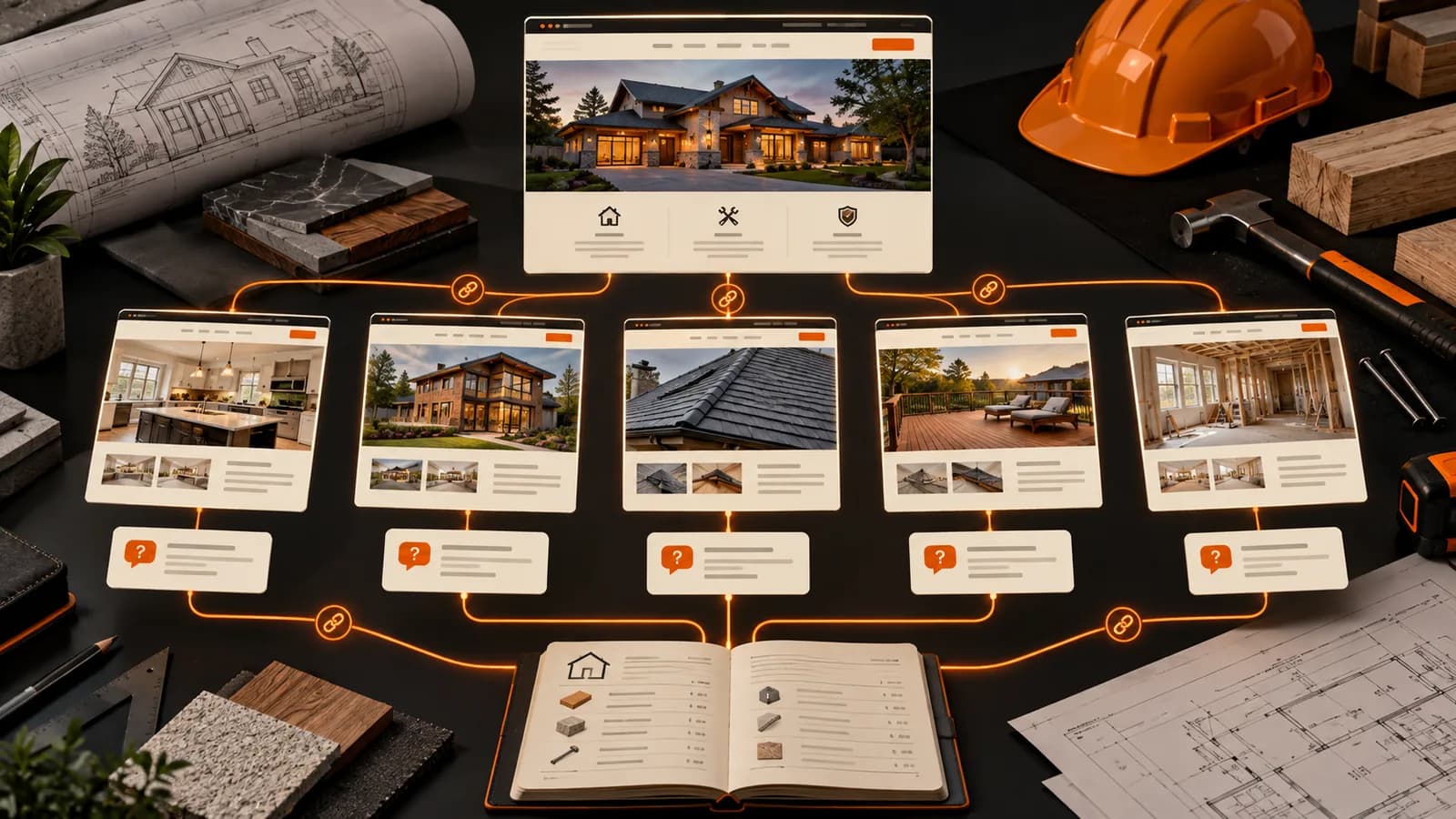
Organize pages around genuine intent. A homeowner planning a primary-suite addition needs a different explanation from someone pricing a single bathroom or opening a kitchen to a living room. Focused pages can describe the design and estimate process, show relevant project galleries, and set scope boundaries without promising a price before anyone has measured the space.
- Claims to build every renovation imaginable
- Hides the actual service territory
- Uses one generic free estimate form
- Asks no project or access questions
- Promises a price without explaining the consultation
- Names the renovations the company designs and builds
- States realistic location coverage
- Explains the consultation and next step
- Shows projects related to the page topic
- Asks only questions that improve routing
Local context can make these pages more useful, but it must stay grounded. Permit requirements, historic-district rules, and inspection steps vary by jurisdiction, so explain that your team confirms them during design rather than implying one rule fits every address. Describe the process a homeowner can expect, not a guarantee about their project.
See how focused service pages, local content, and qualification route homeowner projects to the right in-home visit.
Turn remodeling searches into qualified consultationsAsk form questions that change routing
A useful form is short enough to complete and specific enough to prepare the response. Keep a field where its answer changes service-area fit, routing, scheduling, preparation, or follow-up. Remove fields that add friction without a documented use, and protect the information you collect.
- Collect the property address or ZIP code so the office can confirm real coverage.
- Offer broad project choices such as kitchen, bathroom, addition, basement, whole-home renovation, or not sure yet.
- Ask for property type and whether the caller owns, manages, represents, or is purchasing it.
- Let the homeowner note a rough timeline and whether an event such as a move or a growing family is driving it, without asking for a committed start date.
- Ask whether the spaces can be seen and measured and whether a co-owner should attend the consultation.
- Provide an optional photo or inspiration upload only if the team has a secure process and actually reviews the files.
- State who responds, what the first conversation covers, and how a consultation is scheduled.
Avoid turning the first form into a full design brief. Do not require finished selections, exact dimensions, a structural plan, or a committed budget from a homeowner who is still exploring. An open notes field can capture what they want to change, what prompted the project, and why they are acting now. The trained team can ask the follow-up questions.

Use the first call to confirm context, not close the project
The office call should verify the form, clarify the project, and set expectations for the consultation. Confirm the address, the caller's relationship to the property, the renovation they have in mind, access, scheduling needs, and who should be present. Then explain what your designer or estimator can and cannot determine during that first visit.

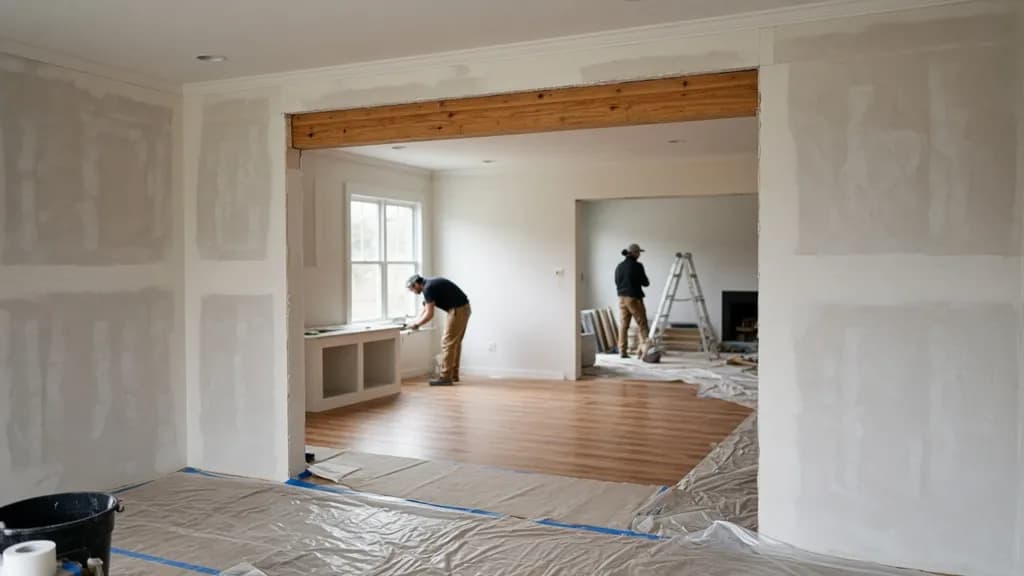
Scope needs judgment. A cosmetic refresh, a full gut renovation, and an addition that touches the foundation should not share one queue. When an inquiry involves removing a load-bearing wall, raising a roofline, or signs of settlement, document when to send a senior estimator, when to involve a structural engineer or architect, and when to recommend an engineering opinion first. Office staff should follow the approved protocol rather than improvising structural advice.
Create outcomes beyond booked and lost
Booked and lost hide too much. An inquiry may fit but need photos or plans before scheduling. A home buyer may need to close before authorizing work. A landlord may need owner approval. A wet basement may need waterproofing before any finish work, and a structural question may deserve an engineer referral first. Give the office a small set of outcomes for what actually happened.
- Consultation booked: fit is confirmed and the spaces can be seen on site
- Specialist review: the project needs a senior estimator, architect, or engineer before scheduling
- Information requested: photos, plans, address details, or authorization are missing
- Future follow-up: the project fits, but timing or property control is not ready
- Partner referral: the request belongs to a trade or service your company does not perform
- Not serviceable: the location, property, or requested work falls outside defined scope
- Unable to contact: the team completed the approved follow-up sequence without reaching the homeowner
- Consultation booked: fit confirmed and the spaces can be seen on site.
- Specialist review: senior estimator, architect, or engineer needed before scheduling.
- Information requested: photos, plans, address details, or authorization missing.
- Future follow-up: timing or property control not ready.
- Partner referral: request belongs to a trade the company does not perform.
- Not serviceable: location, property, or work outside defined scope.
- Unable to contact: approved follow-up sequence completed without reaching the homeowner.
Track the reason alongside the outcome. Patterns reveal whether marketing or operations need attention. Out-of-area inquiries can expose loose ad targeting. Repeated requests for work you do not take on can point to unclear page copy or broad keywords. Do not erase unsuitable leads to improve the dashboard.
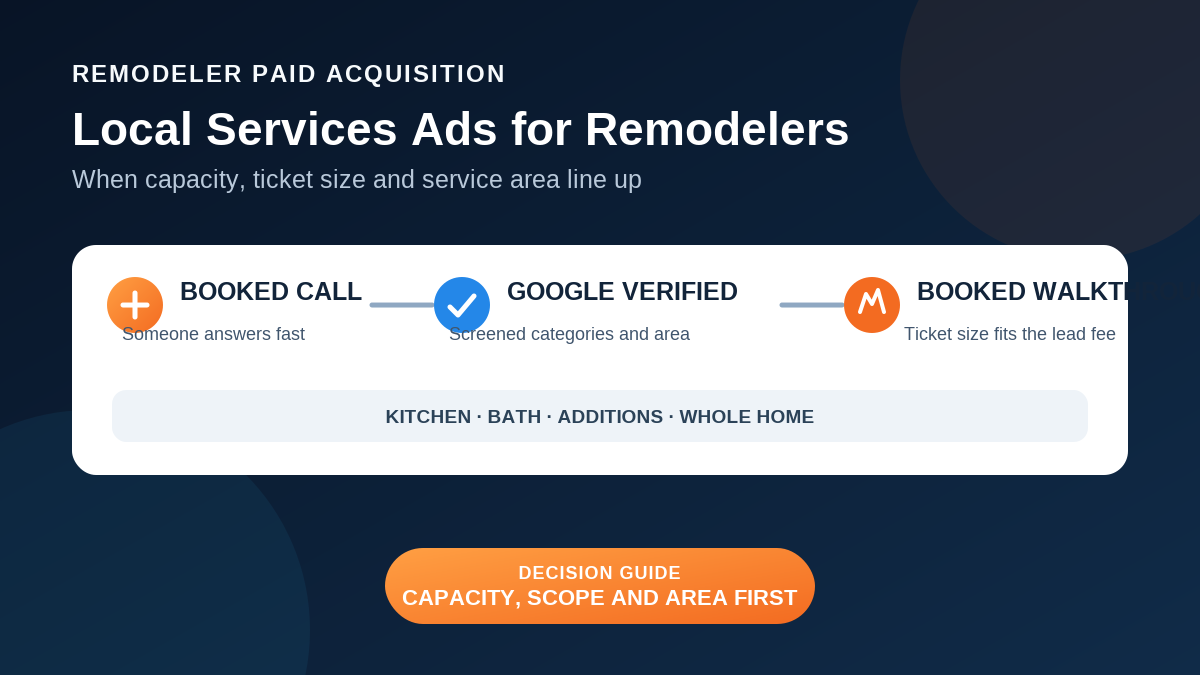
Compare eligibility, capacity, and booked-walkthrough tracking for remodeling demand.
See how remodelers use Local Services AdsReturn meaningful lead outcomes to Google Ads
If Google Ads sees every form as equal, bidding can favor campaigns that produce easy submissions rather than serviceable consultations. Google Ads documents offline conversion imports for connecting ad clicks with outcomes recorded later. Its guidance recommends enhanced conversions for leads when you begin this measurement.
Google also documents call reporting through Google forwarding numbers. The available details include whether a call connected, timing, and call duration. Duration helps screening but does not prove quality. A short call that books a kitchen walkthrough can matter more than a long conversation about work you do not perform. Pair call records with the office outcome instead of optimizing to length alone.
A practical sequence is raw inquiry, qualified lead, completed consultation, proposal issued, and signed project. Use only stages your team defines consistently. Enhanced conversions use hashed first-party data, according to Google, but hashing does not remove the need for consent, access controls, and qualified privacy guidance. Test definitions and permissions before automating uploads.
Review the pipeline by completed consultation and signed work
Lead source reports should follow opportunities far enough to reveal useful work. Compare unique inquiries, qualified leads, booked consultations, completed consultations, proposals, signed projects, and disqualification reasons. Keep recent cohorts open until the sales cycle has developed. A source is not good because it creates forms, and it is not bad because every inquiry does not close immediately.
- Audit whether service area and project fit are applied consistently.
- Compare booked consultations with completed consultations so calendar quality is visible.
- Review no-shows, cancellations, access failures, and unable-to-contact outcomes separately.
- Break down proposals and signed work by project type, location, landing page, campaign, and source.
- Use recurring bad-fit reasons to improve page copy, forms, ad targeting, and call handling.
- Listen to or review a sample of calls under an approved privacy and quality process.
The goal is to give each inquiry the right attention and keep scarce design and estimating capacity on work the company can actually build. Define fit, make service pages clear, ask routing questions, confirm context with a person, record honest outcomes, and connect marketing to completed consultations and signed projects. The result is a process the team can operate consistently.
Book a discovery call to review your traffic, service pages, forms, call handling, qualification stages, and reporting.
Plan your remodeling lead systemSources and further reading
- Google Search: SEO Starter Guide
Crawlable links, descriptive page information and content organization. Practical trade examples are SF Web Tech recommendations.
Source checked .
- Google Ads: offline conversion imports
Connecting supported offline outcomes with advertising measurement. Lead qualification and routing decisions are SF Web Tech operating guidance.
Source checked .
- Google Maps: prohibited and restricted content
Rules against fake engagement, incentives and selectively soliciting positive reviews.
Source checked .