Roofers should not choose between Google Search Ads and Local Services Ads by asking which platform produces the cheapest lead. The useful question is which channel produces qualified roof inspections, estimates, and booked work inside your service area at a cost the job can support. Local Services Ads can create direct calls and messages from a compact profile. Search campaigns offer more control over keywords, landing pages, geography, schedules, and conversion goals. Those differences make the channels complementary, not interchangeable.
Search campaign management for roofers is covered on Google Ads for roofers.
Start with Local Services Ads when the business is eligible, verified, responsive, and ready to handle the services selected in the profile. Use Search Ads when tighter control is needed for a specific job type, market, landing-page message, or growth priority. A roofing company may test both when capacity and tracking support it, then compare the channels with the same qualification and sales stages.
How the two roofing ad formats differ
Google's Local Services Help says Local Services Ads can generate phone calls and messages directly from an ad profile. Google also lists roofers among the supported home-service categories in its current getting-started documentation, although availability and onboarding requirements can vary by location and business. The advertiser selects services and service areas, completes the required business checks, sets a budget, and manages incoming leads inside the Local Services account.
Google Ads Help describes Search campaigns as ads that can appear near search results when a person's search relates to the advertiser's keywords. For a roofing company, that creates a more configurable system. You can separate roof replacement from repair, direct each intent to a relevant landing page, exclude poor-fit searches, adjust locations and schedules, and measure website or phone actions. That control also creates more ways to waste money when account structure, query review, tracking, or landing pages are weak.
- Lead arrives through the Local Services profile
- Google says advertisers pay for valid leads
- Business screening and profile readiness are prerequisites
- Service selection, service area, reviews, and responsiveness matter
- Less control over the full website journey
- Advertiser pays for ad interactions such as clicks
- Keywords and search terms reveal expressed intent
- Dedicated landing pages can pre-qualify the project
- Campaigns can split services, locations, and schedules
- More control requires more active management
See how campaign structure, storm demand, landing pages, negatives, and conversion tracking fit together for roofers.
Review the roofing Google Ads playbookBuild a controlled paid search system around qualified opportunities, booked jobs, and the roofing work your crews want.
See Google Ads management for contractorsWhere Local Services Ads fit best
Local Services Ads fit roofers that can turn a concise profile and direct contact into a real sales conversation. The format reduces the steps between search and inquiry. That can be valuable when a homeowner wants to speak with a contractor quickly after noticing a leak, storm damage, missing shingles, or an aging roof. It also means the office, not a long landing page, often carries more of the qualification burden.
Google's current lead documentation says advertisers pay for valid leads, set an average weekly budget, and choose a bidding mode based on what they are willing to pay for a lead. That billing model is not the same as paying only for a booked roofing job. A valid platform lead can still be outside your preferred project scope, too early to estimate, difficult to reach, or unlikely to buy. Your own CRM must separate platform validity from commercial quality.
- Keep roofing services accurate. Do not select work your crews, licenses, insurance, or operating model cannot support.
- Define the real service area by reliable crew coverage, not by every county that could produce a lead.
- Answer calls and messages consistently. Google's getting-started guide warns that regularly failing to respond can affect ad ranking.
- Record whether each inquiry was contacted, qualified, inspected, estimated, booked, lost, or disqualified.
- Review profiles, services, hours, business details, and required documentation whenever operations change.
Where Google Search Ads fit best
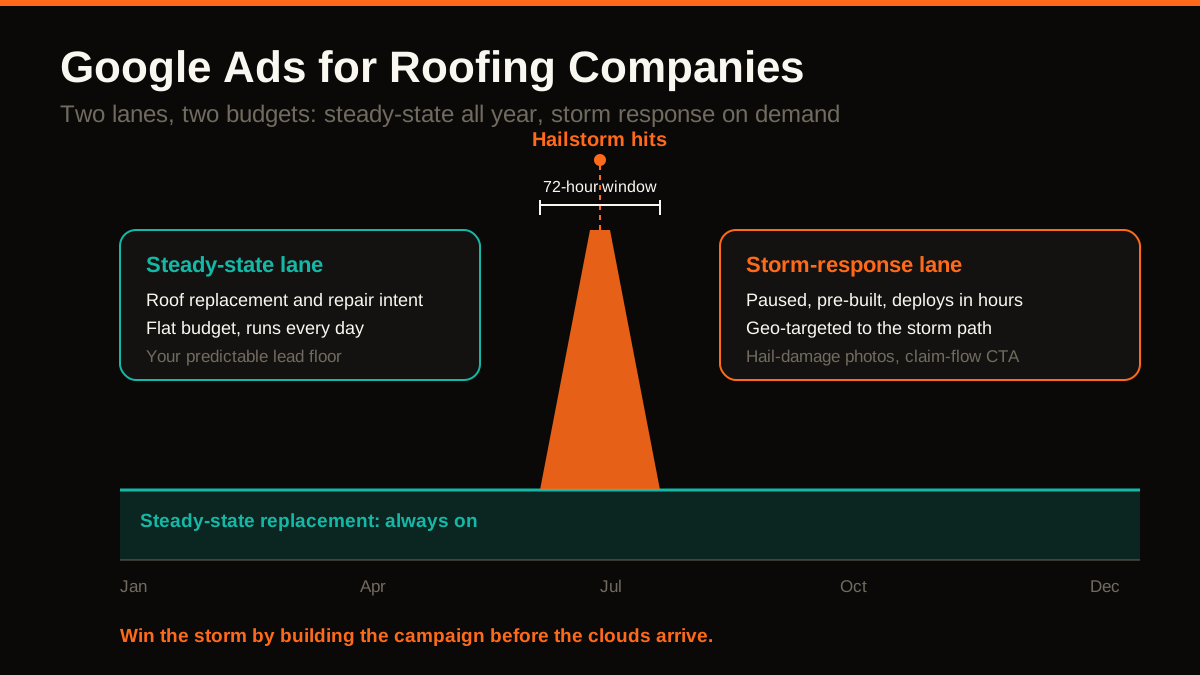
Search Ads fit when the roofing company needs to shape demand instead of accepting one broad stream. A replacement campaign can emphasize inspection, materials, financing availability, warranties, and the estimate process. A storm campaign can use a separate budget, location set, schedule, and message. Commercial roofing can live in its own campaign so residential traffic does not consume the same budget. Each segment should point to a page that answers the questions behind that search.
The main advantage is not that Search is always cheaper. It is that the account exposes levers. Search-term reviews can reveal repair-only queries, employment searches, material research, insurance questions, DIY intent, or places the company does not serve. Negative keywords and tighter match strategy can remove recurring waste. Landing-page forms can ask for service, location, ownership, and a short project description without turning the form into an interrogation.
- Split campaigns by economically different scopes, such as residential replacement, storm response, repair, and commercial roofing.
- Set location targeting around the operating area and inspect where users were located, not only the location words they typed.
- Send each ad group to the closest relevant service page instead of the homepage.
- Track calls and forms, then connect them to qualification, estimate, and booked-job outcomes.
- Review actual search terms and add negatives based on evidence, not a generic list copied from another roofer.
- Adjust budget only after checking lead quality, sales follow-up, schedule capacity, and job economics together.
Improve the trust, service clarity, mobile call path, and estimate flow that paid traffic reaches after the click.
Build a conversion-ready roofing websiteAllocate budget around the operating constraint
There is no defensible universal percentage for dividing a roofing budget between these channels. Market availability, lead prices, search competition, service mix, storm activity, reviews, response coverage, close rate, and crew capacity all change the answer. Start with a controlled test that is large enough to produce decisions, but do not spread a modest budget across every service and city at once. Concentration makes the signal easier to read.

If verification is complete and the office responds reliably, Local Services Ads can be the first channel tested for broad residential demand. If the company wants only replacement opportunities in selected communities, Search Ads may deserve the first dollar because the account and landing page can carry more qualification. If both channels already produce leads, do not reward the one with the lower reported lead price until sales outcomes have matured.
Measure booked roofing work, not platform totals
Create one opportunity record for each real project and preserve the source. A homeowner might call from a Local Services profile, submit a Search landing-page form later, and return through a branded search before signing. Deduplicate obvious repeats without erasing the touch history. Keep the original source stable, record later touches, and apply the same qualification stages to both channels.
Preserve Search, Local Services, referral, and customer-declared source evidence while counting the unique opportunity once.
Compare both channels in one roofing ledgerGoogle Ads Help documents offline conversion imports for connecting later outcomes back to earlier ad interactions. That can help a Search campaign learn from qualified or sold work rather than every initial form, but the imported stage must be recorded reliably. If the office marks jobs inconsistently, optimize first to the deepest stage you can audit, then improve the process before moving farther down the funnel. Local Services leads should follow the same internal sales definitions even when the platform reporting is separate.
- Spend and charged leads by source and service
- Unique inquiries after clear duplicates are joined
- Contact rate and time-to-first-response exceptions
- Qualified opportunities and documented disqualification reasons
- Inspections and estimates scheduled and completed
- Booked jobs, contract value, loss reasons, and time between stages
- Production capacity, travel burden, cancellations, and collection status
Connect calls, forms, qualification, estimates, booked work, and revenue before moving budget between channels.
Set up booked-job attributionUse a practical test sequence
Begin with clean foundations. Confirm the Local Services profile, screening status, services, hours, service area, and lead routing. Audit Search campaigns for conversion actions, location settings, search terms, negative keywords, landing pages, call handling, and campaign separation. Agree on qualification stages with the office before changing budgets. Otherwise, the test will compare inconsistent data rather than channel performance.
- Choose one roofing scope and a service area the company can fulfill consistently.
- Set up separate source tracking while applying the same CRM stages and loss reasons.
- Test call and form routes during business hours and after hours before buying traffic.
- Run long enough for normal inspection and sales decisions to mature.
- Review lead recordings and records lawfully, then classify quality and follow-up failures.
- Move budget toward the source producing suitable booked work, not simply more contacts.
- Retest when storm conditions, staffing, service mix, reviews, or geographic capacity changes.
Google Ads versus Local Services Ads is not a permanent winner-take-all decision. It is a budget allocation problem that should respond to the roofing company's market, sales process, and production capacity. Use Local Services Ads for direct profile-led demand when eligibility, trust, and response operations are strong. Use Search Ads when service-specific targeting and landing-page control matter. Use both when the business can track both to the same booked-job standard.
Place both channels inside the broader roofing marketing agency for website fit, local discovery, intake, qualification, and commercial measurement.
Book a discovery call to review channel fit, tracking, landing pages, service-area targeting, and the path from inquiry to booked roofing work.
Plan your roofing lead mixSources and further reading
- Google Search: SEO Starter Guide
Crawlable links, descriptive page information and content organization. Practical trade examples are SF Web Tech recommendations.
Source checked .
- Google Search: creating helpful content
People-first writing, useful original information and the absence of a preferred word count. Does not substantiate a client result.
Source checked .
- Google Maps: prohibited and restricted content
Rules against fake engagement, incentives and selectively soliciting positive reviews.
Source checked .
- Google Local Services Ads: getting started
Eligibility, lead handling and verification. Platform lead-billing criteria differ from a contractor’s sales qualification.
Source checked .
- Google Local Services Ads: Google Verified badge
Current badging and discontinuation of the former Google Money Back Guarantee.
Source checked .