
Roofing customers may be arranging an urgent inspection or comparing replacement options. Help them understand the services, actual availability and next step. A map result is one discovery route, not a universal two-minute buying process.
Separate urgent repair requests from planned replacement inquiries and measure their qualification outcomes. Avoid assuming a standard roof price, response time or share of map clicks for the market.
Local results can help a homeowner discover roofing companies, but the visible businesses vary by searcher, query and market. This guide focuses on the information and evidence a roofer can maintain, while treating search position and calls as measured outcomes rather than promises.
Build an accurate profile, useful service information, real project evidence and a neutral review process. Measure qualified inquiries and adapt the plan to the business’s territory and capacity. Weather and profile activity do not guarantee calls.
How local SEO supports roofing discovery and evaluation
Roofing searches can include urgent repair, inspection, replacement and early research. Separate those needs in page content and qualification so response expectations, scope and measurement remain accurate.
Service availability is local, but customers may compare map results, organic listings, referrals, directories and advertising. Document the actual territory and review qualified inquiries by source instead of assuming a fixed share of clicks goes to three listings. Use the roofing journey-and-touch ledger to connect that discovery evidence to one accepted opportunity and its later commercial outcomes.
Review the local, content, technical and attribution work available for roofers and other home-service businesses.
See the full contractor SEO systemStep one: optimize your Google Business Profile like it's your dispatch board
A Google Business Profile is an important local discovery and verification surface. Keep its identity, category, services, hours, coverage and project evidence accurate. Maintain the website as the fuller source for scope, process, proof and inquiry details.
Choose the most accurate available category, list real services and keep hours and coverage truthful. Add authorized project photos and useful updates. Advertise 24-hour service only when staffed; geotagging and a fixed posting cadence are not ranking requirements.
How map pack rankings actually work: proximity, relevance, prominence
Google describes local results mainly through relevance, distance and prominence. Those broad factors help organize the work, but Google does not publish exact weights and an agency cannot remove the distance constraint.
Google describes local results mainly through relevance, distance and prominence. A service-area setting or city page does not move the business closer to a searcher or guarantee wider map visibility.
Improve accuracy and useful service information while acknowledging proximity and competition. You cannot guarantee that stronger content or more reviews will outrank a nearer competitor in every other neighborhood.
- Proximity (you can't control it): your physical location relative to the searcher. The lever you do have is service-area coverage and city pages so you're eligible across a wider radius.
- Relevance (you control most of it): primary category, services listed, and on-page content that matches 'roofing contractor [city]' and 'storm damage roof repair [city]' searches.
- Prominence (you control it over time): review count and velocity, citation consistency, backlinks, and overall web presence.
Roofing-specific citations and NAP consistency
Correct inaccurate business details so customers can identify and reach the roofer. Legitimate call-tracking numbers can be used with a stable business identity; their presence is not automatically a ranking problem.
Prioritize relevant business listings and manufacturer locators the company is eligible to use. Check the accuracy and usefulness of each listing. Avoid buying bulk links or claiming a specific number of citations produces a ranking result.
Choose listings that help real customers find or verify the business. Relevance, accuracy and eligibility matter more than a purchased directory count.
- Tier 1 (essential): Google Business Profile, Bing Places, Apple Maps, Yelp, Facebook, and the Better Business Bureau.
- Tier 2 (home services + roofing): Angi, HomeAdvisor, Houzz, Thumbtack, Porch, BuildZoom, and roofing-specific directories like the GAF and Owens Corning contractor locators if you carry those manufacturer certifications.
- Tier 3 (local relevance): your chamber of commerce, local newspaper business directories, and county or regional business listings.
- Evaluate additional directories for customer use, local relevance, data accuracy, ownership and cost before submitting.
Build a steady, policy-compliant review process
Invite honest reviews from eligible customers without positive-only selection or preferred wording. Google does not publish a formula in which a particular number of recent reviews always beats a larger older set.
Use a consistent invitation rule for eligible completed customers regardless of expected sentiment. Choose a reasonable completion milestone, respect contact preferences and keep review participation optional.
- Invite every eligible customer under the same documented completion rule and include the correct profile review link.
- Ask for an honest account of the experience. Do not require a photo, rating or particular wording.
- If the customer has not opted out, one optional reminder may be appropriate. Do not claim a universal response lift.
- Invite customers to describe the experience in their own words. Do not script locations, services or a preferred sentiment.
- Reply on a schedule the team can sustain. Do not present a particular response deadline as a ranking factor.
Service-area pages: publish where distinct customer information exists
A list of town names rarely answers a customer's local questions. Research how people describe the service and publish a separate page only where real coverage and distinct information justify it. A location page is not required for every query and does not guarantee eligibility or visibility.
Publish a location page only when the business truly serves the area and can add distinct information such as operating details, authorized local projects, relevant permit resources or a specific service pattern. Add service pages where scope and customer questions differ. A page does not make a business eligible for map visibility across an entire territory.
Review eligibility, control, landing-page needs, lead handling, and booked-work measurement before allocating budget.
Compare Google Ads and Local Services Ads for roofersWork backward from job contribution, qualification, close rate, and capacity instead of using a generic lead-cost target.
Calculate marketing cost per booked roofing jobOn-page SEO for roofers: schema, galleries, financing, and warranties
On-page SEO is how you tell Google what each page is about and back up the relevance you're claiming. None of it is complicated; it's just consistently done. The fundamentals that move the needle for roofers:
Use descriptive metadata, genuine project evidence and accessible contact paths. Structured data must match visible facts; self-serving local-business review stars and contractor FAQ rich results should not be promised. Keep financing and warranty information current and accurately scoped.
Plan seasonal roofing content before demand changes
Roofing demand can change with weather, season, service mix, and market conditions. Prepare accurate service information and relevant landing pages before a campaign or content need becomes urgent, then compare dated query, inquiry, and capacity evidence instead of assuming every storm creates the same search response.
Keep storm and seasonal guidance relevant to the actual market and services offered. Use dated official weather information where needed, distinguish preparedness from property-specific assessment, and advertise only real inspection offers and availability.
What local SEO costs for a roofing company
We publish our pricing openly because hiding it behind a 'book a call' button is exactly the kind of thing that makes contractors distrust agencies. Three packages, all month-to-month, no setup fees, cancel anytime. You can see the full breakdown on our pricing page, but here's the short version:
- Lead Launch, $1,500/mo: Paid acquisition for established businesses with capacity for more inquiries.
- Lead & Local Growth, $2,000/mo (Recommended): Paid leads alongside a custom website and ongoing local marketing assets you own.
- Local Authority, $3,500/mo: Expanded useful content and local coverage for businesses ready for a larger ongoing program.
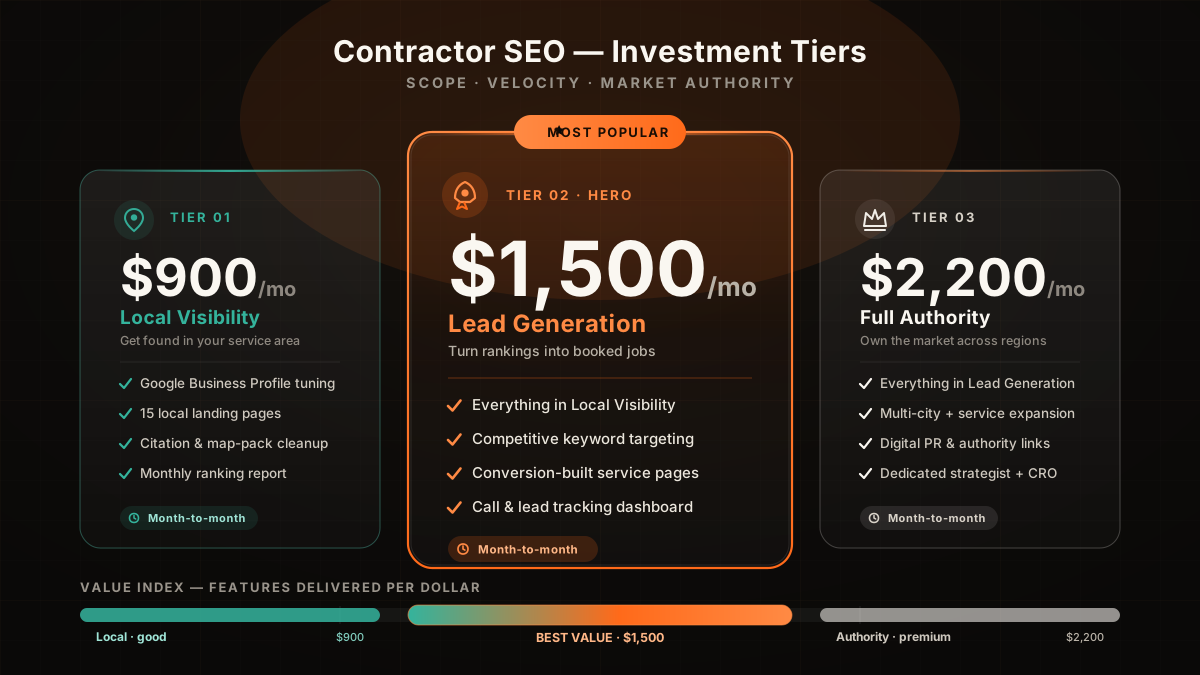
Evaluate marketing against total acquisition cost and contribution from completed jobs. A roof’s revenue does not all become profit and does not automatically pay for a year of service. The package fee and advertising spend are separate.
How to evaluate examples and reported results
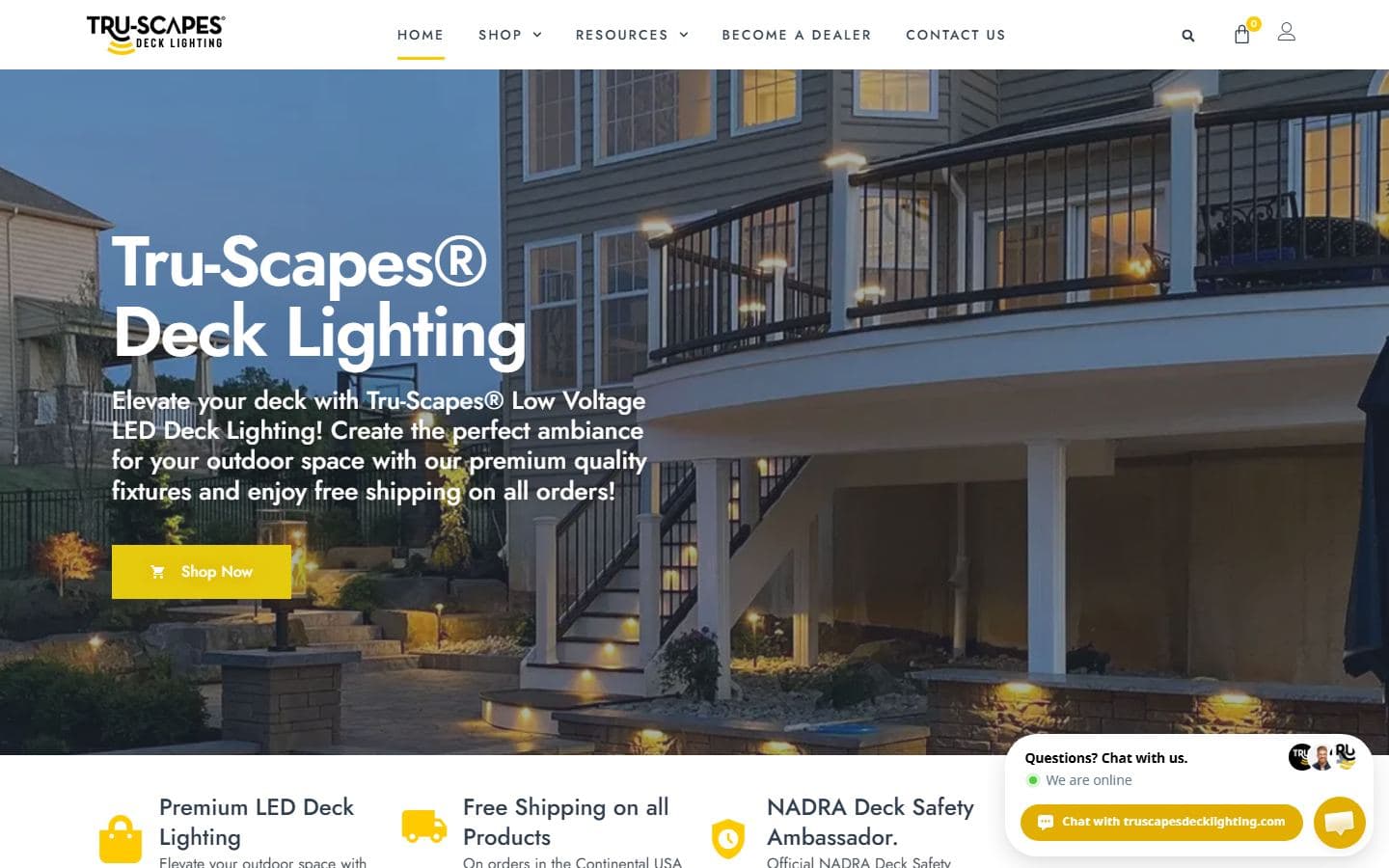
Our portfolio includes Truscapes Deck Lighting, an e-commerce business with a different sales model from roofing. Its results should not be treated as a roofing benchmark. For your campaign, agree scope, qualification and attribution before payment, then judge performance against those terms.
Review the website and marketing work in our portfolio, and request supporting context for any historical performance example. E-commerce revenue and qualified contractor leads are different measures.
The bottom line
Roofing customers may be handling an urgent problem or researching a future project. Accurate business information, useful service explanations, genuine evidence and a clear contact path help them evaluate fit. Measure whether that work contributes to qualified inquiries instead of promising a particular map position or lead source.
The work requires accurate inputs, regular maintenance and coordination with the people who know the projects and service area. A discovery call can establish the current baseline, capacity and first priorities.
Connect local discovery to the website, paid demand, intake, and later sales stages with the roofing marketing agency framework.
Share priority services and towns so we can review current visibility, evidence and measurement needs.
Book a call with SF Web TechSources and further reading
- Google Search: SEO Starter Guide
Crawlable links, descriptive page information and content organization. Practical trade examples are SF Web Tech recommendations.
Source checked .
- Google Business Profile: local ranking guidance
Google’s broad relevance, distance and prominence guidance. No exact ranking weights or guaranteed service-area coverage are stated.
Source checked .
- Google Maps: prohibited and restricted content
Rules against fake engagement, incentives and selectively soliciting positive reviews.
Source checked .
- Google Search documentation updates: FAQ retirement
Google states FAQ rich results stopped appearing May 7, 2026; useful visible FAQs remain appropriate for readers.
Source checked .
- Google Search: review snippet guidelines
Restrictions on self-serving LocalBusiness and Organization review snippets.
Source checked .