Consider a visitor comparing several window companies after a local search. They may submit more than one request, leave when a page is slow or unclear, or choose another provider before the office follows up. Treat page speed, form delivery, response coverage, and qualification as separate parts of the conversion path, then measure where real inquiries are lost.
Paid traffic can be lost at several stages: page load, offer clarity, form completion, delivery, response, qualification, and sales follow-up. Measure each stage before concluding that traffic or page conversion is the primary constraint. A competing provider may also influence the outcome, but the website alone does not prove why a job was lost.
Model how page friction can affect acquisition cost
Window-replacement decisions may involve several quotes, warranties, financing, product options, and scheduling questions. Use the company’s page analytics, lead records, and sales outcomes to understand the actual buying timeline and where inquiries leave the path.
Establish a baseline from relevant visits, qualified inquiries and completed sales. Neither a universal website conversion range nor a fixed lead price predicts this window company’s results.
Use conversion math as a planning model, not a forecast. If a tested page version produces more qualified inquiries from the same paid traffic, the business may improve acquisition efficiency without raising media spend. Actual results depend on traffic quality, the offer, the market, tracking, and the page experience. Evaluate each change against qualified, booked, and paid outcomes.
Illustrative arithmetic should show the relationship between paid visits, accepted inquiries, qualified estimates, sold projects, and collected revenue. Use ranges from the actual account and label every input as an assumption until it is reconciled.
Plan for the questions window prospects actually ask
Window inquiries may be less urgent than an active plumbing emergency, but timing and comparison behavior vary. Explain the supported products, installation process, warranties, financing, project evidence, and next step, then use real lead records to learn what qualified prospects need.
Answer material questions the company can support: product and installation scope, warranty terms, current financing, project timing, service area, and follow-up. Compare qualified inquiries and sales outcomes before attributing a change to any one section.
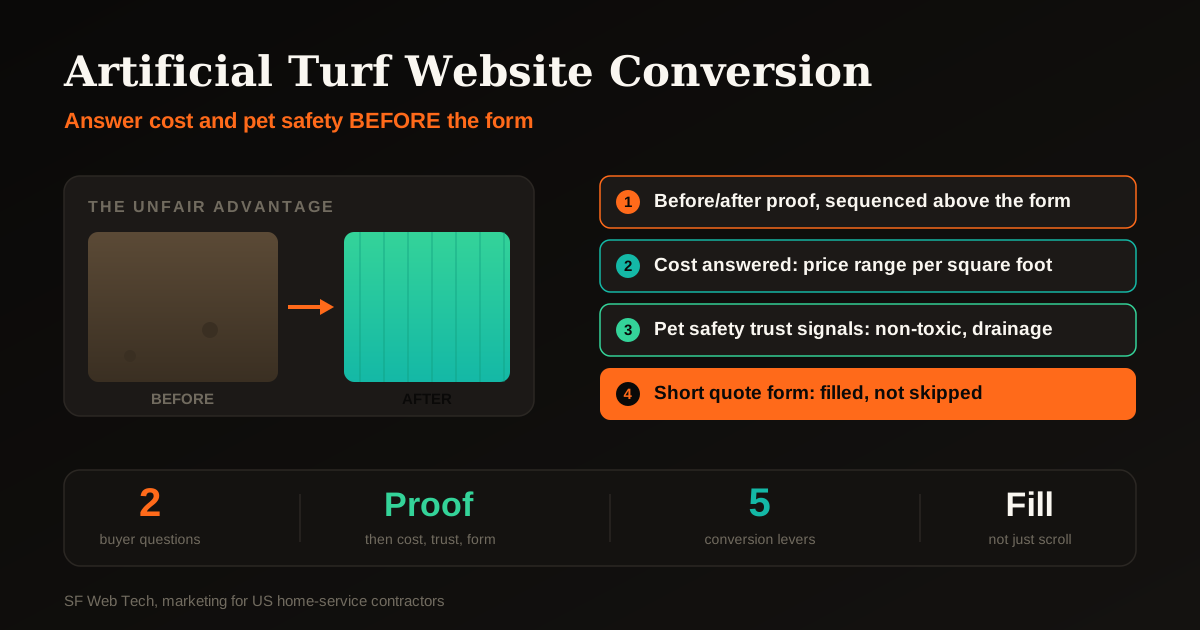
- Clear estimate or consultation action near relevant information
- Current financing and warranty terms with necessary qualifications
- Permissioned project evidence and genuine customer feedback
- A response expectation the office can consistently support
- A form limited to information needed for routing and qualification
- The next step is difficult to find or unclear
- Product, warranty, financing, or installation information is missing or outdated
- Images or claims cannot be verified
- No supported response expectation or operating-hours context
- The form requests data the office does not need or protect
Measure the complete response path
Form submission is one step in the sales path. Measure delivery, response coverage, qualification, appointment setting, estimates, and sold projects. Set a response commitment the office can sustain, then compare outcomes instead of assuming a visitor requested four quotes or chose the first reply.
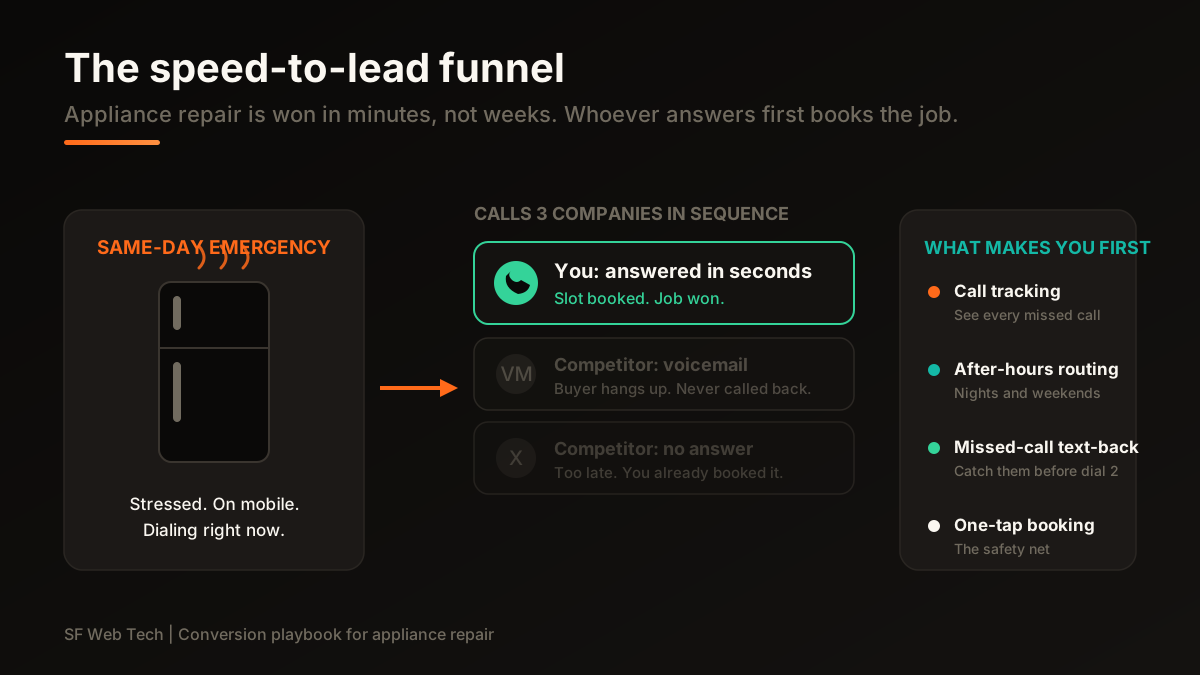
Measure the actual time to first contact and subsequent qualification. A practical response process helps prevent missed inquiries; it does not establish that the first business to reply always wins.
Route forms to the responsible person and test delivery. Publish only a response target the office can support, including its operating hours. Avoid a guaranteed 15-minute claim unless it is a real, sustainable service commitment.
“Clear next steps and reliable follow-up can help a window company stay in consideration while a homeowner compares options. Measure the effect instead of assuming response speed alone wins the estimate.”
Websites that connect clear offers, reliable delivery, supported follow-up, and qualified outcomes.
See how we build measurable inquiry pathsUse verified trust evidence near relevant decisions
Window projects can involve substantial cost, product, warranty, installation, and financing questions. Place the strongest verified evidence near the decisions it supports, then use page behavior and lead outcomes to learn what visitors actually need. These blocks are useful starting points rather than universal conversion rules.
Explain applicable warranties, current financing terms, verifiable credentials and actual installation steps. Use genuine customer feedback and project photos with permission. Display a platform badge only when entitled to use it; no badge proves a business will remain available indefinitely.
Choose the proof that matches the actual offer and common customer questions. Warranty and financing deserve prominent treatment only when they are current, material, and accurately explained. Combine verifiable details across the page, then test which paths assist qualified inquiries.
Instant-quote CTAs above the fold
A difficult-to-find next step can create conversion friction. Make the quote path clear near the relevant service information, keep it accessible on representative devices, and compare call and form completion before and after a documented change.
- Use an action label that matches the next step, such as requesting a window estimate, and test it against a clear alternative
- Ask only for information the office needs to respond and qualify the request, while preserving consent and routing requirements
- Offer an instant price, range, or same-day estimate only when the business can support that promise accurately
- Make the call action easy to use on mobile and show the hours when a live response is available
- Place calls to action at natural decision points and test their use; repeating one after every section can add noise
Check the phone and quote paths at common mobile widths and from several points in the page. Make the next step clear, accessible and consistent with staffed follow-up, then use observed interaction and qualified inquiries to decide what to improve.
Connect service intent, location, landing pages, qualification, proposals, and sold work.
Plan paid search for sold window projectsYour window site conversion checklist
Review the site on representative phones before increasing traffic. Use the checklist to identify testable gaps in clarity, evidence, consent, delivery, and response. An unchecked item is a review lead, not proof that it caused lost revenue.
- The primary estimate action is visible early on mobile and describes the real next step
- The form asks only for fields needed to route and assess the request and includes the required consent language
- Warranty length, coverage, and exclusions match the provider’s current written terms
- Financing or payment options appear only when currently available and include the relevant qualifications
- Permissioned project photos and genuine customer reviews are easy to inspect
- Response expectations match staffed operating hours and the actual follow-up process
- Lead notifications and customer messages follow consent requirements and a tested office workflow
- Page performance is measured on representative mobile devices and connections
Start with three measurable checks: whether the primary call to action is visible, whether the form asks only for information the office uses, and whether the response process is followed. Record the baseline and accepted-inquiry rate before changing them. Their effect should be measured against the actual traffic mix rather than assumed to outperform a broader redesign.
Review where the window-site path may lose clarity, trust, or follow-up continuity
Book a free conversion auditThe conversion playbook applied to painting contractors
How the same fix works for paintersSpeed-to-lead and trust blocks for HVAC sites
HVAC website conversion breakdownUse verified acquisition economics before increasing traffic to a revised site.
What contractor SEO actually costsSources and further reading
- Google Search: SEO Starter Guide
Crawlable links, descriptive page information and content organization. Practical trade examples are SF Web Tech recommendations.
Source checked .
- Google Search: creating helpful content
People-first writing, useful original information and the absence of a preferred word count. Does not substantiate a client result.
Source checked .
- Google Maps: prohibited and restricted content
Rules against fake engagement, incentives and selectively soliciting positive reviews.
Source checked .