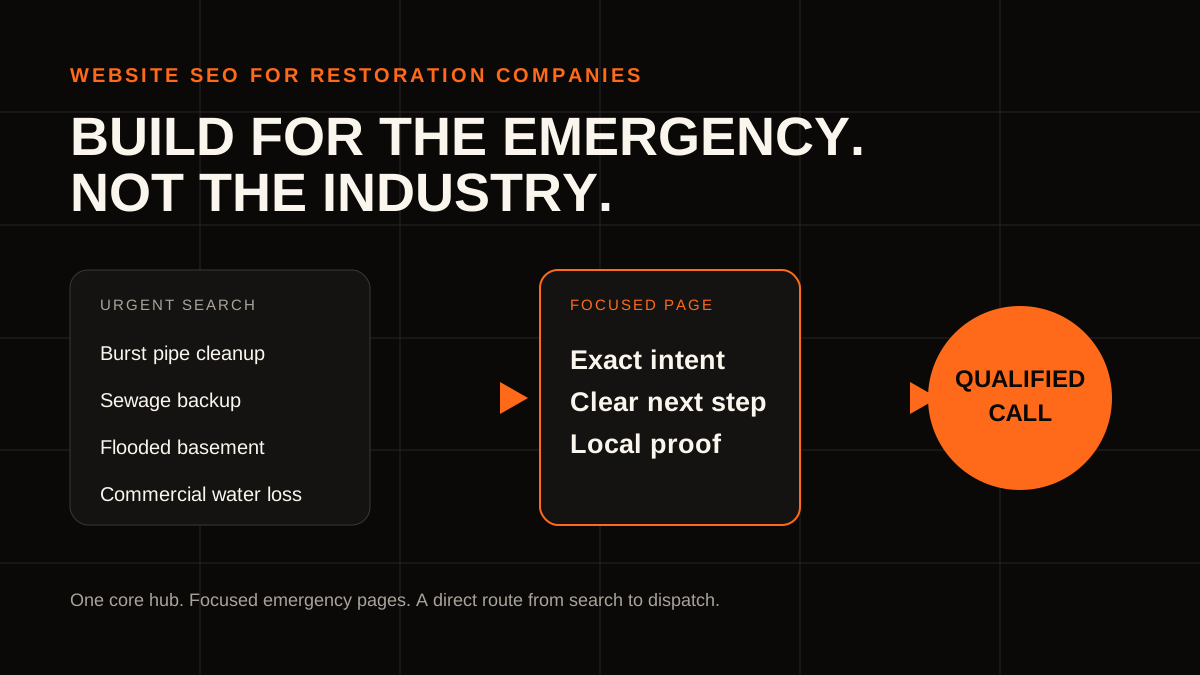
A homeowner hears water running at 2:14 in the morning, steps into a soaked hallway, and searches emergency water removal near me. Another finds sewage pushing through a basement drain. A property manager discovers a sprinkler leak across three office suites. They all need a restoration company, but they are not making the same search and they are not reading with the same concerns.
Most restoration websites force all three people onto one broad water damage page. That page lists extraction, drying, mold remediation, fire cleanup, and insurance help in a few generic paragraphs. It looks complete to the owner. To a search engine and a panicked customer, it is vague. The focused competitor with a page for the exact emergency gets the visibility and the call.
Why one restoration services page cannot carry the whole market
Google explains in its SEO Starter Guide that logical site organization and descriptive URLs help users and search engines understand how pages relate. That matters in restoration because each emergency has its own language. Burst pipe cleanup, sewage cleanup, flooded basement drying, storm water removal, and commercial water extraction overlap operationally, but the person searching does not see them as interchangeable.
The conversion problem is just as serious. A sewage-backup visitor wants containment and sanitation explained immediately. A burst-pipe visitor wants the water stopped and a crew dispatched. A commercial manager wants capacity, documentation, and minimal downtime. One blended page either becomes too long to scan during an emergency or too shallow to answer any of those buyers well.
Technical structure and focused service pages built for contractor search intent.
See the full website SEO serviceBuild the service architecture around emergencies
Start with a primary water damage restoration page that explains the overall process and links to focused child pages. The child pages should reflect jobs people actually call about, not every phrase a keyword tool can produce. A strong first set usually includes emergency water removal, burst pipe cleanup, sewage backup cleanup, flooded basement cleanup, storm damage restoration, and commercial water damage restoration.
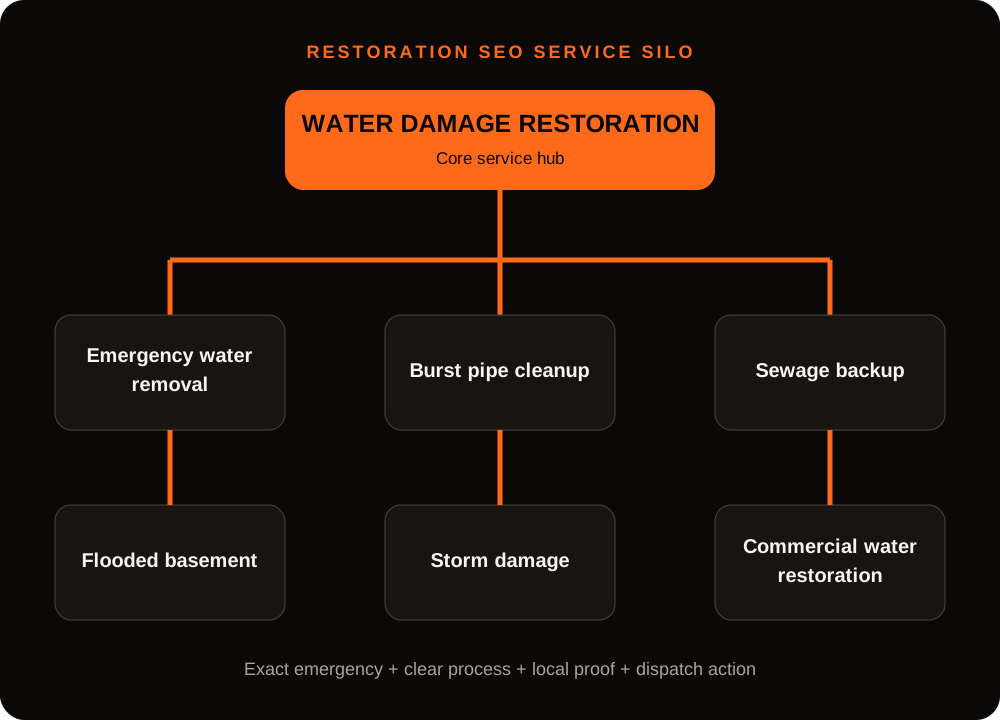
- Give every primary emergency a dedicated, descriptive URL, such as /burst-pipe-cleanup and /sewage-backup-cleanup.
- Write a unique title and H1 around the emergency, not a swapped keyword inside the same template.
- Explain what the customer should do now, what the crew does on arrival, and what happens after extraction.
- Link every child page back to the main water damage restoration hub and to relevant city pages.
- Keep mold remediation as a related service, not a promise that every wet building already has mold.
Answer the questions that decide the emergency call
Urgent visitors scan before they read. The first screen should make the service area, availability, phone action, and next step obvious. Then the page should lower uncertainty in the order the customer feels it: Is this dangerous? What should I do before the crew arrives? How quickly can the company respond? What will be removed? How will hidden moisture be found? Will the work be documented for the insurance conversation?
- Exact emergency named in the title and first sentence
- Prominent tap-to-call action with service-area clarity
- Immediate safety and damage-limitation guidance
- Step-by-step extraction and drying process
- Real equipment, crew, and project proof
- Clear documentation and insurance-support language
- A broad headline that could fit any company
- Five services competing above the fold
- Stock flood photos with no local proof
- Vague claims about advanced equipment
- No answer to what happens after the call
- Insurance promises the contractor cannot control
The EPA says wet areas should be completely dried within 48 hours to help prevent mold growth, and it specifically calls out hidden areas behind walls, ceilings, crawl spaces, and attics. That gives a restoration page a useful, defensible explanation for moisture meters, thermal imaging, controlled demolition, and cavity drying. Cite the EPA by name when using the 48-hour guidance. Do not turn it into a scare tactic or claim mold appears on a guaranteed clock.
Ranking gets the visit. A clear emergency path gets the call.
Fix the conversion path tooCreate local pages with real operational detail
Restoration is local because response time, building stock, weather, and service coverage affect whether a company can take the job. A useful city page should name the area honestly, describe the water-loss patterns the market produces, explain which neighborhoods and suburbs the crew actually serves, and include proof from jobs in that market. A city name inserted into a national template is not local expertise.
- Show the real dispatch radius and after-hours coverage. Do not imply a location or response time the company cannot support.
- Use local project photos, with permission, and describe the type of loss and building involved.
- Address market-specific building conditions, such as crawl spaces, basements, slab construction, older plumbing, humidity, or storm exposure where they genuinely apply.
- Add local reviews and case notes only when they are real and attributable to that service area.
- Link the city page to each emergency service available there, then link those service pages back to the city hub.
LocalBusiness structured data can help Google understand business details such as hours and departments, according to Google Search Central. It does not create local relevance by itself. The visible page, business information, service coverage, and proof still need to agree. Marking up a city page as though it were a staffed office when it is only a service area creates a trust problem, not an SEO advantage.
Build topical support without burying the money pages
Blog content should answer the research questions surrounding each service page, then link readers toward the relevant emergency page. Useful topics include what to do after a pipe bursts, what sewage categories mean, how structural drying works, what contents can sometimes be saved, how moisture is checked behind drywall, and what documentation a property manager should collect after a commercial loss.
Use search visibility for compounding demand and paid campaigns for controlled emergency coverage.
Compare SEO and paid search for contractorsMeasure calls by page and emergency type
Traffic alone does not tell you whether the architecture works. Track calls and forms by landing page, then label the lead by emergency type, property type, location, and outcome. A sewage page that produces fewer visits but more qualified dispatches can be more valuable than a broad page with far more traffic. The measurement should follow booked opportunities and jobs, not just keyword movement.
- Organic entrances by service page and city page
- Calls, forms, and qualified leads by landing page
- Emergency type and residential versus commercial split
- Answered-call rate and speed to first response
- Booked inspections or dispatches by source
- Revenue or pipeline tied back to the original landing page
The winning restoration site is not the one with the most pages. It is the one that makes the right page available for each real emergency, gives the customer a confident next step, and proves the company can handle that work in that market. Build the architecture around the call your dispatcher wants to receive, then support it with useful content and honest local evidence.
Book a discovery call to map the service pages, local coverage, and measurement needed to turn urgent searches into qualified calls.
Build your restoration SEO systemSources and further reading
- Google Search: SEO Starter Guide
Crawlable links, descriptive page information and content organization. Practical trade examples are SF Web Tech recommendations.
Source checked .
- Google Search: creating helpful content
People-first writing, useful original information and the absence of a preferred word count. Does not substantiate a client result.
Source checked .
- Google Maps: prohibited and restricted content
Rules against fake engagement, incentives and selectively soliciting positive reviews.
Source checked .
- Google Search documentation updates: FAQ retirement
Google states FAQ rich results stopped appearing May 7, 2026; useful visible FAQs remain appropriate for readers.
Source checked .
- Google Search: review snippet guidelines
Restrictions on self-serving LocalBusiness and Organization review snippets.
Source checked .
- EPA: mold, moisture and your home
Moisture and drying guidance. Marketing content cannot diagnose an individual property.
Source checked .