A homeowner who has already settled on a pool type is often still deciding on the extras: a spa off the shallow end, a sheer descent on the raised wall, or simply how the deck will handle water around the pool. Pool water feature pages are where a builder answers those questions clearly, one distinct question at a time, so the reader can picture the finished yard and bring the right things to a consultation.
This is a page-planning guide, not engineering advice. It explains how a pool builder should plan pages for water features, spa add-ons and pool deck drainage scope, and what each page may and may not claim. The service program that wraps it, the one that also answers queries like pool designer SEO, lives on the pool builder SEO hub. A feature belongs on a page only if the company actually designs and builds it, and where parts of the work are subcontracted, the electrical for a pump, the gas line for a fire feature, the page should say so in general terms rather than imply one crew does everything.
Which features earn their own page
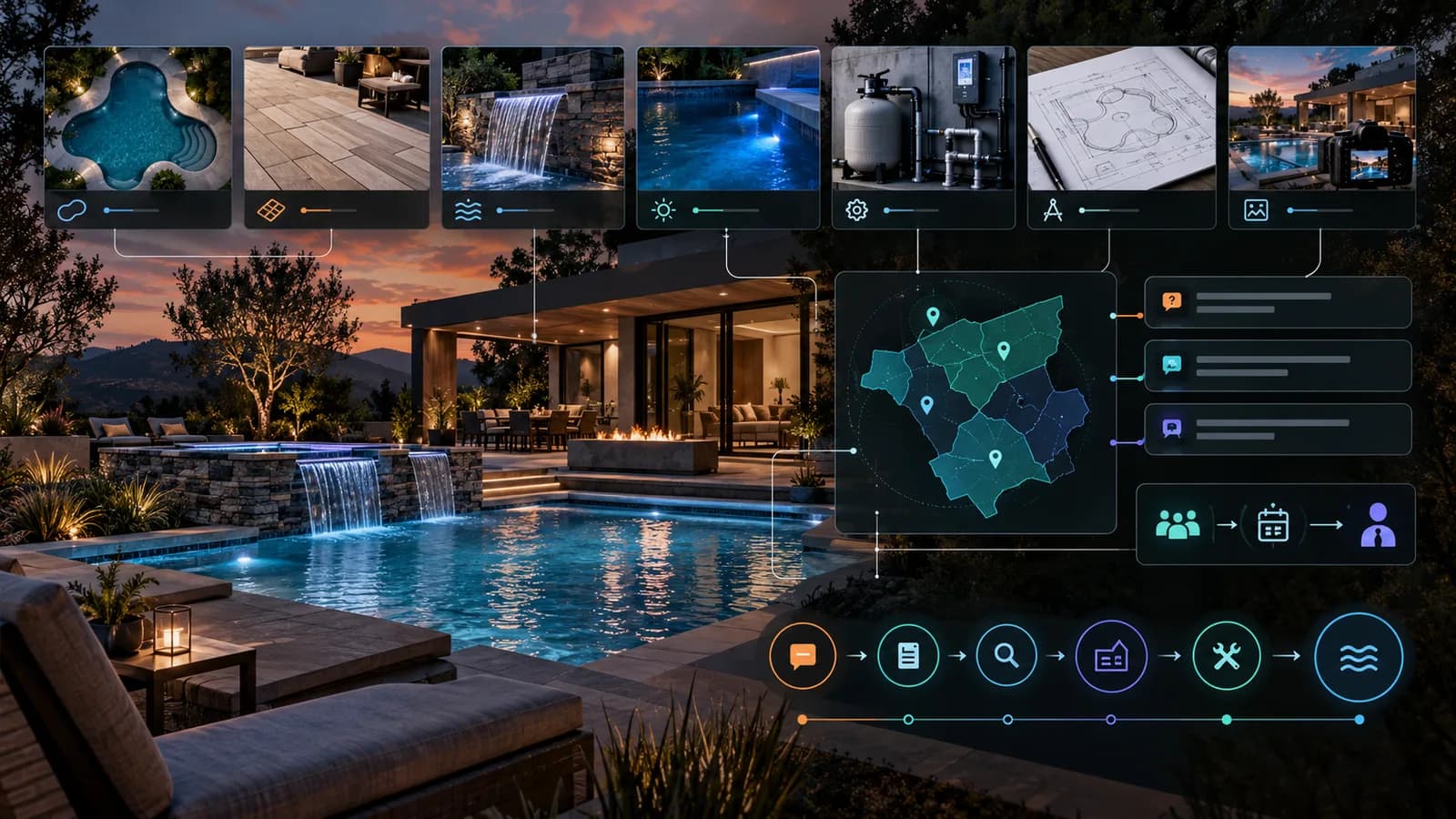
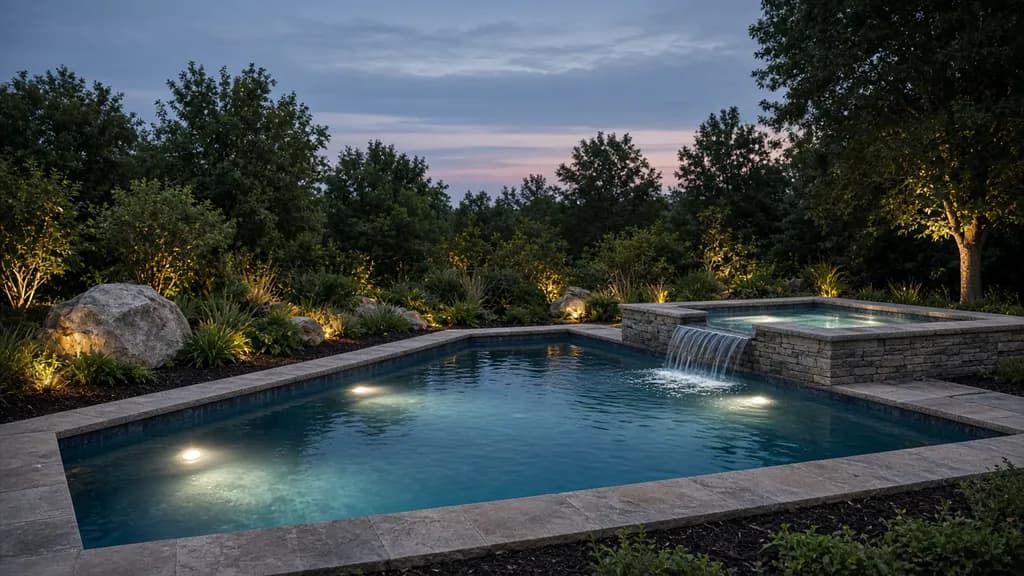
A feature earns its own page when buyers ask distinct questions about it. A spa raises questions about seating, heat and controls. Water features like sheer descents, deck jets, bubblers, spillover spas and rock waterfalls raise questions about sound, lighting, and how they are plumbed and controlled. A fire-and-water bowl adds trades, because fire involves gas or electrical work that may be subcontracted. When two features would be answered the same way, put them on one page and keep it clear rather than split hairs for a keyword.
- Buyers ask a distinct set of questions about it
- It changes the design, the trades or the controls
- The company has its own projects that show it
- There is real, provable detail to explain
- The answer repeats another feature's page
- The company does not design or build it
- There are no own-project photos to show
- The only difference would be a swapped keyword
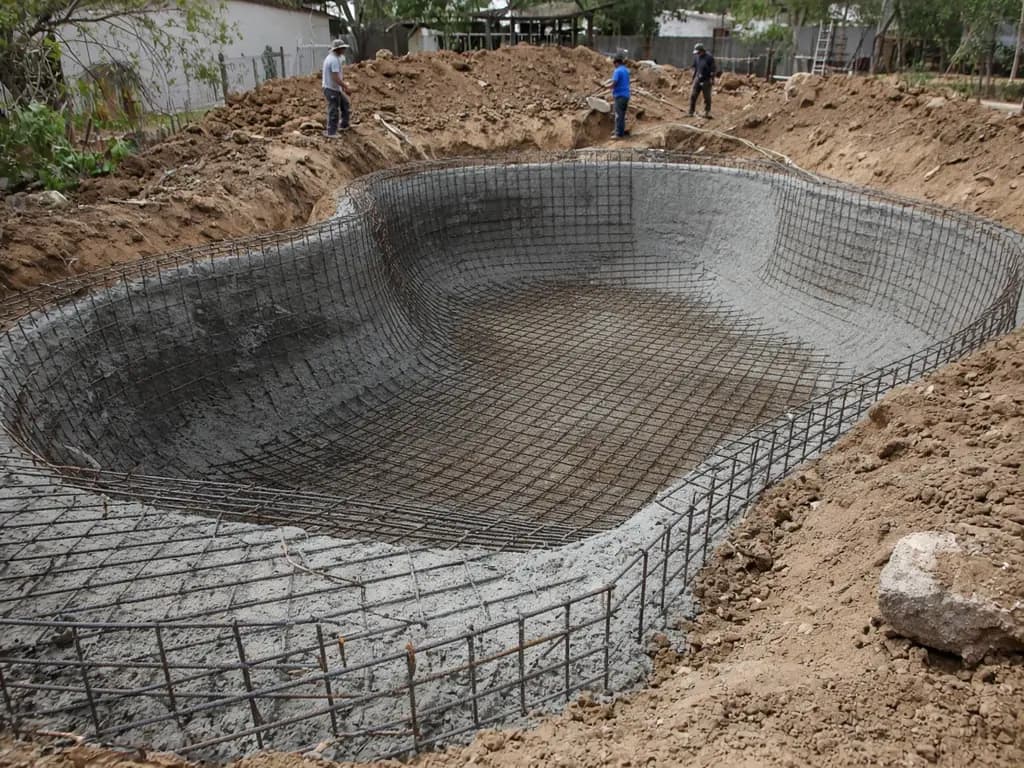
What a feature page should include
A feature page works when it tells the reader what the feature is, how it fits into the design process, which of the company's own projects show it, what to ask at the consultation, and what will be confirmed on site. Automation is a common place where questions diverge: a buyer wants to know how a spa or a water feature is turned on, scheduled and controlled, and whether that ties into the rest of the pool equipment. Answer the questions the company can speak to honestly, and point the rest to the consultation. Use photos the company has permission to publish, and keep prices off the page unless the company publishes its own. Describe the experience and the build honestly, without claiming a feature cools the water, saves energy, reduces maintenance or adds to the home's value, unless there is a cited source for that specific claim.
- What the feature is, in plain language a homeowner uses, not catalogue jargon.
- How it fits the overall design, and which decisions are made at the consultation versus confirmed on site.
- Which parts the company builds itself and which it coordinates with a licensed trade, kept general.
- Photos of the company's own completed features, shared with the owner's permission.
- The questions a buyer should bring, so the consultation starts from the right place.
Pool deck drainage as a scope page
Deck surface water has to go somewhere, and where it goes is site-specific. A drainage page should explain, in plain language, that the company plans this around the particular yard and shows how it handled drainage on its own jobs. It is a trust and consultation topic, not a keyword to chase. Keep it free of slope figures, drain spacing, pump numbers and cost or timeline estimates. Where a rule matters, point the reader to the local building department and the equipment manufacturer's instructions rather than quoting a number.
Separate build from service and maintenance
Someone searching to repair a failed water feature or replace a pump is not the buyer a build page is written for. Keep build intent and service or maintenance intent apart. If the company does not service features it did not install, say so on the page, and do not use build pages to attract maintenance searches you will only turn away. Clear scope now saves a frustrated call later.
Area pages only where local facts differ
Area pages are worth building only where there is a real local difference: a permit office and its process, HOA rules that shape a backyard build, or lot types common to a town. Google's spam policies describe doorway abuse as creating substantially similar pages, or pages targeted at specific cities, that funnel users to one place. A wall of near-duplicate city pages triggers exactly that. For the local SEO basics behind pool builder area coverage, the companion guide on local SEO for pool builders covers the ground so this page does not repeat it.
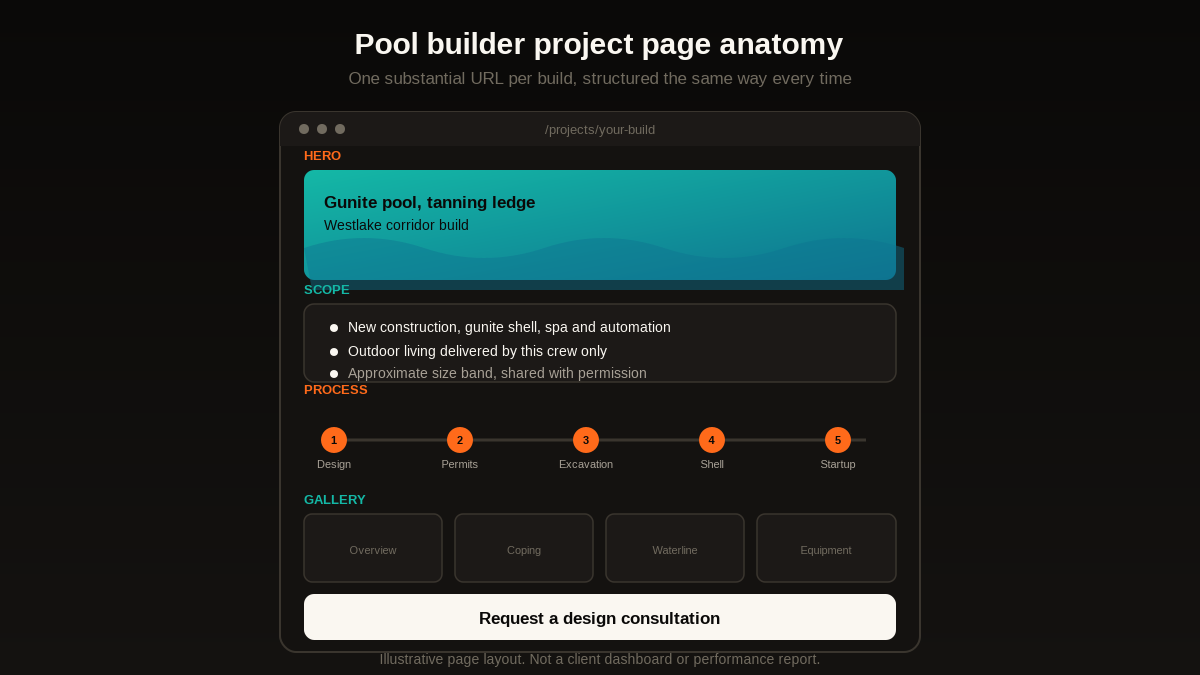
How a single pool build is structured end to end, so your feature pages can link to the projects that prove them.
Read the pool project page anatomyMeasure by requested feature
Tag each inquiry with the feature or scope it came in for, a spa, a specific water feature, drainage questions, so the builder can see whether feature pages actually bring design consultations rather than idle reading. Keep the measurement simple and consistent. For a worked example of documenting a build and tracking inquiries without inventing a ranking or a lead count, the pool builder project method is the companion to read.
Useful feature, spa and drainage pages, accurate profiles, and qualified-inquiry measurement for pool builders.
See how our local SEO worksA short order of work
- List the features and scope the company actually designs and builds, and note which parts it subcontracts.
- Group buyer questions, and plan one page per distinct question, combining the ones that would repeat.
- Gather permissioned photos of the company's own features and drainage work, with accurate captions.
- Write a drainage page that explains the approach in plain language, with no code numbers and no guarantees.
- Tag inquiries by requested feature so you can tell which pages bring consultations worth having.
Water feature, spa and drainage pages are not about catching every related search. They help a homeowner who already wants a pool picture the finished yard and arrive at a consultation ready to decide. Explain what the company builds, prove it with the company's own projects, keep the claims honest, and measure the inquiries that fit. That is a plan a pool builder can run and stand behind.
Bring your current feature and drainage pages and recent lead records for a scoped review of coverage and measurement gaps.
Book a free strategy callSources and further reading
- Google Search Essentials: spam policies
Doorway abuse covers multiple pages targeted at specific cities that funnel users to one page, and substantially similar pages built mainly to rank; the basis for building area pages only where local facts differ.
Source checked .
- Google Search: SEO Starter Guide
There are no secrets that automatically rank a site first, length of content alone does not affect ranking, and images should sit near relevant text with descriptive alt text. Practical pool-trade examples are SF Web Tech recommendations.
Source checked .
- Guidelines for representing your business on Google
Choose the fewest categories that describe the core business, and service-area boundaries should not extend farther than about two hours of driving time.
Source checked .
- Google Maps: prohibited and restricted content
Merchants may not offer incentives, discourage negative reviews or selectively solicit positive reviews.
Source checked .