
Pool buyers don't browse. They search. They search at midnight, on a Tuesday in March, when they finally decide this is the year they pull the trigger on the backyard. If your map-pack listing is third (or invisible), you don't get the call. The one above you does. Six-figure project, gone.
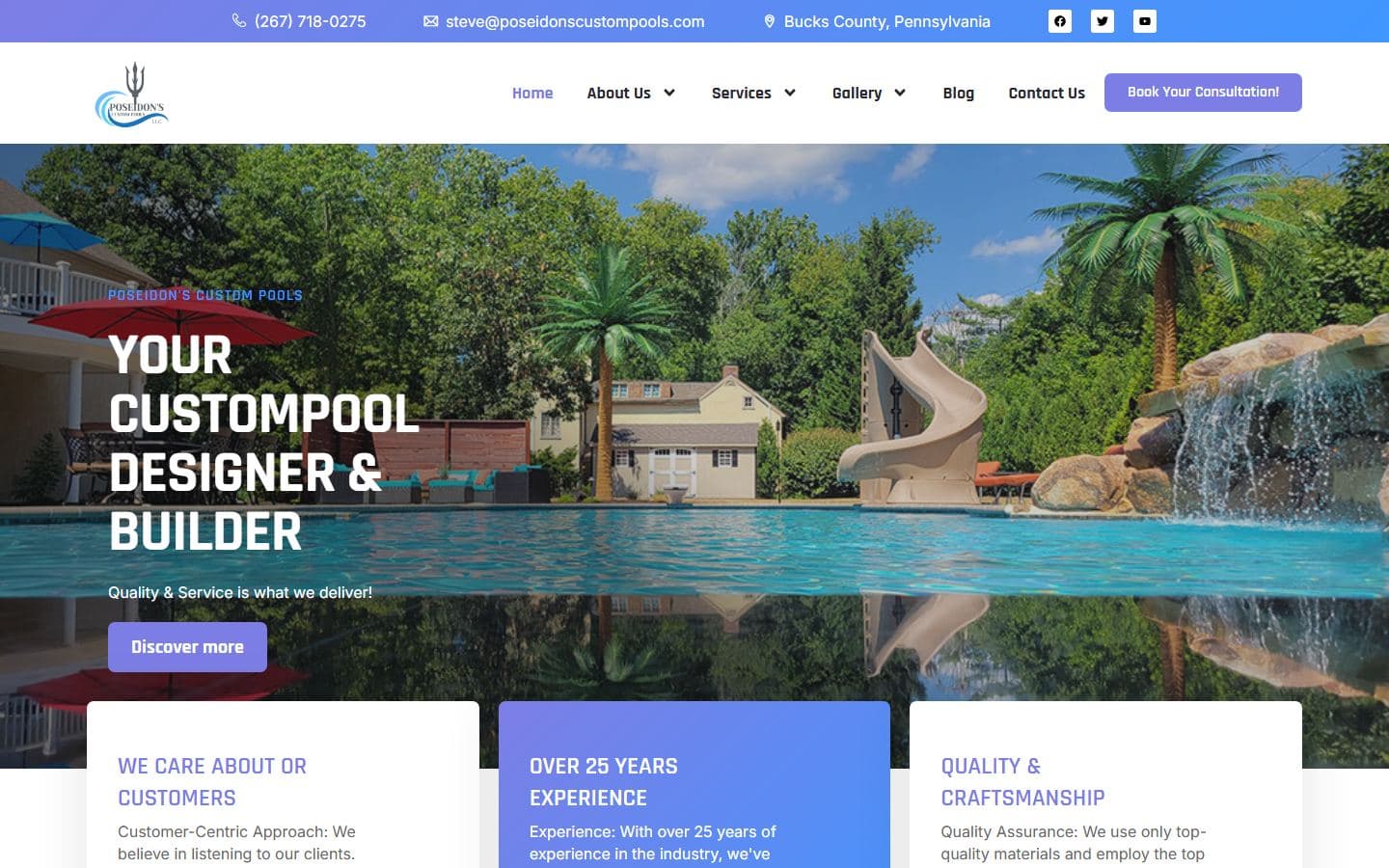
After 36 months running Local SEO for Poseidon's Custom Pools (now booked-out a season ahead) and 24+ months on FS Landscaping (40-50 inbound projects a month), here's what we've stopped doing, what we've doubled down on, and the eight things that actually move the needle for pool-builder Local SEO in 2026.
1. Treat your Google Business Profile like a content channel, not a directory listing
The biggest delta we see between #1 and #4 in any pool-builder map pack is GBP activity. The #1 listing posts weekly: project photos, before-and-afters, FAQ answers, seasonal promos. The #4 hasn't posted since 2022. Google rewards activity because activity is a signal of an actually-operating business.
- Post weekly: alternate between project showcases (with geo-tagged photos), short educational tips, and seasonal calls-to-action
- Add 5-10 new project photos per month, every photo geotagged to where the pool was actually built
- Pre-populate Q&A with the 10 questions buyers actually ask: cost, timeline, financing, permits, warranty
- Reply to every review within 48 hours, including the 5-stars (Google logs response rate as a quality signal)
2. Build city × service pages for every priority town, not generic 'service area' pages
Generic 'service area' pages are dead. Search intent is hyper-local: someone in Doylestown searches 'pool builder Doylestown PA,' not 'pool builder Bucks County.' If your site doesn't have a Doylestown page, you're not in the running.
For Poseidon, we built dedicated pages for all 12 priority cities (Doylestown, Newtown, Allentown, West Chester, Yardley, etc.). Each page has locally-shot project photos, town-specific permit info, and city-specific pool-cost ranges. By month 6, Poseidon held map-pack #1 in 9 of 12 cities.
3. Layer the right schema, then forget about it
Schema doesn't directly rank you. But it makes Google understand who you are and what you do, which compounds. We layer LocalBusiness, Service, AggregateRating, and FAQ schema on every city page. Set it once, maintain only when service offerings change.
4. Citations: 60 right ones, not 600 random ones
Citation building has degraded into a spam-and-pray game. Don't fall for the 600-citation packages on Fiverr. Google ignores low-quality directories now and may flag you for unnatural patterns.
- Tier 1 (essential): Google, Bing Places, Apple Maps, Yelp, BBB, Houzz
- Tier 2 (industry): HomeAdvisor, Angi, Thumbtack, Nextdoor, Pool & Hot Tub Alliance directory, your local home builders association
- Tier 3 (local relevance): chamber of commerce, local newspaper directories, county business directories
- Skip everything else, especially anything that asks for a fee to 'feature' you
5. Reviews are not a vanity metric, they're a ranking factor
Review velocity (how often you get new reviews) and review recency (when the most recent one landed) both factor into local pack rankings. A pool builder with 200 reviews from 2021 ranks below a competitor with 80 fresh reviews from the last 6 months.
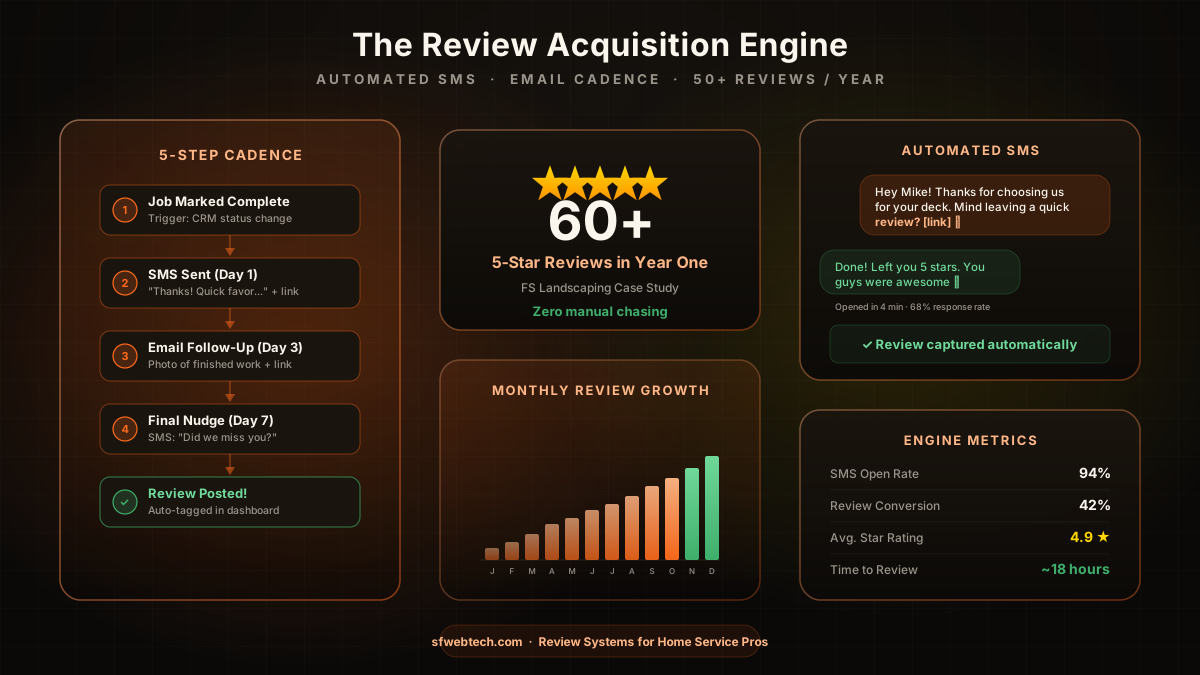
Tie review acquisition to project completion: the moment the project signs off, an SMS goes out with a direct Google review link. Three-day follow-up if no review yet. Aim for 50+ new 5-star reviews in year one, which is what we landed for FS Landscaping and Poseidon both.
6. Optimize for the questions, not just the keywords
Pool buyers search in questions, not keywords. 'How much does an inground pool cost in Doylestown PA' beats 'pool cost' for both intent and competition. Build a content engine around the actual buyer questions: cost, timeline, financing, warranty, comparing brands, permit process.
7. NAP consistency is boring, table-stakes, and absolutely required
Name, Address, Phone. The same on every directory, every page, every footer, every embed. It sounds obvious. It's wrong on most pool-builder sites we audit. Fixing NAP across 60+ citations isn't fun work, but it's the single most underrated multiplier on local pack rankings.
8. Page speed and mobile UX, because Google measures both
Mobile-first indexing means Google judges your site by what mobile users see. A 5-second LCP on mobile is the kind of thing that holds an otherwise-strong pool builder out of the top 3. We rebuilt Poseidon's site with a 1.3-second LCP (down from 5.8s) and saw rankings move within 6 weeks.
What to do if you read this and feel behind
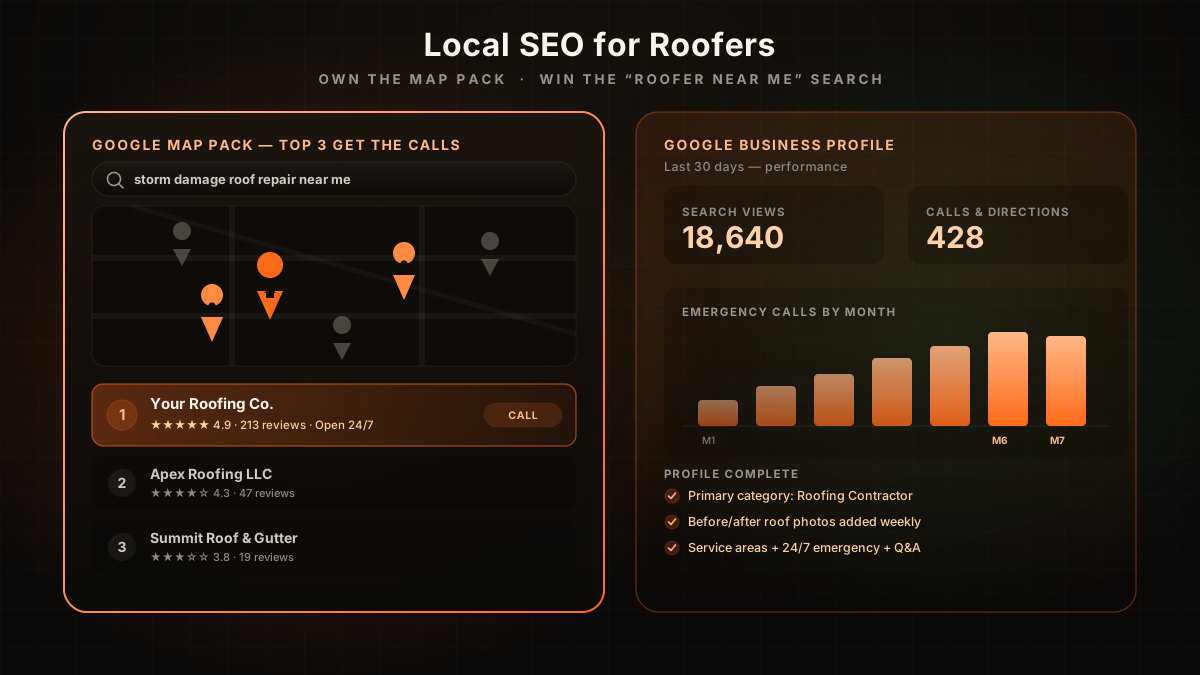
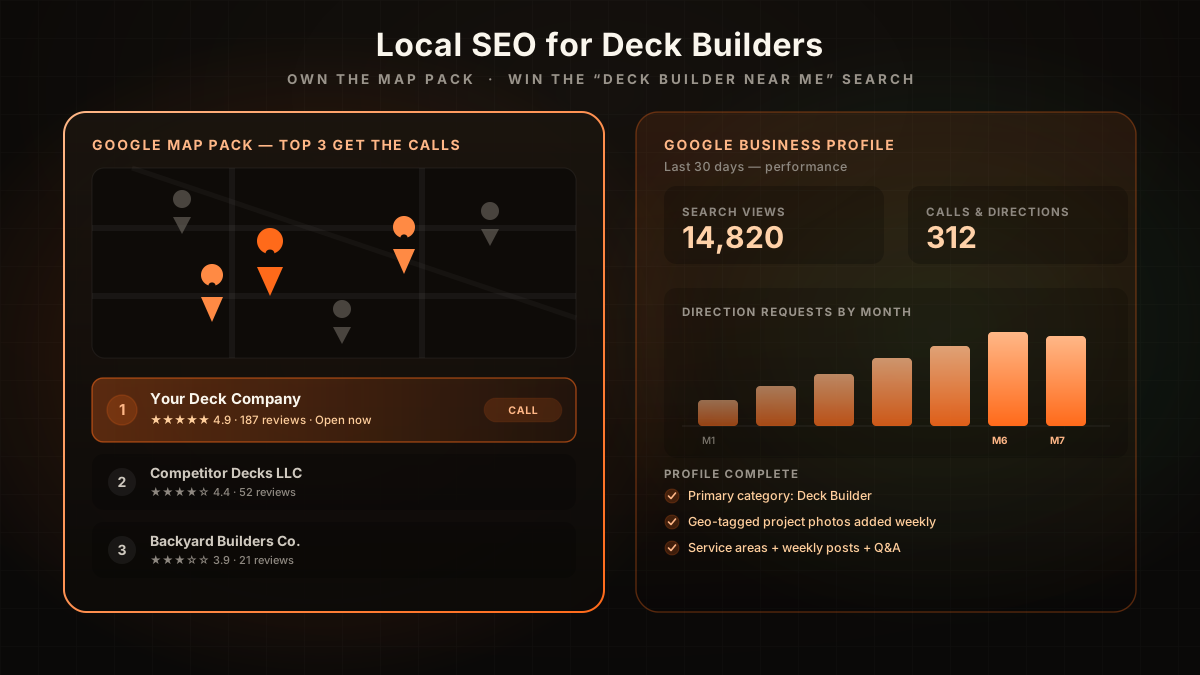
If you're a pool builder reading this thinking, 'we're doing zero of these,' that's actually good news. The list is short, the work is doable, and the compounding starts faster than you'd think. The first map-pack #1 usually lands at month 4-7 of focused execution. We've written the same kind of deep-dive playbook for [deck builders](/blog/local-seo-for-deck-builders) and [roofers](/blog/local-seo-for-roofers) if you want to see how the tactics translate across trades.
30 minutes. We'll audit your map-pack standing in your top 3 cities and tell you what's holding you back.
Book a free strategy call