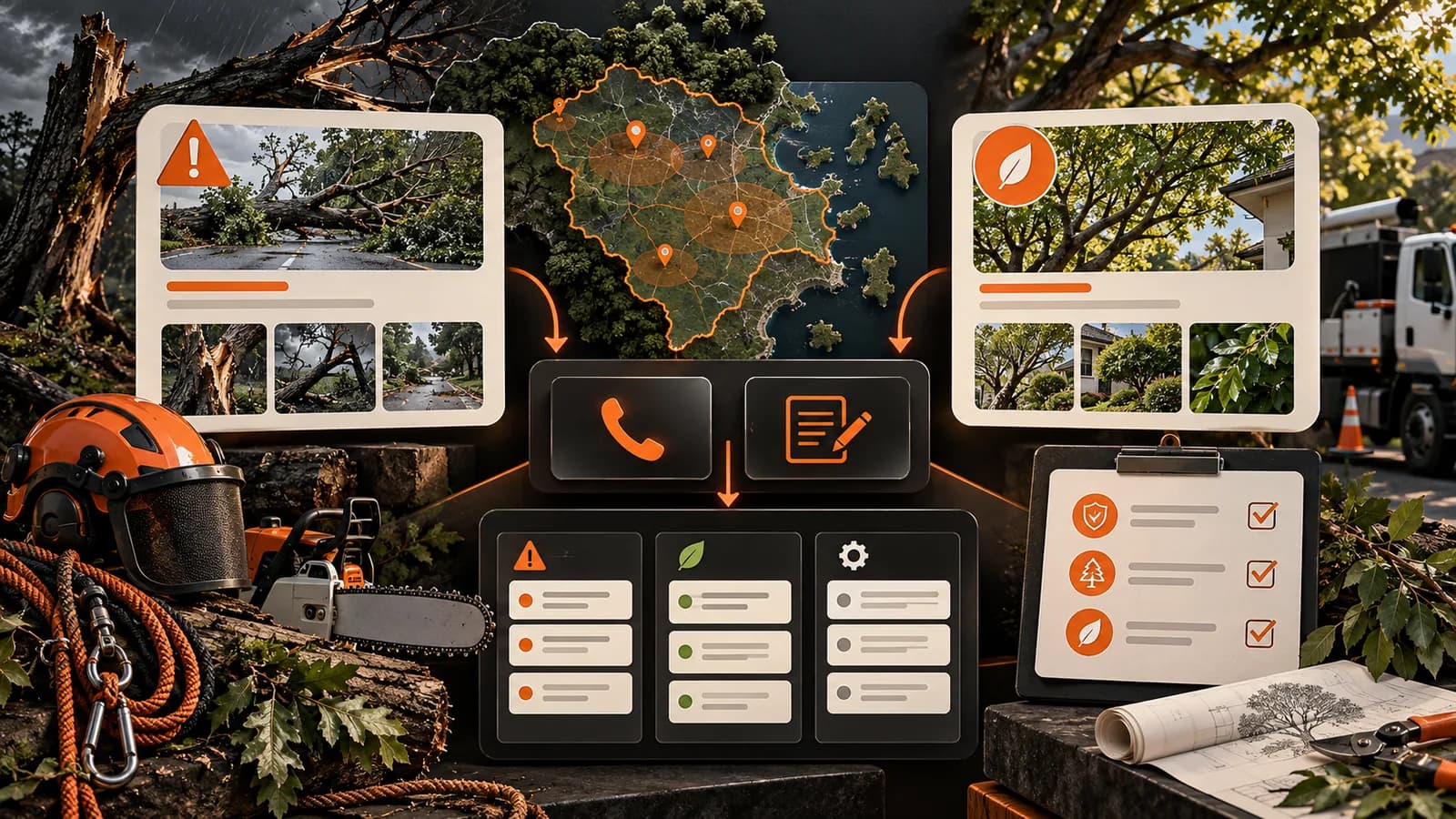
A storm-damaged tree can create an urgent safety concern, while pruning, stump work and tree-health assessments follow a different decision path. A useful local presence makes availability, operating area, credentials and the contact route clear for each service actually offered.
Customers may use map results, organic pages, referrals, directories or advertising when they need a tree service. Record which path produced an accepted inquiry and whether the business could safely serve it.
Why generic contractor SEO fails tree companies
Most SEO agencies run tree services through the same template they use for a general remodeler. They optimize for "tree service [city]" and call it a day. That misses how tree care buyers actually search, because "tree service" is not one intent. It is at least five, and each one is a different customer with a different urgency and a different price tolerance.
An urgent tree concern and a planned consultation can need different contact and scheduling information. Make both clear if offered, and use qualified assessment for safety questions. Separate pages when scope and evidence support them; a combined page does not automatically lose rankings.
Maintain an accurate Google Business Profile
A Google Business Profile can help a local customer verify identity, services, hours, coverage and contact details. Keep it aligned with the website and the real operating model.
Choose the most accurate available primary category for the business’s main activity, with relevant secondary categories for actual services. Verify options in the live profile rather than assuming every suggested category exists. Category selection does not establish a fixed ranking ceiling.
Keep services, operating hours and coverage accurate. Publish real job information when useful and use currently supported contact options. Google’s former Business Profile chat is not a universal messaging option, and weekly posts should not be sold as a seven-day ranking requirement.
Profile accuracy, service and location content, customer evidence and lead measurement for eligible home-service businesses.
See the Local SEO service scopePrepare useful storm-service information before demand changes
Storm-related demand can change quickly by region and event. If the business provides emergency work, maintain a useful page that explains real availability, qualification questions, safety boundaries and the contact route.
Publish durable service information before it is needed so search systems and customers can access it. Update temporary hours, coverage and capacity as conditions change. A page does not guarantee visibility for a later event.
Keep a useful storm-service page if the business offers that work. State actual coverage and availability, and update it when conditions change. Review capacity before changing paid campaigns. Do not promise that an evergreen page holds rankings all year or advertise unstaffed 24-hour crews.
Service-area pages that are not doorway pages
A tree company may serve several towns, but each location page needs a distinct customer purpose and evidence of genuine coverage. Avoid name-swapped pages that exist only to capture similar queries.
- Distinct local information that helps customers assess service fit
- Permissioned photos of relevant completed work
- Permissioned customer feedback connected to the area when available
- Accurate services plus applicable permit or ordinance references
- Coverage the company can staff and maintain
- Boilerplate with the place name substituted
- Stock media without local context
- No distinct proof, service detail, or customer value
- Very limited copy created mainly for a keyword
- Locations outside documented operating coverage
Build location pages where genuine coverage and project evidence justify distinct content. Avoid name-swapped pages and unsupported claims about competitors. A particular number of pages does not guarantee superiority in search.
Compare how another urgent local trade handles service-area evidence, profile accuracy and inquiry paths.
Read our roofing local SEO playbook for more service-area page tacticsPhotos and reviews: the trust problem unique to tree work
Tree work carries visible safety and property risk. Customers may compare credentials, insurance, equipment, crew practices, project evidence and feedback before choosing a provider.
Authorized photographs can show project type, equipment, safety practices, cleanup and completed work. Add useful captions for customers. Do not claim that posting frequency or filename wording creates a known ranking effect.
Show genuine credentials, authorized project evidence and honest customer feedback. A specific review count or photograph does not guarantee which company a customer chooses.
Invite honest reviews from eligible customers and respond professionally. Reviews can help people evaluate the business, but a specific review cadence should not be presented as a confirmed ranking tiebreaker.
A repeatable invitation and response workflow without a promised rating, count or ranking effect.
Build an honest contractor review processCitations and directories for arborists
Business listings can help customers verify identity and contact details. Correct material inconsistencies on platforms that are relevant, eligible and maintainable. Do not treat exact formatting or listing volume as a published local-ranking formula.
- Verify the main entity surfaces first: Google Business Profile, Bing Places and Apple Business Connect, where eligible.
- Evaluate home-service platforms for customer use, cost, data ownership and referral value before claiming a profile.
- Use ISA and TCIA directories only when the individual or company holds the required current credential or membership.
- Keep core identity and contact details accurate while following each platform's formatting rules.
- Review active listings on a documented schedule and record corrections, referrals and qualified inquiries.
A four-week tree service local SEO review
Use this sequence to establish accurate information, useful service paths and a measurement baseline. It is a work plan, not a ranking timeline.
- Week 1: confirm profile eligibility, identity, categories, services, hours, operating area and contact routes.
- Week 2: improve the priority emergency, pruning and stump-service information where the business actually offers each service.
- Week 3: publish or refresh durable storm-service guidance with real coverage, capacity and safety information.
- Week 4: establish a neutral review invitation process and check priority listings for material identity errors.
- Ongoing: add location or project content only when distinct customer information and genuine evidence support it.
Tree-service local search needs accurate urgency, scope, location and safety information. Review how customers find the business, which inquiries it can accept and which pages or profiles assist qualified work before expanding the program.
Review current profile accuracy, emergency and planned service paths, coverage evidence and lead measurement.
Book a tree service visibility reviewTransparent plans built for home-service businesses.
See contractor SEO packages and pricingSources and further reading
- Google Search: SEO Starter Guide
Crawlable links, descriptive page information and content organization. Practical trade examples are SF Web Tech recommendations.
Source checked .
- Google Business Profile: local ranking guidance
Google’s broad relevance, distance and prominence guidance. No exact ranking weights or guaranteed service-area coverage are stated.
Source checked .
- Google Maps: prohibited and restricted content
Rules against fake engagement, incentives and selectively soliciting positive reviews.
Source checked .