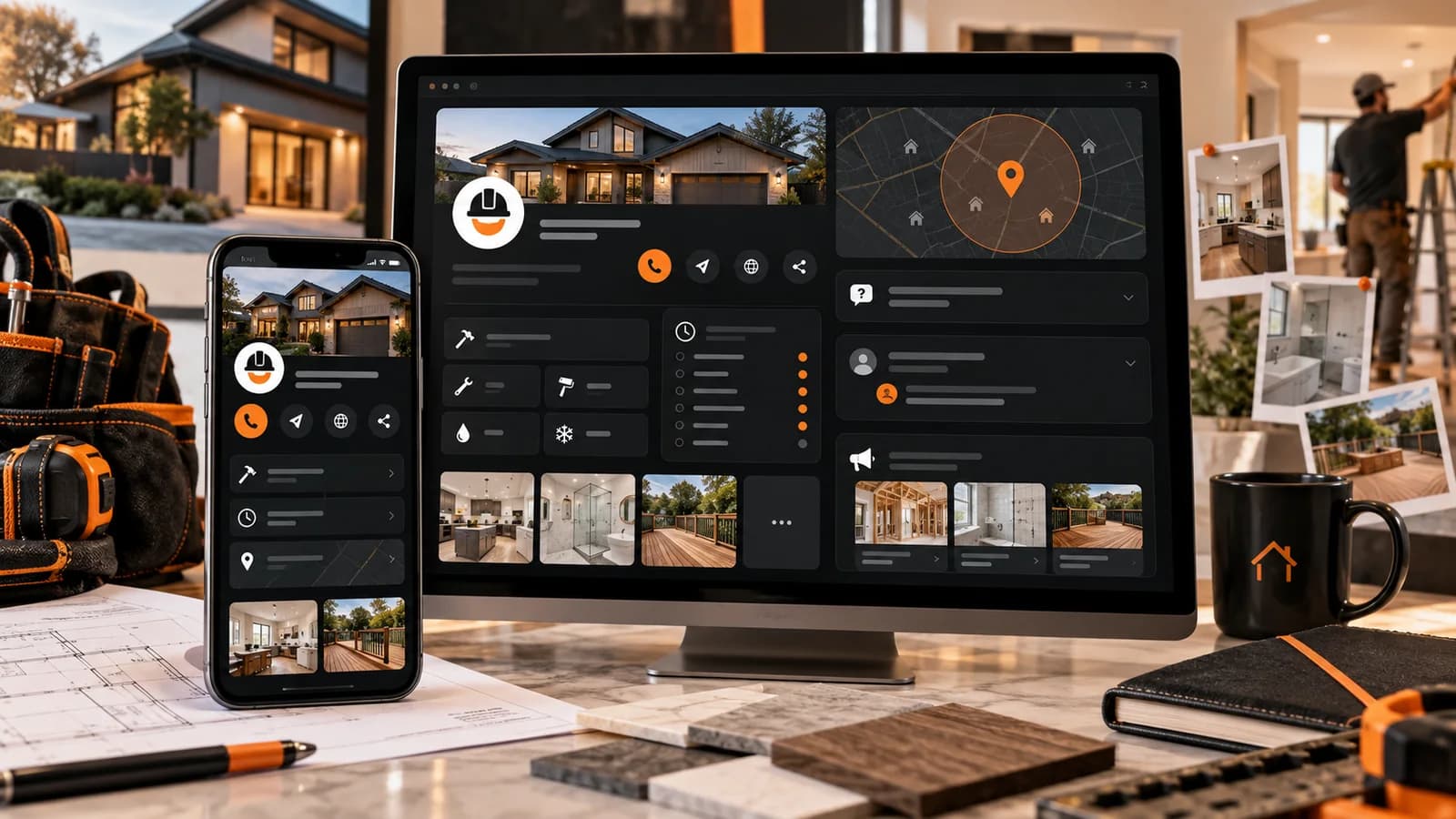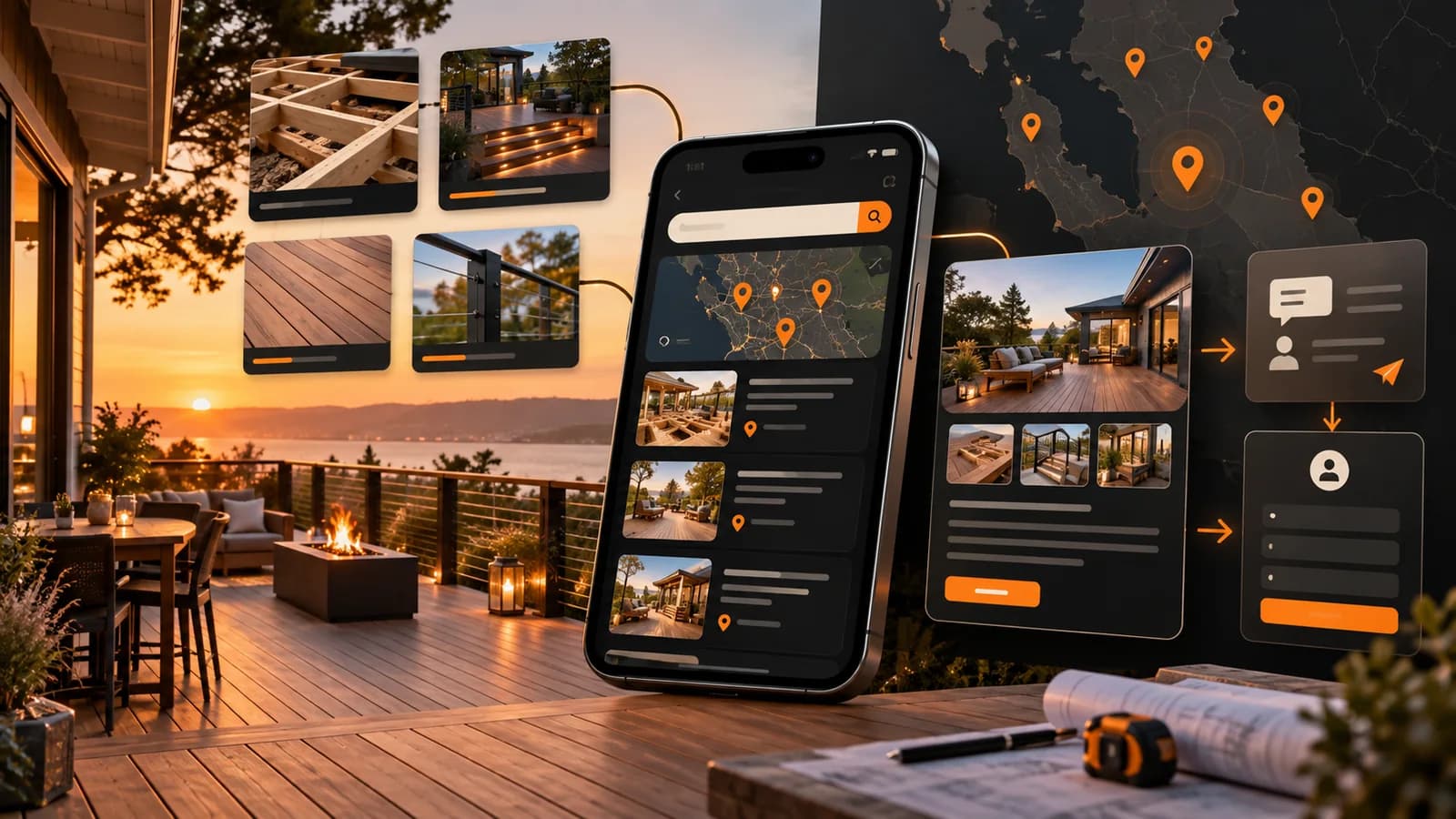
A deck buyer may compare materials, project examples, process and local availability before arranging a consultation. A useful local presence supports that research. Do not assume every project is decided from a map listing within two minutes.
Local results are one way a prospective deck customer may discover and compare companies. The visible businesses vary by searcher, query and market. This guide focuses on the information and evidence a deck builder can maintain without promising a particular map position.
Track how visitors reach the business, what they request and whether the inquiry fits the service area and project scope. There is no universal deck value or fixed map-click distribution to use as a forecast.
Why local SEO can matter for deck builders
A deck search can represent early research, material comparison or readiness for an estimate. Explain project types, process, operating area and the next step so different buyers can evaluate fit.
A nearby search can represent early research or a ready-to-book consultation. Explain the actual service area and scope. Use contribution from completed jobs to assess acquisition costs rather than assuming one contract pays for a year of marketing.
Deck service is geographically constrained, but customers may compare map results, organic listings, referrals, directories and advertising. Document actual coverage and review qualified inquiries by source instead of assuming a fixed click share for three listings.
Map and organic results can both contribute to discovery. Review the actual queries and qualified inquiries for your market instead of applying an unsupported percentage split to the visible map listings.
Review the local, content, technical and attribution work available for deck builders and other home-service businesses.
See the full contractor SEO systemStep one: optimize your Google Business Profile like it's your storefront
A Google Business Profile is an important local discovery and verification surface. Keep identity, category, services, hours, coverage and authorized project evidence accurate. Maintain the website as the fuller source for scope, process, materials, proof and inquiry details.
- Primary category set to 'Deck Builder'
- Authorized project photos added when useful
- Updates published when the business has current information
- Accurate service areas and customer questions answered honestly
- Vague category like 'Contractor' or 'Construction'
- A logo and a stock photo, nothing new in over a year
- Zero posts, blank Q&A, no service areas
- Less useful to customers comparing services and availability
Choose accurate available categories, show genuine projects and keep services, hours and contact information current. Use supported profile features and invite honest feedback. Neither service-area names nor a weekly posting schedule guarantees rankings in each town.
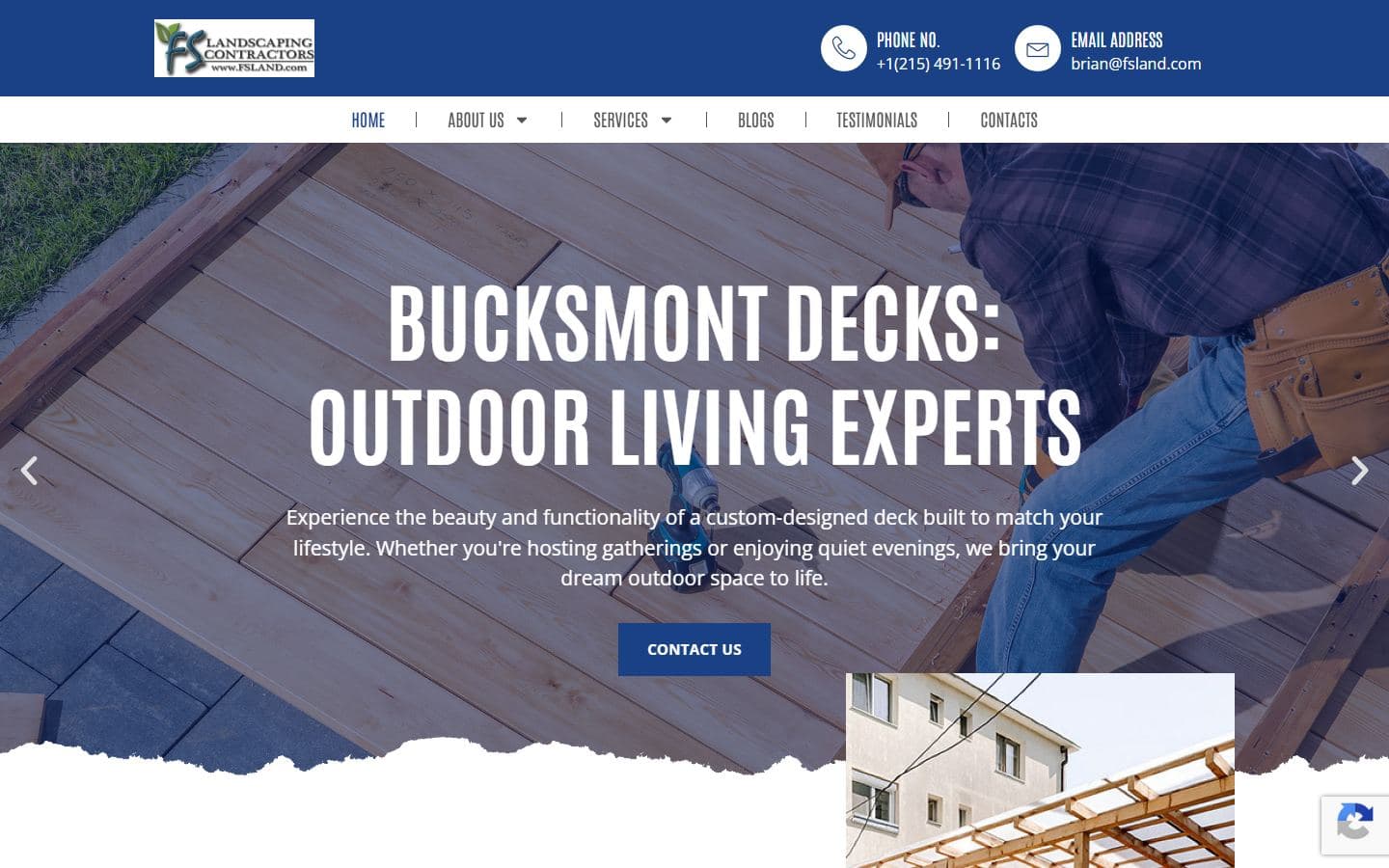
A field-by-field guide to accurate profile information and useful customer evidence
Get the full GBP optimization guideHow map pack rankings actually work: proximity, relevance, prominence
Google describes local results mainly through relevance, distance and prominence. Those broad factors help organize the work, but Google does not publish exact weights and an agency cannot remove the distance constraint.
Google identifies relevance, distance and prominence as broad local factors. Better information and evidence can help customers evaluate the business, but do not guarantee placement beyond a competitor’s immediate neighborhood.
- Proximity: Google describes this as distance from the searcher or named location. Service-area settings and city pages leave the physical location unchanged; observe map visibility separately.
- Relevance: keep the eligible primary category, services, profile details, and website information accurate. Google does not publish exact weights or promise visibility for a query.
- Prominence: Google cites how well known a business is and references links, articles, directories, review count, and review score. It does not publish an exact formula or a review-velocity rule.
Time your SEO to the deck season before it arrives
Deck demand may be seasonal, and local patterns vary by climate and market. Use dated search and sales data to plan content maintenance before expected demand, while avoiding a universal peak month or ranking timeline.
Quieter periods can be useful for documenting projects, correcting listings and improving priority pages. Search positions can change at any time, so measure visibility and qualified demand rather than claiming a position will lock in for the next season.
Local citations and NAP consistency: boring, required, and a real multiplier
Maintain accurate business details across relevant listings. Legitimate tracking numbers are not automatically inconsistent or harmful when configured around a stable business identity. Correct real errors rather than chasing identical punctuation everywhere.
Prioritize useful, relevant listings and directories the business is eligible to join. Avoid bulk link schemes and a fixed citation-count promise.
- Tier 1 (essential): Google Business Profile, Bing Places, Apple Maps, Yelp, Facebook, and the Better Business Bureau.
- Tier 2 (industry + home services): Houzz, Angi, HomeAdvisor, Thumbtack, Porch, BuildZoom, and the North American Deck and Railing Association (NADRA) directory.
- Tier 3 (local relevance): your chamber of commerce, local newspaper business directories, and county or regional business listings.
- Evaluate additional directories for customer use, local relevance, data accuracy, ownership and cost before submitting.
Build a consistent, policy-aware review process
Invite honest customer feedback consistently. Review recency and volume are not a published formula that guarantees one deck builder outranks another.
Use a consistent invitation rule for eligible completed customers regardless of expected sentiment. Choose a reasonable completion milestone, respect contact preferences and keep review participation optional.
- Invite every eligible customer under the same documented completion rule and include the correct profile review link.
- If the customer has not opted out, one optional reminder may be appropriate. Do not claim a universal response lift.
- Invite customers to describe the experience in their own words. Do not script a town, service or preferred sentiment.
- Reply on a schedule the team can sustain. Do not present a particular response deadline as a ranking factor.
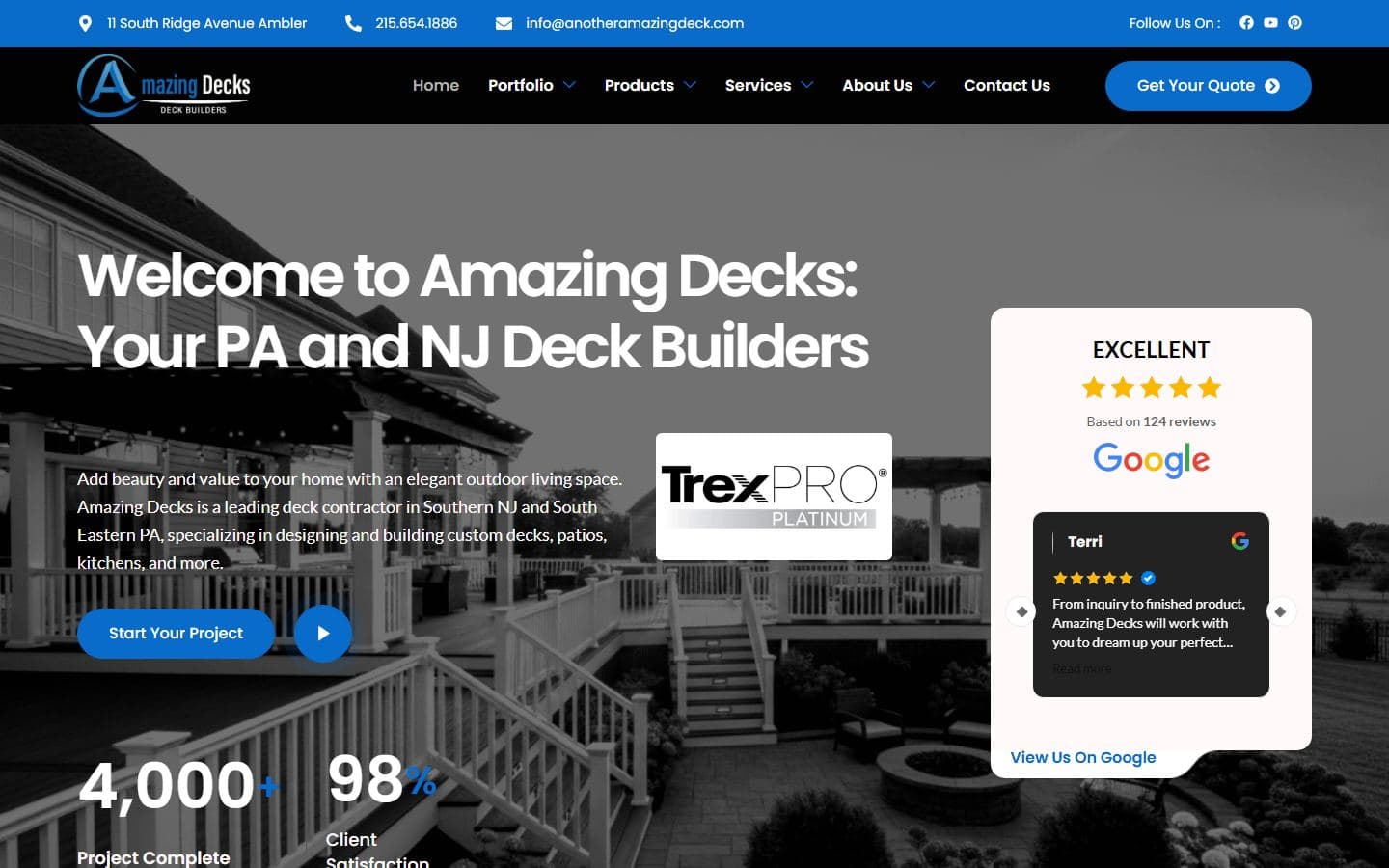
Service-area pages: publish where distinct customer information exists
A list of town names rarely answers a customer's local questions. Research how people describe the service and publish a separate page only where real coverage and distinct information justify it. A location page is not required for every query and does not guarantee eligibility or visibility.
A town page should add genuine project or coverage information and cite any local process it describes. When that evidence is unavailable, use a clear service-area overview instead of publishing name-swapped pages.
Publish a location page only when the business truly serves the area and can add distinct information such as operating details, authorized local projects, permit resources or a specific service pattern. A page does not make a business eligible for map visibility across its entire footprint.
Compare related local content and evidence considerations for outdoor-living services
See the hardscaping local SEO playbookOn-page SEO for deck builders: title tags, schema, and project galleries
On-page SEO is how you tell Google what each page is about and back up the relevance you're claiming. None of it is complicated; it's just consistently done. The fundamentals that move the needle for deck builders:
Use descriptive headings, accessible project photos and a working contact route. Any structured data should match visible facts and supported eligibility; it is not a substitute for useful content or a guaranteed ranking tool.
Keep business markup truthful and current. Do not promise Google review stars for self-serving business reviews or FAQ rich results for a contractor site. Use actual project stories and helpful navigation, and test mobile usability separately from ranking outcomes.
What local SEO costs for a deck builder
We publish our pricing openly because hiding it behind a 'book a call' button is exactly the kind of thing that makes contractors distrust agencies. Three packages, all month-to-month, no setup fees, cancel anytime. You can see the full breakdown on our pricing page, but here's the short version:
- Lead Launch, $1,500/mo: Paid acquisition for established businesses with capacity for more inquiries.
- Lead & Local Growth, $2,000/mo (Recommended): Paid leads alongside a custom website and ongoing local marketing assets you own.
- Local Authority, $3,500/mo: Expanded useful content and local coverage for businesses ready for a larger ongoing program.
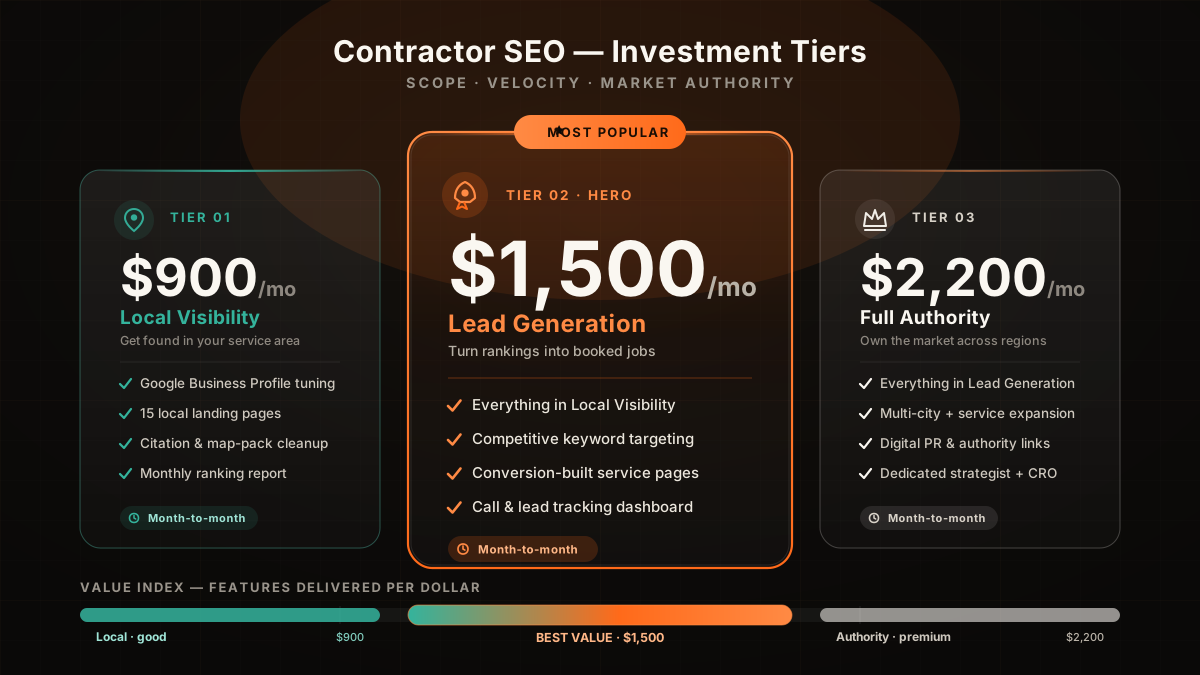
Compare the full marketing expense with contribution from completed work. Contract revenue is not profit, and one deck project does not automatically fund a year of service. Advertising is paid separately from the package fee.
Real results: what this looks like for actual deck companies
Our portfolio includes deck and outdoor-living websites. Review the published work for design and content context, and ask for any client-approved performance evidence before relying on a search or lead claim.
Our portfolio covers deck and outdoor-living projects, including an e-commerce lighting business. Compare the nature and measurement of the work before using any historical example to evaluate your own campaign.
Truscapes Deck Lighting is an e-commerce portfolio project, with different attribution and sales economics from a deck builder. Your written target should be based on your own market, qualification rules and budget rather than borrowed revenue multiples.
Review current public visibility, profile accuracy, evidence and the inquiry path for priority service areas.
Book a free discovery callThe bottom line
Deck customers may be comparing materials, builders, process and timing before requesting an estimate. Accurate business information, useful project evidence and clear inquiry paths help them evaluate fit. Measure qualified inquiries instead of promising a particular map position or lead source.
The work requires accurate inputs, regular maintenance and coordination with the people who know the projects and service area. A discovery call can establish the current baseline, capacity and first priorities.
Share priority services and towns so we can review current visibility, evidence and measurement needs.
Book a call with SF Web TechSources and further reading
- Google Search: SEO Starter Guide
Crawlable links, descriptive page information and content organization. Practical trade examples are SF Web Tech recommendations.
Source checked .
- Google Business Profile: local ranking guidance
Google’s broad relevance, distance and prominence guidance. No exact ranking weights or guaranteed service-area coverage are stated.
Source checked .
- Google Maps: prohibited and restricted content
Rules against fake engagement, incentives and selectively soliciting positive reviews.
Source checked .
- Google Search documentation updates: FAQ retirement
Google states FAQ rich results stopped appearing May 7, 2026; useful visible FAQs remain appropriate for readers.
Source checked .
- Google Search: review snippet guidelines
Restrictions on self-serving LocalBusiness and Organization review snippets.
Source checked .