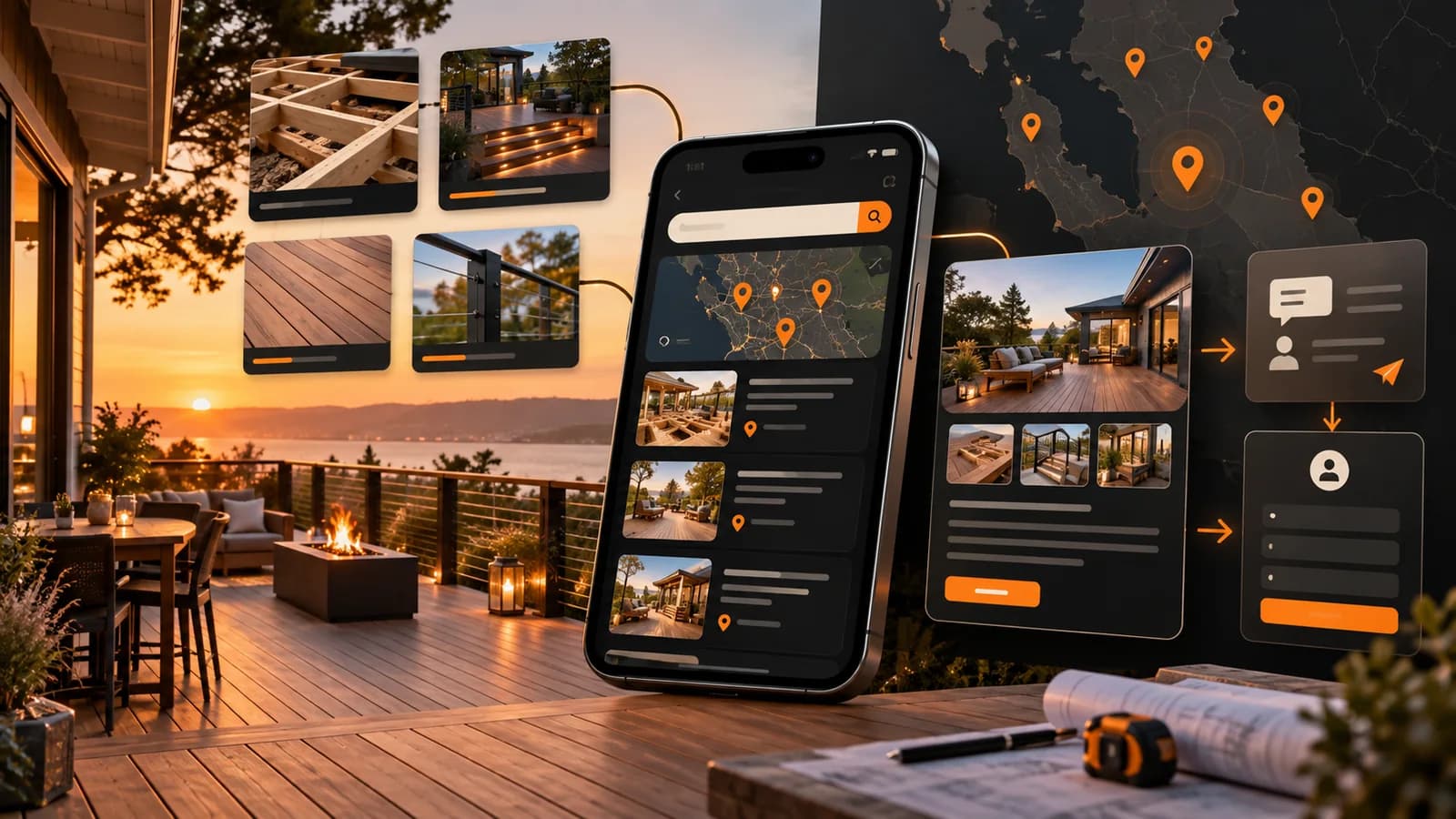
A completed patio can provide useful marketing evidence when the owner permits publication. Instead of leaving every image in an unorganized gallery, select projects that illustrate distinct materials, scope or site decisions and explain them clearly.
Hardscape projects can produce useful visual and local evidence when the company has permission to publish it. Connect finished-work photos with accurate project context, materials, conditions, and coverage so prospects can evaluate relevant experience.
Why the mega-gallery is a dead asset
A single gallery page cannot rank for anything specific because it is not about anything specific. Google reads a page and asks one question: what place, what service, what intent does this answer? A wall of 200 mixed photos answers none of that. It is a scrapbook, not a page with a job to do.
A nearby homeowner may search by service and place, browse galleries, follow a referral, or use another discovery path. Add accurate location context to permissioned projects when it helps a visitor understand relevance; do not invent project locations or predict search visibility from the location mention.
Use individual project pages for substantial stories and a well-organized gallery for simpler examples. Label the actual community, scope and materials. Neither a location in the title nor a separate page guarantees a ranking.
Your unfair neighborhood-portfolio advantage
This is the part that makes hardscaping different from every other trade, and it is the reason a generic local-SEO playbook leaves money on the table for you specifically.
A project story can document the contractor’s actual work and help a homeowner evaluate a similar job. Publish only information and photos you have permission to share. The asset can remain useful, but its future traffic and leads are not permanent or guaranteed.
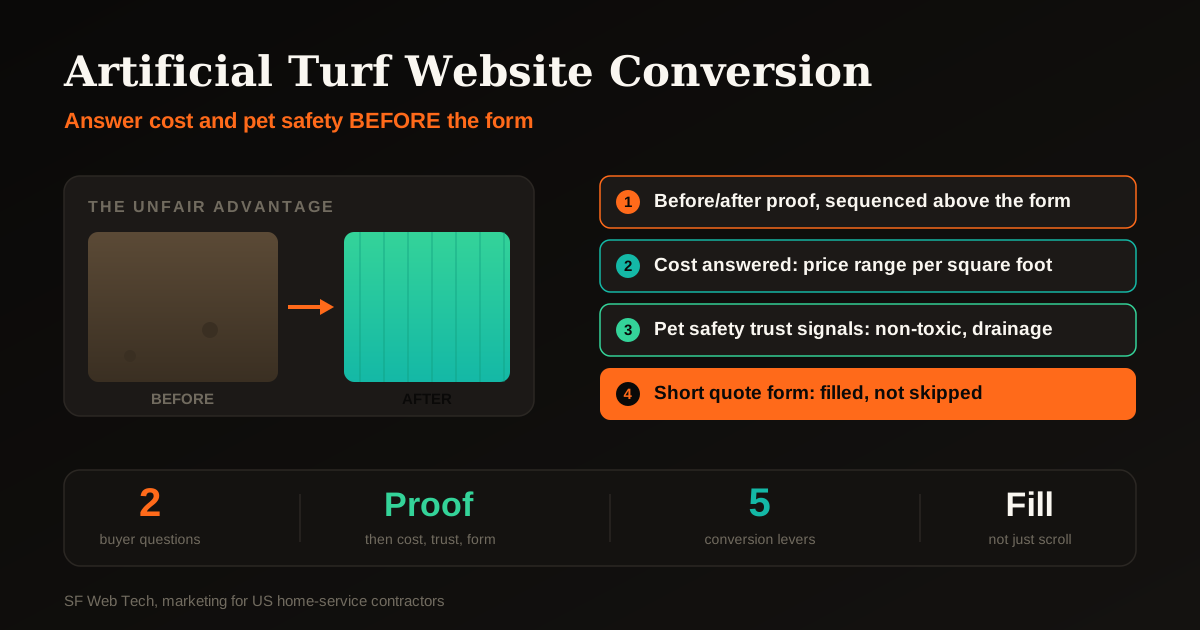
Permissioned before-and-after pairs can help customers evaluate a hardscaping project when both images show the same job and the caption explains the actual material, scope, and location context. Capture evidence at a cadence the team can sustain and test its contribution to qualified inquiries instead of claiming a universal conversion advantage.
Select a project, confirm publication permission, describe the real scope and materials, then link it to the relevant service page. Do not publish a customer’s exact address as an SEO tactic.
One job, one page: the anatomy
A useful project page gives enough context to understand the work. The following elements are editorial suggestions, not a guaranteed ranking recipe.
Use a descriptive title, authorized before-and-after photos, the actual scope and material decisions, and a relevant inquiry path. Write descriptive alt text for what an image shows. Include the community where useful and permitted; do not force place names into every image attribute or target a fixed word count.
How to name each page so it actually ranks
Write a specific title that accurately describes the page, service, and useful geographic context. Keep it distinct from other site titles, align it with the visible heading and content, and review Search Console impressions, queries, clicks, and page outcomes before deciding whether a rewrite is warranted.
- Service plus material: paver patio, flagstone walkway, segmental retaining wall, outdoor kitchen.
- The neighborhood, subdivision, or development name, not just the metro.
- Keep it human. A title a homeowner would say out loud beats a title stuffed for a robot.
A subdivision or community page may be useful when the contractor genuinely serves the area and can add permissioned project evidence, site constraints, material choices, and a distinct customer answer. Do not infer constant demand or exclusive search ownership from one project. Check actual queries and qualified inquiries before expanding the pattern.
The value of a project story is evidence of real work. Its location should help the reader understand service coverage without compromising the customer’s privacy.
Your Google Business Profile is the amplifier
Website project pages and a Google Business Profile serve different discovery paths. Keep profile information accurate and publish permissioned project media when it helps customers, then use Search Console, profile data, and reconciled leads to assess whether the activity contributes.
Add genuine project photos when useful and keep service information accurate. A fixed upload cadence is not a known ranking formula. Focus on clear evidence and useful captions rather than volume.
- Reuse an approved before-and-after pair on the relevant profile or page when it adds useful project context.
- Name the neighborhood only when accurate, useful and safe to publish; do not imply location text is a ranking mechanism.
- Invite authentic feedback from eligible customers through a consistent process that follows platform rules.
- Link to the project or service page when it is the most useful destination for that update.
The exact profile setup that feeds your project pages into the map pack.
See the full GBP playbook for contractorsThe compounding math
A maintained project library can continue helping prospects after publication, while paid distribution depends on ongoing spend. Create a separate project page when it adds distinct location, scope, material, constraint, or outcome information. Measure discovery and qualified inquiries instead of assuming each new page reinforces the rest.
A busy crew may have many jobs worth documenting, but not every job needs its own page. Publish a separate story when it contributes distinct information, and maintain a useful gallery for the rest.
Do this for a year and you do not have a website. You have a map of your service area, one proven job at a time, that a homeowner in any of those neighborhoods can find at the exact moment they are ready to spend. That is an asset a competitor cannot buy or copy. They would have to go build the patios.
The mistakes that kill it
A related portfolio discussion for landscape and outdoor-living businesses.
See how we did this for a landscaping clientRun an outdoor-structure trade next door to hardscaping? The same neighborhood-portfolio play works for fence companies, which build the other most photogenic, most identifiable outdoor asset in the yard. The suburb-named project page is the whole game there too.
Where to start
Turn selected completed work into helpful project evidence, then measure how visitors and sales conversations use it. Do not assume each finished job creates a second stream of monthly revenue.
Map permissioned finished-work evidence to genuine service areas and customer questions.
Book a call about your project-page strategyBuilt specifically for home-service and outdoor-living trades.
Explore our Local SEO service for contractorsSources and further reading
- Google Search: SEO Starter Guide
Crawlable links, descriptive page information and content organization. Practical trade examples are SF Web Tech recommendations.
Source checked .
- Google Business Profile: local ranking guidance
Google’s broad relevance, distance and prominence guidance. No exact ranking weights or guaranteed service-area coverage are stated.
Source checked .
- Google Maps: prohibited and restricted content
Rules against fake engagement, incentives and selectively soliciting positive reviews.
Source checked .