A homeowner types "artificial turf installer near me," lands on your site, and spends a minute scrolling a gorgeous gallery of green backyards. Then they leave. No call, no form, no quote. Your photos did their job. Your site did not.
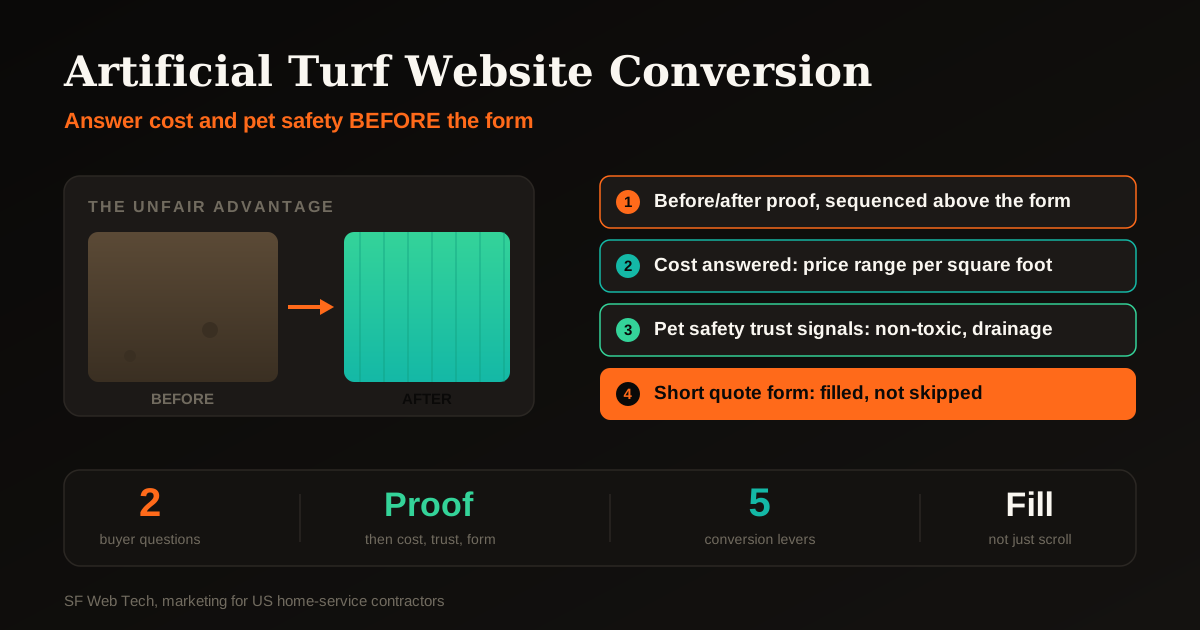
Turf buyers do not leave because your work looks bad. They leave because your site made them do the math alone. Two questions run through every turf shopper's head before they hand over their name: what does this cost per square foot, and is it safe for my dog and my kids. A portfolio gallery answers neither. A generic contact form answers neither. So the lead cools, opens three more tabs, and calls whoever answered those two questions first.
Your gallery is where the lead dies
Most turf installer sites are built like a photographer's portfolio. Hero photo, a wall of thumbnails, an "About Us" block, and a contact form bolted to the footer. It looks premium. It converts poorly, because a gallery is a browsing experience, not a buying path.
The shopper scrolls, admires, and then hits a wall of uncertainty. They have no idea whether their 800 square foot backyard is a 4,000 dollar job or a 12,000 dollar job. They do not know if the turf gets hot, drains after their dog uses it, or holds up to a Labrador. So they defer the decision, and a deferred decision is a lost lead. Traffic is not your problem. The gap between the gallery and the form is your problem.
The two questions every turf buyer asks
Before a turf buyer trusts you with their name and number, their brain needs two boxes checked. Check both above the form and your conversion rate climbs. Ignore either one and you are asking for a leap of faith most people will not take.
Notice what these two questions have in common: neither is answered by another beautiful photo. Photos sell the dream. Cost and safety close the gap between the dream and the form. You need both, in that order.
The five conversion levers
This is the playbook. Five levers, in order. Each one closes a specific gap between "nice photos" and "submitted quote." Pull all five and the same traffic you have today starts producing more artificial turf lead conversion.
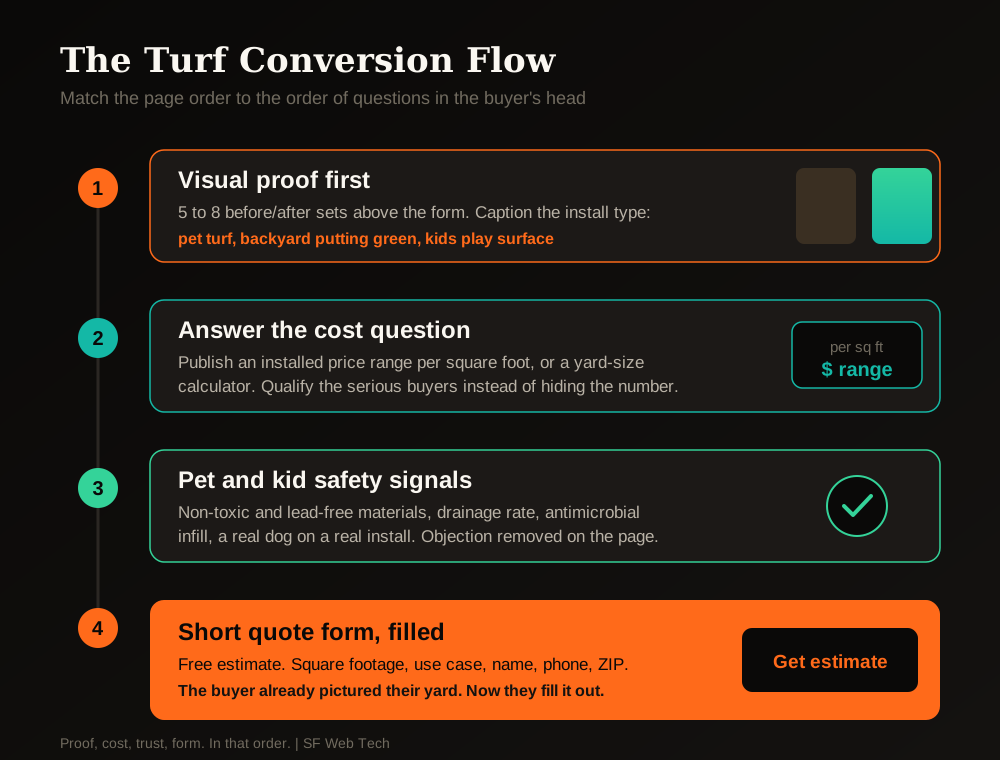
Lever two deserves a closer look, because most installers get it exactly wrong. They hide price because "every yard is different." True, but the buyer is not asking for a bid, they are asking whether you are in their universe. An installed range like "most projects land between X and Y per square foot" or a calculator that takes square footage and use case and returns a ballpark keeps the serious buyers and gently disqualifies the tire-kickers before they waste your time on a site visit.
Price-range calculators, before/after sequencing, and quote forms built to convert
See how we design converting turf sitesLever three, pet safety, is where turf installers leave the most money on the table. Pet turf conversion is its own market. A dog owner searching for a backyard solution is not comparing you to another turf company yet, they are still deciding whether artificial grass is even safe for their animal. Answer that on the page with specifics: your drainage rate, your antimicrobial infill, your lead-free certification, a photo of a real dog on a real install. You are not just selling turf, you are selling relief.
“The turf buyer has already pictured their own yard before they reach your form. Your job is to answer cost and safety fast enough that picturing it turns into filling it out.”
Rebuild the quote form
The form is where all the work either pays off or dies. Most turf sites run a generic five-field contact form that feels like a commitment. Reframe it as a free estimate, cut the fields to the essentials, and put it directly under your before/after proof. Compare the two approaches:
- Header: "Get your free turf estimate"
- Yard size in square feet (or a slider)
- Use case: pet turf, play area, putting green, landscape
- Name, phone, ZIP, that is it
- Sits directly below the before/after gallery
- Reassurance line: no obligation, no pressure
- Header: "Contact Us"
- No square footage field
- No use case, so no way to answer cost
- Name, email, phone, address, long message box
- Buried in the footer under everything
- Feels like signing up for a sales call
- Frame it as a free estimate, never "contact us"
- Ask for square footage so you can pre-qualify
- Ask for the use case so cost and safety messaging can follow
- Keep required fields to name, phone, and ZIP
- Place it right below the before/after proof, not the footer
- Add a one-line no-pressure reassurance under the button
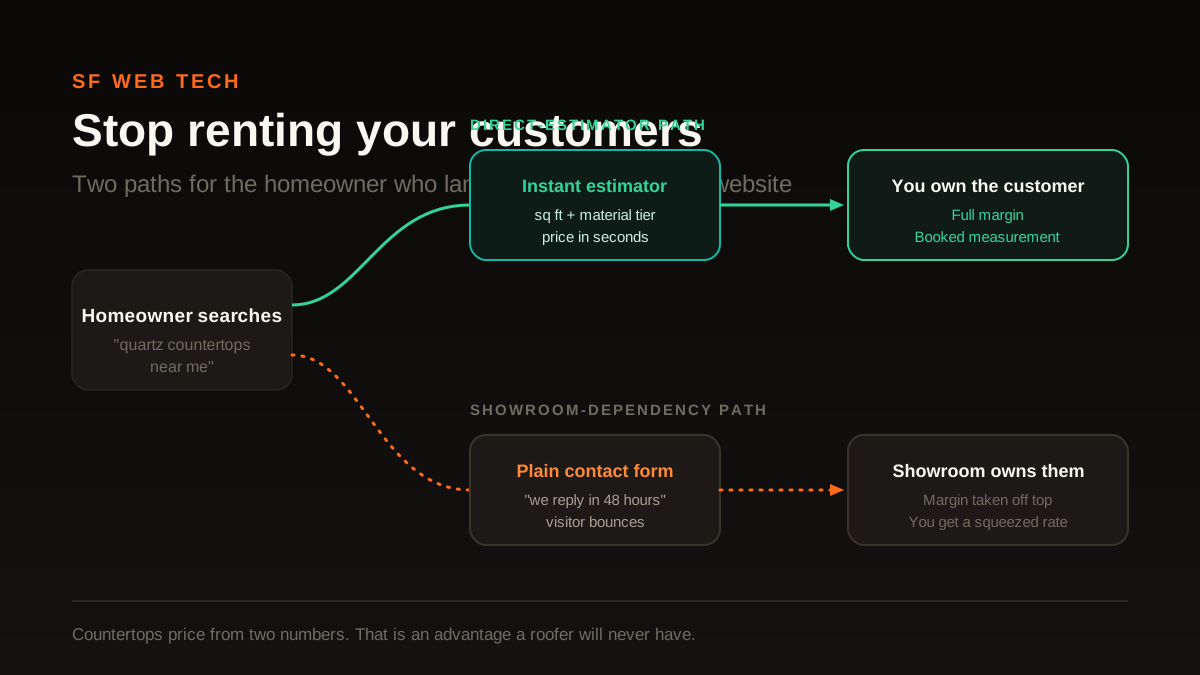
The same proof-then-price sequence, applied to another high-visual trade
Read the countertop conversion breakdownWhat good looks like
A converting turf site is not more clever than a losing one, it is more honest and better sequenced. Proof, then cost, then trust, then a short form. That order matches the exact order of questions in the buyer's head, so the page feels like it is reading their mind instead of stonewalling them.
Pull the five levers and you stop paying for traffic that bounces at the gallery. The photos finally close instead of just impressing. If your synthetic grass website leads have flatlined while your work has never looked better, the problem is almost never the traffic. It is the silence between the gallery and the form.
We will show you exactly where your turf site leaks leads and how to fix it
Get a free turf website conversion reviewLocal SEO, Google Ads, and websites that turn turf traffic into booked estimates
Marketing built for home-service contractorsSources and further reading
- Google Search: SEO Starter Guide
Crawlable links, descriptive page information and content organization. Practical trade examples are SF Web Tech recommendations.
Source checked .
- Google Search: creating helpful content
People-first writing, useful original information and the absence of a preferred word count. Does not substantiate a client result.
Source checked .