Google Ads can contribute qualified HVAC system replacement and heat pump install opportunities when the campaign separates that work from general service demand. A blended campaign mixes replacement searches with tune-up requests, small repairs, no-cool emergencies, job seekers, DIY research, and out-of-area calls. Compare accepted estimates and installed systems by search theme before you judge the lead total.
The answer is not simply bidding more. Separate replacement and install work from the rest of the HVAC account, match each search to an appropriate page, define what makes an inquiry qualified, and send real sales outcomes back into reporting. That structure makes service mix and budget tradeoffs easier to evaluate. If you want the broader account view first, the HVAC Google Ads playbook covers how repair, maintenance, and replacement lanes fit together; this guide focuses on the high-ticket replacement lane.
Why replacement campaigns need their own structure
HVAC demand spans very different customer problems. Someone searching for an AC that stopped cooling may need a service call, a small repair, or a refrigerant check. Someone searching for a new furnace, heat pump installation, or full system replacement is further into a specific, high-ticket buying process. Those searches should not share one undifferentiated budget, ad, and landing page.
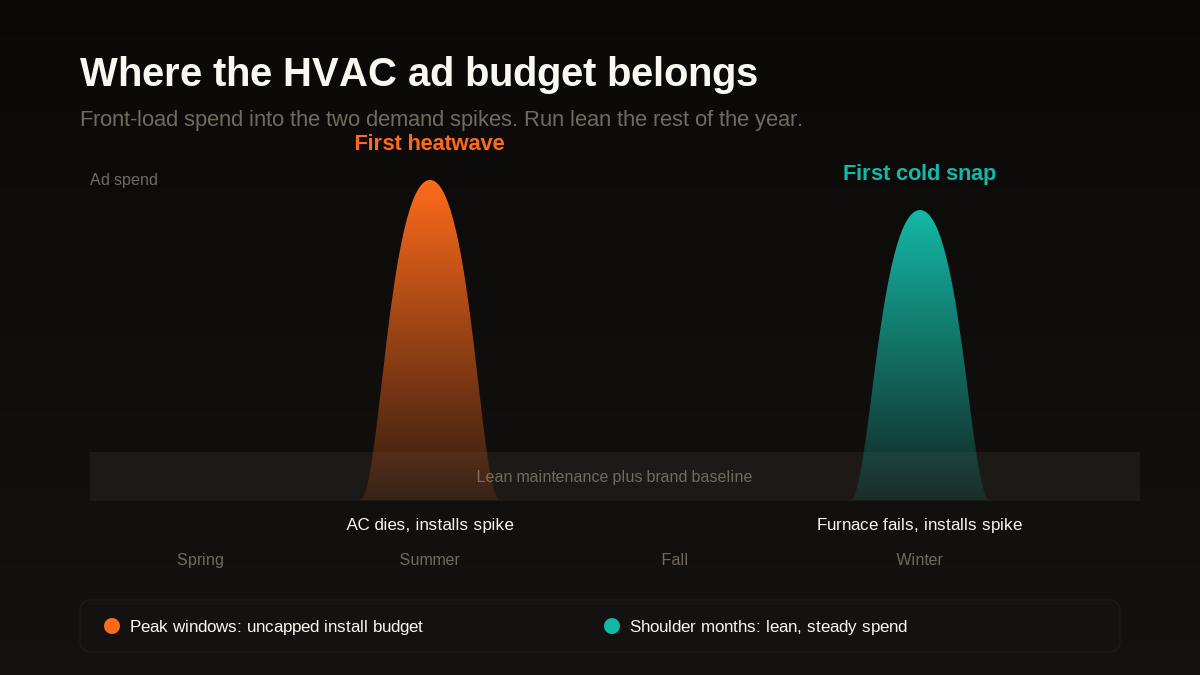
A separate structure lets you assign budget to the work you want, write accurate ad copy, show relevant proof, and judge results against the economics of a replacement job. It also reduces the risk that a busy emergency campaign consumes a disproportionate share of budget before planned replacement searches occur. Google describes Search campaigns as a way to show ads near search results when a person's terms relate to your keywords. Account structure determines whether that match reaches a relevant customer path or a generic homepage.
- Every service competes for one budget
- Generic heating and cooling ads
- Homepage used for every search
- All calls counted as equal leads
- Service mix controlled by search volume
- Budget protected for install intent
- Ads name the replacement or heat pump
- Dedicated replacement landing page
- Qualified estimates tracked separately
- Service mix controlled by the contractor
Build paid search around profitable installs, qualified calls, and traceable booked work.
See how contractor Google Ads management worksMap keywords to the homeowner's real trigger
Start with a compact keyword map based on the actual install services, customer language, and search-term evidence. Keep furnace, air conditioner, and heat pump replacement searches together only when the same crew, qualification rules, and landing page can handle them; split them when the sales path or economics differs materially.
- Direct replacement intent: furnace replacement, replace air conditioner, new HVAC system, and system replacement cost
- Heat pump intent: heat pump installation, heat pump replacement, ductless mini split install, and heat pump vs furnace
- Trigger intent: AC keeps breaking down, old furnace replacement, HVAC not keeping up, and high energy bill upgrade
- Project-triggered intent: new system for an addition, HVAC for a remodel, and right-sizing after insulation work
- Local intent: each qualified theme paired with the cities or service areas the company actually covers
Electrification is one of the strongest replacement triggers, and it rarely arrives alone. Homeowners moving to a heat pump often weigh it alongside rooftop solar, an upgraded panel, and other efficiency work, so partnering with adjacent trades can surface ready buyers. A solar installer website can present that connected path, and a careful keyword map keeps your ads focused on the HVAC install rather than the whole electrification project.
Do not assume that a keyword controls every search that can trigger it. Google's keyword matching documentation says match types determine how closely a keyword must relate to a query. It also says broad match can reach related searches that do not contain the direct meaning of the keyword, while exact match narrows eligibility. That flexibility can find useful demand, but it can also expose a small local account to irrelevant intent before conversion data is trustworthy.
Build a negative keyword system before launch
Negative keywords protect the replacement lane from searches the company cannot turn into install work. They should be based on actual business boundaries, not copied blindly from another contractor. A company that also runs a service department will handle repair language differently from one that reserves this campaign for planned installs. A firm that installs heat pumps should not block every heat pump term, but it may still need to block DIY and parts-shopping searches.
- Employment and training: jobs, salary, apprenticeship, school, course, certification, and exam
- DIY and information: how to, diagram, wiring diagram, manual, tutorial, YouTube, and do it yourself
- Parts shopping: used condenser, replacement capacitor, blower motor for sale, wholesale, and supply house
- Tune-up and low-ticket service: furnace cleaning, filter change, recharge, and seasonal tune-up when reserved for the service campaign
- Wrong geography: cities, counties, or states outside the real dispatch area
- Wrong customer type: commercial rooftop, industrial, property-management maintenance contracts, or new-construction bids when those segments are not accepted
- Low-fit requests: free system giveaways, rebate-only research with no install intent, and warranty-only part lookups
Treat the negative list as an operating document. Review search terms on a consistent schedule, classify waste by reason, and share recurring patterns with dispatch and sales. A term is not bad merely because it did not close once. Block it when the underlying intent is outside the offer, outside the geography, or repeatedly unqualified.
Write ads that qualify before the click
The ad should confirm the service and reduce ambiguity. Name system replacement, heat pump installation, or new equipment directly. State the genuine service area. Mention residential focus accurately. If the company provides an in-home assessment before quoting, say that instead of promising an instant price. If permits, load calculations, or utility rebates are part of the normal process, explain that on the page rather than making a blanket promise in the ad.
Avoid writing ads that try to attract everyone. Phrases such as all HVAC services can increase clicks while weakening fit. The goal is not the highest click-through rate in isolation. The goal is enough qualified homeowners moving from search to assessment to an accepted install at a sustainable acquisition cost.
Send traffic to a replacement-specific landing page
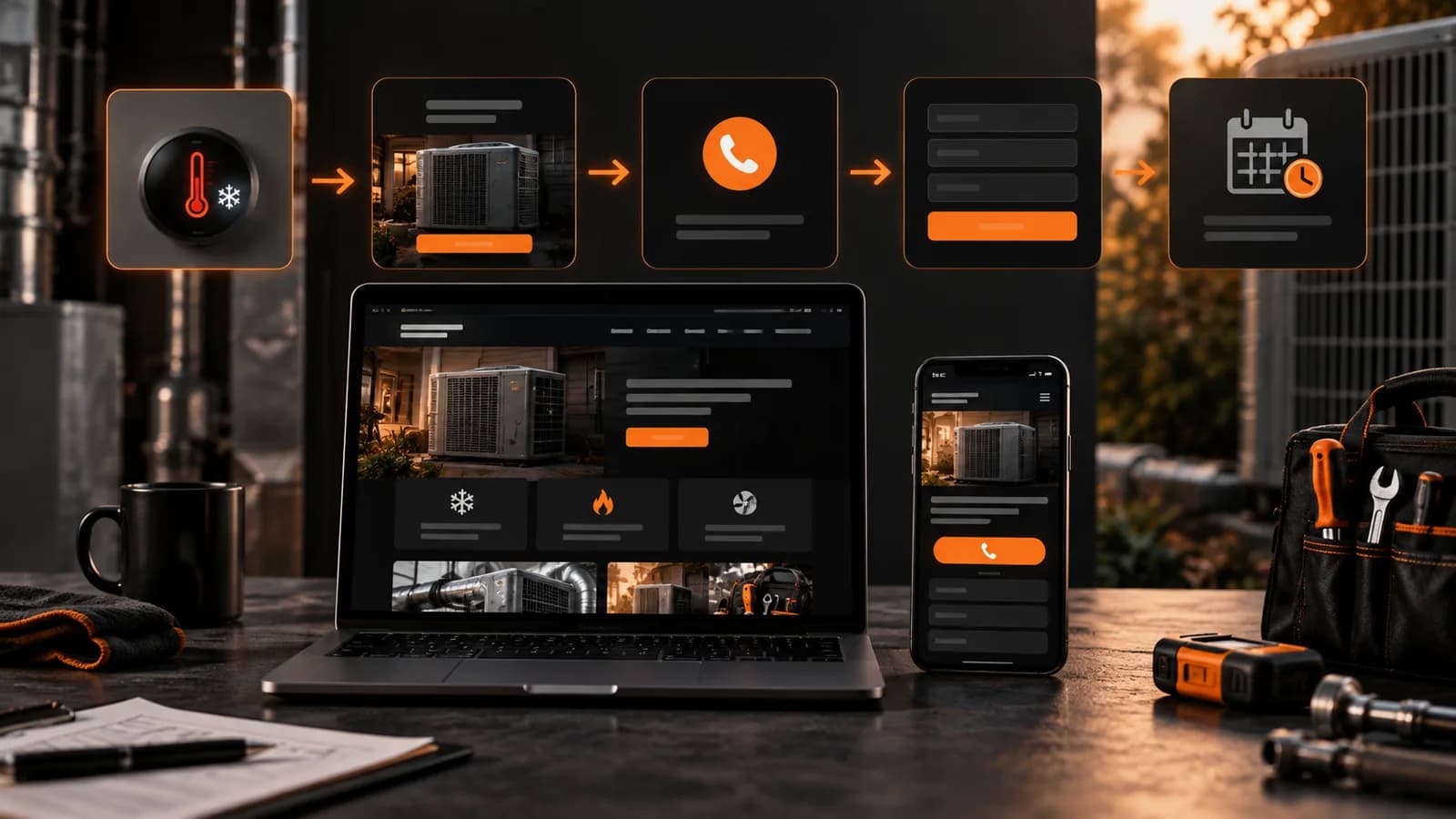
A homeowner researching a new system should not have to hunt through a general services menu. The landing page needs to answer the immediate questions: whether the contractor installs the equipment in question, where the company works, what situations usually trigger a replacement, what the process looks like, and how to request the next step.
- A clear headline that matches system replacement or heat pump install intent
- A short explanation of when replacement may be appropriate, without diagnosing a home from a web form
- Real photos of completed installs and equipment work, labeled accurately
- License, insurance, review, manufacturer, and warranty proof that can be substantiated
- A process covering assessment, load sizing, options, scheduling, permits or rebate steps where applicable, installation, and closeout
- Service-area boundaries that match campaign targeting
- A mobile call option and a short form that captures project location, equipment age or problem, timeline, and preferred contact method
- A safety note directing urgent no-heat or no-cool emergencies to the appropriate service line rather than the install path

Use service-specific proof, clear qualification, and traceable calls to turn HVAC traffic into better opportunities.
Fix the website path behind your adsTarget only places the company can serve well
Campaign geography should match crew availability, travel time, licensing, utility and rebate territory familiarity, and the value of the work. A large radius can look like growth while producing missed calls, long drive times, and estimates the company does not want. Build around accepted cities, ZIP codes, or practical clusters, then compare qualified and installed outcomes by area.
Google's location targeting documentation explains that targeting can be based on geographic areas and location intent, and it warns that location targeting is not perfectly exact. That makes lead-level geography checks essential. Record the actual project address or service ZIP in the CRM and compare it with the campaign's location reports. Exclude persistent out-of-area demand rather than assuming the platform setting catches every case.
Track the full path from call to installed system
A form submission is not the business outcome. Replacement campaigns need stages that reflect how the contractor sells: new inquiry, service-area fit, replacement project fit, assessment scheduled, assessment completed, estimate delivered, accepted install, and completed work. Keep disqualification reasons visible so the marketing team can tell the difference between poor targeting, missed calls, price objections, and production constraints.
Google's offline conversion guidance explains that an ad may start a path that later becomes a sale over the phone or offline, and that importing later outcomes connects those events to the original ad interaction. Google currently recommends enhanced conversions for leads for advertisers starting offline measurement. For an HVAC contractor, the useful feedback event is a consistently defined qualified or accepted opportunity, handled with appropriate consent and privacy controls, not a button click that happened before anyone verified the project.
- Track unique callers and forms without counting duplicates as separate prospects
- Record service area, equipment type, requested work, timeline, and disqualification reason
- Use call recordings or call summaries only where lawful and disclosed
- Separate scheduled assessments from completed assessments
- Tie estimates and accepted installs back to the original campaign and search theme
- Assign conversion values from real business rules rather than invented platform numbers
- Audit CRM stages so sales staff use the same definitions
Set budget from capacity and job economics
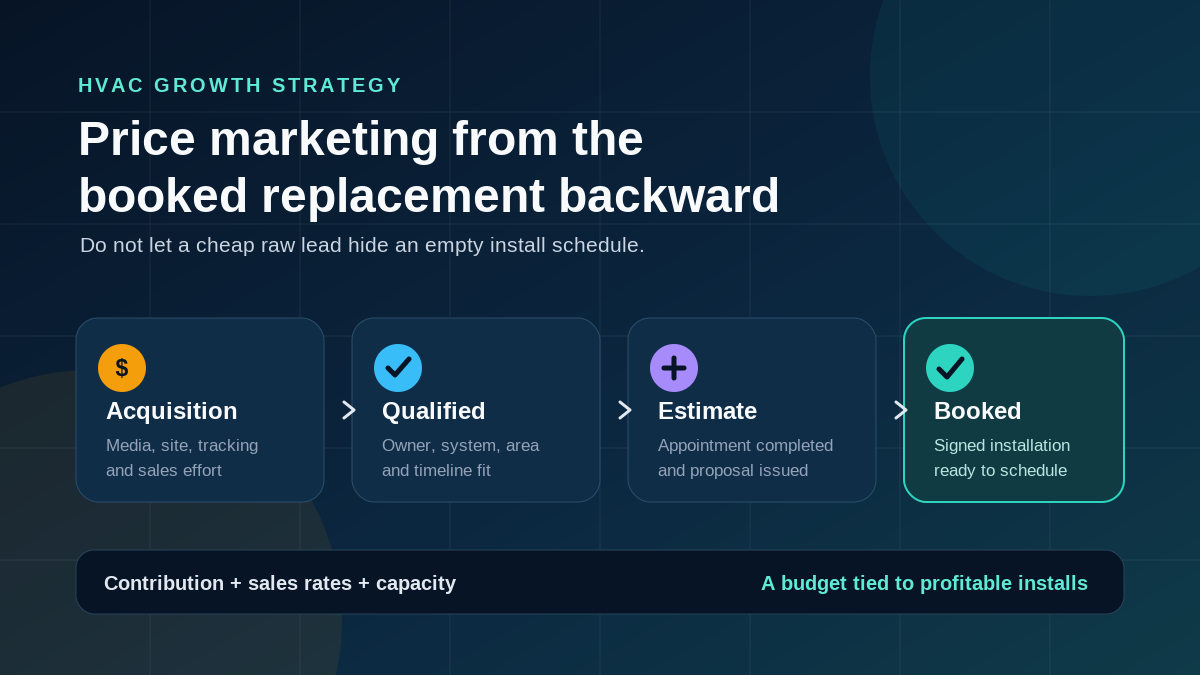
There is no universal monthly budget or cost-per-lead target for system replacement. Start with the gross profit the company expects from the actual equipment mix, the share available for acquisition, the observed rate from qualified assessment to accepted install, and the number of additional systems crews can install. That produces a defensible ceiling for cost per installed system. The cost per booked HVAC replacement guide walks through that math.
Keep media, management and any agreed additional costs separate so you can see the full acquisition expense. The Founding Partner Program is one offer: month one free, then $1,997/month all in from month two, bundling paid acquisition, a custom website and ongoing local marketing. Google Ads spend is separate, at least $1,500 a month paid to Google. The first 90 days of paid service are the commitment, then it is month to month with 30 days' notice.
Compare the month-to-month offer and see what is included before setting the total acquisition budget.
Review SF Web Tech pricingUse a practical launch and optimization sequence
- Define the accepted install, service area, minimum fit, sales stages, and capacity.
- Build a dedicated landing page with verified proof and a clear assessment path.
- Create focused keyword themes and a business-specific negative keyword list.
- Write ads that name the work, geography, and honest next step.
- Configure call, form, and CRM tracking before buying traffic.
- Launch with controlled targeting and enough budget to evaluate meaningful demand.
- Review search terms, calls, forms, qualification reasons, and installed outcomes together.
- Expand match types, geography, or project triggers only after the data supports it.
Use search terms, call review where appropriately disclosed, and CRM outcomes together. A query may reveal new language, an intake record may expose confusion, and sales outcomes may show differences by market or project trigger. Require enough evidence before excluding or expanding a keyword.
The standard is better installs, not more leads
A system replacement campaign succeeds when it helps the company choose more suitable, profitable work. That requires service-specific structure, deliberate query control, accurate geography, a landing page that qualifies, and reporting that reaches the installed system. Without those pieces, Google Ads will still generate activity, but the platform cannot know which activity keeps the right crews installing.
Build the campaign around the operating decision you actually care about: how many qualified assessments became accepted installs, at what full acquisition cost, in which service areas, and with what effect on capacity. Once that foundation is trustworthy, budget and automation can support growth instead of hiding waste.
Book a discovery call to map the offer, service area, landing page, tracking, and installed-system target.
Plan an HVAC replacement lead campaignSources and further reading
- Google Search: SEO Starter Guide
Crawlable links, descriptive page information and content organization. Practical trade examples are SF Web Tech recommendations.
Source checked .
- Google Ads: keyword matching options
How keyword match types relate to search intent; account strategy and examples are editorial recommendations.
Source checked .
- Google Ads: negative keywords
Negative keyword behavior and exclusions. The suggested service exclusions require account-specific review.
Source checked .
- Google Ads: advanced location options
Presence and interest settings and the limits of geographic targeting accuracy.
Source checked .
- Google Ads: average daily budgets
Platform budget and spending mechanics, not a trade-specific CPC or lead-cost forecast.
Source checked .