It is 98 degrees on the first real heatwave of the summer. Half the homes in your service area just discovered their AC is dead, and every one of those owners is typing 'AC repair near me' into their phone right now. This two-week window is the single most profitable stretch of your advertising year. If your Google Ads budget is spread evenly across all twelve months, you are asleep during the only weeks that truly pay.
HVAC is one of the most expensive niches in the trades to advertise in. The clicks cost a fortune because the jobs are huge: a dead compressor in July turns into a full system replacement worth thousands. That math is what makes the seasonal spike so brutal and so lucrative at once. Everyone in your market is bidding for the same desperate homeowner in the same fortnight.
Separate repair, replacement and maintenance economics. Use actual qualified inquiries, close rates and job contribution to judge the budget; there is no universal HVAC CPC, lead cost or installation value.
Why HVAC clicks cost more than almost any other trade
Cost per click tracks the value of the job behind it. A dog groomer bids pennies. An HVAC contractor bids hard because a single search can turn into a five-figure install. Google knows this, your competitors know this, and the auction prices it in. Peak-season HVAC clicks sit at the top of the home-services range, and in dense metros they climb well past it.
There is a second reason the auction gets vicious: demand is spiky, not steady. Most trades get a fairly even flow of searches all year. HVAC gets a flat trickle for eight or nine months, then a wall of demand the moment the weather breaks. Everyone floods in at once, bids jump, and the contractors who prepared their budgets clean up while the rest get priced out.
The seasonal spike is the entire strategy
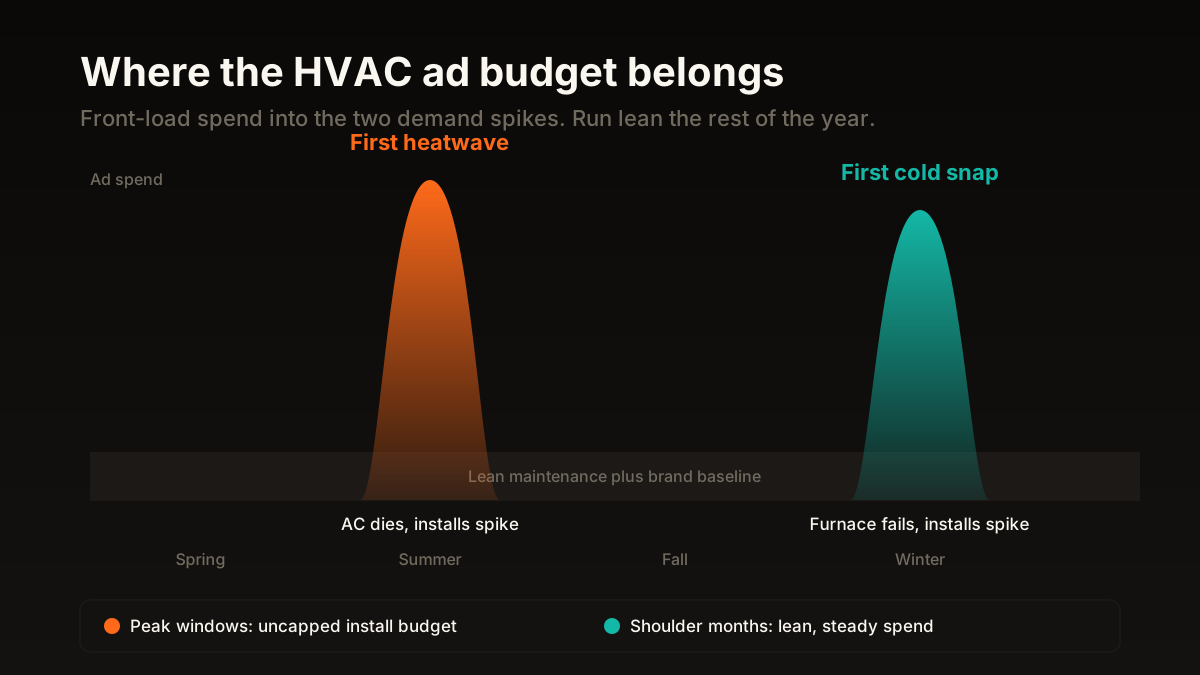
Here is the differentiator that separates HVAC from every other trade you have read Google Ads advice for. No other contractor niche has demand this predictable and this volatile at the same time. Roofing spikes after storms, but you cannot forecast a hailstorm. You can forecast summer. You can forecast winter. HVAC demand multiplies several times over during two or three short windows a year, and those windows land at the same time every year.
So stop pacing your budget evenly. Front-load it. Smart HVAC contractors push the majority of their annual ad spend into the peak windows, when a homeowner with a dead system will book the first company that answers. The clicks cost more in those weeks, but conversion rates climb with them, and the jobs are the big installs. The mild spring and fall months are for maintenance and brand, not for burning install budget.
Seasonal budget pacing built around your local heat and cold cycles.
See how we run HVAC Google AdsSplit maintenance from installs into separate campaigns
A maintenance inquiry and a replacement inquiry may need different budgets and pages. Use the business’s service mix and tracking volume to decide how far to split campaigns. Keep low-priced promotional services accurate and do not assume every maintenance customer is commercially unsuitable.
- Keywords: AC replacement, new furnace, system installation, HVAC upgrade
- High intent, high ticket, thousands per job
- Uncapped budget during peak windows
- Landing page sells financing, warranties, free in-home estimate
- Where your real ad money should go
- Keywords: AC tune-up, furnace maintenance, filter change, seasonal service
- Low ticket, recurring, books the calendar in slow months
- Small, steady budget all year
- Landing page sells a service plan or membership
- Never let these clicks eat install budget
Separate campaigns mean separate budgets, separate bids, and separate landing pages. The install campaign gets the aggressive peak-season spend. The maintenance campaign runs lean and steady, filling your calendar in the shoulder months and feeding your service-plan list. Keeping them apart is the only way to know which side of your business your money is actually buying.
The same split logic, applied to a trade with the same two-speed demand.
Read the plumber emergency vs routine playbookKill the wasted clicks with a negative keyword list
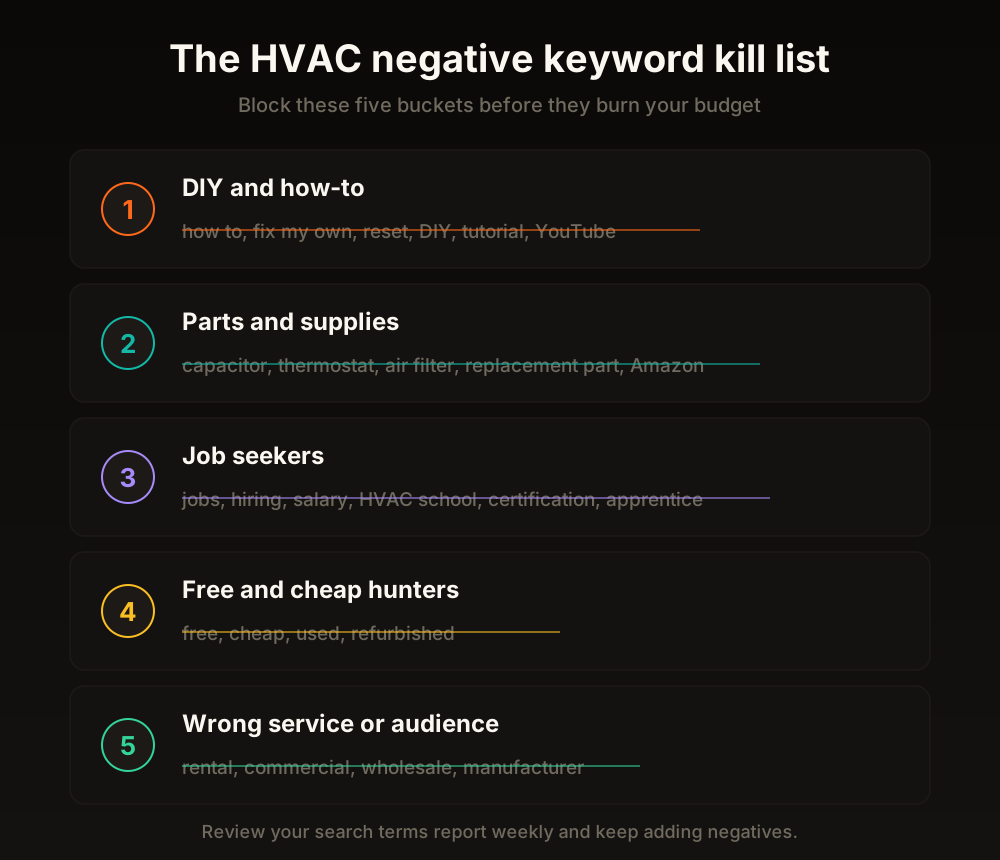
At HVAC click prices, one wrong click hurts. The homeowner Googling how to reset their own thermostat is not your customer, but without negatives, Google will happily charge you to show them your ad. A tight negative keyword list is not optional at these prices; it is the difference between a profitable account and a leaking one. Build it on day one and add to it every week from your search terms report.
- DIY intent: 'how to', 'fix my own', 'reset', 'DIY', 'tutorial', 'YouTube'
- Parts and supplies: 'capacitor', 'thermostat', 'air filter', 'replacement part', 'Amazon'
- Job seekers: 'jobs', 'hiring', 'salary', 'HVAC school', 'certification', 'apprentice'
- Free and cheap hunters: 'free', 'cheap', 'used', 'refurbished'
- Wrong service or wrong audience: 'rental', 'commercial' if you only do residential, 'wholesale', 'manufacturer'
Do not ignore Local Services Ads
Evaluate LSA where the business and service are eligible. Its billing and qualification rules differ from Search and from your sales criteria. Check current verification and charge-review requirements; a billed contact is not automatically a qualified replacement opportunity.
Run Local Services Ads alongside your search campaigns, not instead of them. The badge builds trust with a homeowner staring at a dead system, and the per-lead billing gives you a second, more predictable cost line. During peak windows, both channels fight for the same searcher, so make sure your response time is fast: LSAs reward the contractors who actually answer the phone.
Paying peak-season prices only works if your landing page turns clicks into calls.
Make sure your site converts the clickSend the click to a page built to convert, not your homepage
Send the visitor to information matching the advertised service, with actual coverage, current availability and a clear inquiry path. Show only badges and financing terms the business is authorized to use. Same-day availability should appear only when it can be supported.
“The contractor who answers on the second ring during a heatwave wins the job. Your ads only get the phone to ring. Speed and a page built for one decision close it.”
Your seasonal Google Ads playbook
Here is the whole strategy in order. Set it up before the season turns, because the worst time to build a campaign is the day the heatwave hits and your competitors are already live.
Separate services where useful, agree the budget and test conversion tracking. Review search terms and locations, then qualify inquiries against actual scope and capacity. Seasonal spending changes should follow evidence and approval; check LSA eligibility before including it in the plan.
Report branded and non-branded inquiries separately where attribution allows. Branded traffic may include existing customers, so it should not automatically count as new acquisition. Use your own account data instead of a universal branded-versus-generic cost benchmark.
Which one to lead with, and when to run both.
Compare contractor SEO vs Google AdsWe build seasonal HVAC Google Ads accounts that pay for the year in two windows.
Book a call with SF Web TechSources and further reading
- Google Search: SEO Starter Guide
Crawlable links, descriptive page information and content organization. Practical trade examples are SF Web Tech recommendations.
Source checked .
- Google Ads: keyword matching options
How keyword match types relate to search intent; account strategy and examples are editorial recommendations.
Source checked .
- Google Ads: negative keywords
Negative keyword behavior and exclusions. The suggested service exclusions require account-specific review.
Source checked .
- Google Ads: advanced location options
Presence and interest settings and the limits of geographic targeting accuracy.
Source checked .
- Google Ads: average daily budgets
Platform budget and spending mechanics, not a trade-specific CPC or lead-cost forecast.
Source checked .
- Google Local Services Ads: getting started
Eligibility, lead handling and verification. Platform lead-billing criteria differ from a contractor’s sales qualification.
Source checked .
- Google Local Services Ads: Google Verified badge
Current badging and discontinuation of the former Google Money Back Guarantee.
Source checked .
