Most roofers who are unhappy with Google Ads do not have a lead-volume problem. The leads arrive. Too many of them are simply the wrong leads: an out-of-area homeowner, a job seeker, a tire-kicker chasing a free estimate, or a storm chaser's duplicate of a lead you already paid for. Judge the account on form fills and it looks busy; judge it on booked roofs and it looks broken. The fix is to build around lead quality, not lead count.
A roofing search can mean an active leak that needs an inspection this week, a homeowner comparing contractors for a full replacement, or someone far from your crews who will never be serviceable. Those are different buyers, and a generic campaign pays the same premium price for all of them. Decide what a qualified roofing lead actually is, then build every setting to favor it and filter the rest.
Why lead quality, not lead volume, is the real problem
Click cost and competition for roofing vary by market, season and account quality, and a storm only raises the stakes. If your reporting rewards whatever produces the most leads, you keep funding the cheapest clicks, which are usually the least serviceable. Lead quality flips the goal: fewer, better-matched inquiries your crews can actually turn into signed roofs.
Use your own account's numbers to set expectations. Track billed clicks, calls, qualified estimates and booked jobs with consistent definitions, and let that reconciled path tell you which campaigns and areas earn their spend. An unattributed industry cost-per-lead figure is not a forecast, and optimizing toward it can hide the waste you are trying to remove.
A bad lead is a mismatch, not a lost sale
A homeowner who gets an honest quote and picks another roofer is not a bad lead; that is normal competition. A bad lead is one your business could never serve or convert. Separating the two keeps you from gutting campaigns that work and points you at the settings that leak money. Most junk falls into four buckets.
- Wrong service: searches for roof cleaning, gutter guards, DIY patching or materials when you sell replacements and storm work.
- Wrong area: callers outside your real service radius or in a neighboring metro a closer roofer will reach first.
- Wrong budget: price-only shoppers hunting the cheapest patch who filter out the moment a real inspection is proposed.
- Wrong intent: job seekers, suppliers, insurance-process researchers and comparison tools that will never book an inspection.
None of those are the homeowner's fault. They are signals. Each bucket maps to a lever: a negative keyword, a tighter location setting, a qualifying form field or a clearer offer. Work the levers rather than pausing the campaign and assuming Google is the problem.
Trust signals that separate you from storm chasers and fake listings
The homeowner reading your ad has usually been burned or warned about roofing scams, so the one thing they scan for is whether you are legitimate and local. Generic copy blends you in with the storm chasers and fake listings. Details that signal real verification, a physical service area, licensing and genuine reviews separate you from them in the line the customer actually reads.

Check the current Local Services Ads verification and badge requirements before you lean on them. Google has consolidated its trust badging into a single Verified badge for eligible profiles and discontinued the former money-back guarantee, so confirm what your profile is entitled to display. Show only credentials and badges you can substantiate, keep your service area and hours accurate, and request honest reviews without incentives or selective wording.
Verified setup, call tracking and negative lists built for lead quality from day one.
See how we run Google Ads for home-service prosLocal Services Ads: dispute the junk and train the matching
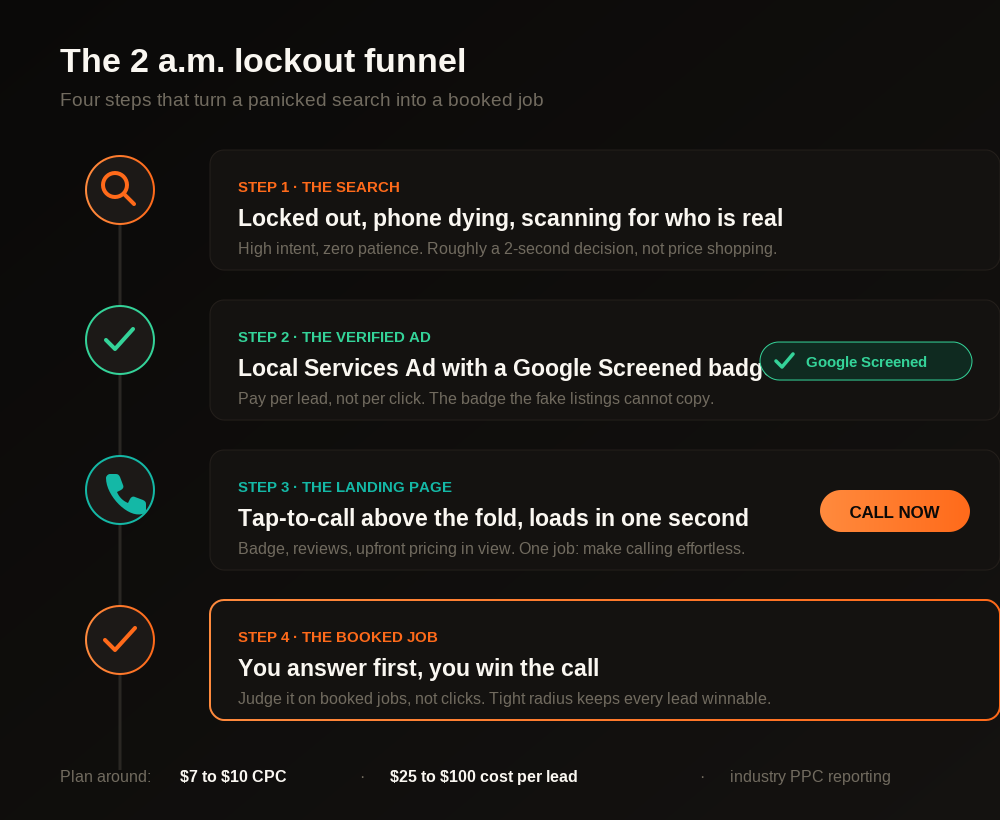
Local Services Ads change the math in a roofer's favor because you pay per lead rather than per click, and you can dispute leads that were spam, out of area, for a service you do not offer, or clear duplicates (Google Local Services Ads documentation). For a trade flooded with junk traffic, paying only for contacts and challenging the bad ones is a structural advantage over a pay-per-click campaign that bills every wasted click.
Treat disputes as training, not refund-chasing. Review leads promptly, document why each one failed, and submit them through the current platform process. Honest, well-documented feedback helps the system match you to better inquiries over time. Remember that a lead the platform considers billable is not automatically one your sales process would qualify.
- Dispute spam and sales solicitations that are not homeowners seeking roofing work.
- Dispute out-of-area contacts from outside your real service radius.
- Dispute requests for services you do not offer, so the profile stops matching them.
- Dispute clear duplicates of a lead you already received and paid for.
- Document each reason within the platform window and review quality on a regular cadence.
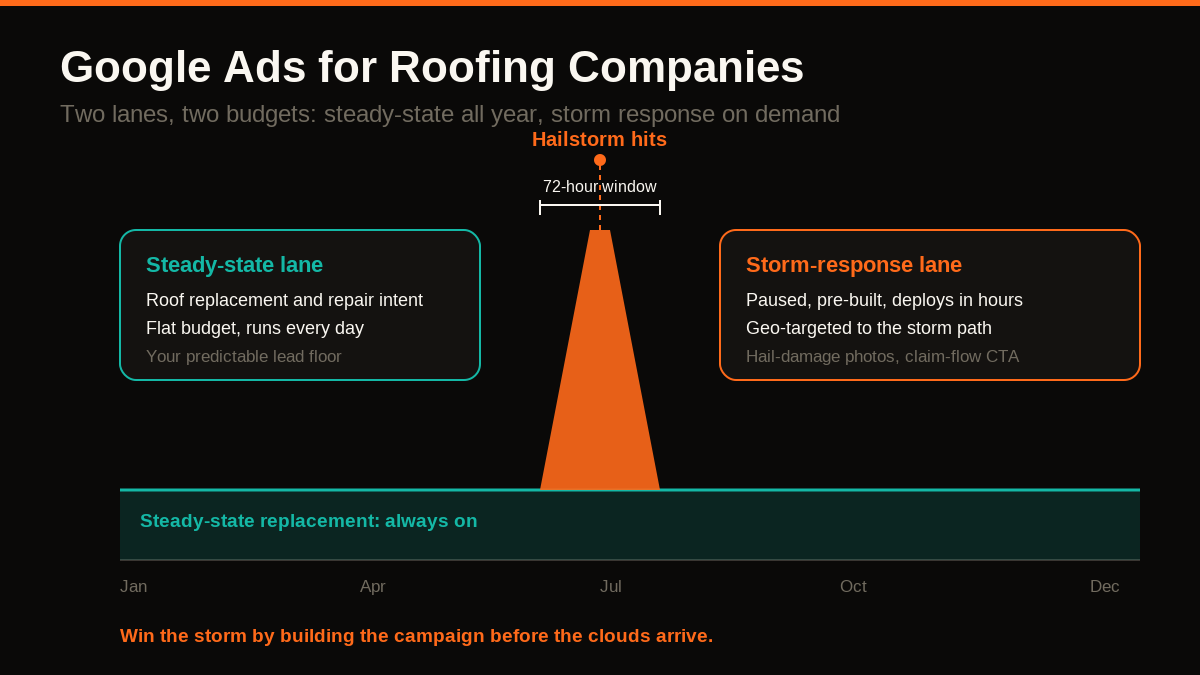
Where each channel earns its place on the roofing page, and how the two split a budget.
Compare Local Services Ads and Search for roofersNegative keywords that strip wrong-service and wrong-intent searches
On the Search side, loose keywords are where quality quietly leaks. Roofing terms match a river of queries that will never book a replacement, and each one costs you a premium click. Build the negative list before you scale, review the search-terms report regularly, and keep adding to it. Phrase and exact match give you more control than broad match alone.
- DIY and price-only searches: how to patch a roof, roof repair tape, cheapest roof, free roof.
- Jobs and careers: roofing jobs, roofer salary, roofing apprenticeship, hiring.
- Materials and suppliers: shingle prices, roofing supply, wholesale, distributor.
- Wrong services you do not sell: roof cleaning, moss removal, gutter guards, solar.
- Research and tools: roof cost calculator, insurance claim guide, roofing templates.
Geographic targeting that keeps out-of-area leads out
Out-of-area contacts are one of the most common wasted-lead categories in roofing, and they are largely a settings problem. Point the campaign at the area your crews can reach, target people in your area rather than merely interested in it, and bid up the zip codes closest to your base. Geographic settings are never perfectly accurate, so review real inquiry locations and keep tuning.
- Set the service area from real crew coverage, licensing and drive time, not the whole metro. a wider radius buys leads a closer roofer reaches first
- Use presence targeting (people in your area), not interest targeting. interest targeting pulls researchers from everywhere
- Exclude neighboring metros a competitor serves better than you. and bid up the zips where you respond fastest
- Review actual inquiry locations and dispute out-of-area Local Services Ads leads. so you stop paying for jobs you cannot reach
Qualify the form and the phone
The lead form and the phone script are your last and cheapest quality filters. A form that asks for the property location, whether the job is a repair or a replacement, and whether an insurance claim is involved deters the least serious inquiries and arrives pre-sorted for your sales team. Setting honest expectations, including that a real inspection comes before any firm number, filters out the price-only shopper before they become a wasted appointment.
On calls, use tracking so you can review recordings for patterns, and judge call quality rather than volume. Align your ad schedule to the hours you actually answer, because a storm-chased homeowner books the first roofer who picks up. Keep identity, credentials and contact details consistent across the ad, the profile and the landing page so nothing reads as a mismatch.
“Current credentials, accurate coverage, honest inspection-first messaging and genuine reviews help a wary homeowner tell a legitimate local roofer from a storm chaser. Publish each signal only when the business can support it.”
Know what you pay before you commit a dollar of roofing ad spend.
See transparent pricing for our ad managementTrack booked jobs, not form fills
You cannot improve lead quality while grading the account on the wrong number. Form fills and raw calls measure activity; booked roofs measure results. Keep the commercial stages separate so you can see where quality breaks down, then feed the real outcome back so the platform optimizes toward buyers who sign, not clicks that fill a form.
Owning your lead flow beats buying shared leads
A lot of roofing lead-quality pain traces back to buying shared or resold leads, where one homeowner submission is sold to several contractors at once. You end up in a speed-and-price race for a contact that is often already cold. Running your own Google Ads and Local Services Ads is more setup work, but the inquiry is exclusive, intent-driven and yours to qualify.
- Exclusive inquiries, not resold to competitors
- You control the area, offer and qualifying questions
- Verified trust and disputes improve match quality
- Conversion data tied to your own booked jobs
- One homeowner sold to several roofers at once
- A price-and-speed race before you inspect
- Fake numbers, renters and out-of-area contacts mixed in
- No way to train the source toward better matches
Your first lead-quality audit
You do not need to rebuild the account to start. Pull the last stretch of leads and sort each into serviceable or one of the four mismatch buckets. Trace each bad lead to the setting behind it, add the negative, tighten the geo or the form, confirm trust signals and disputes are current, and switch the measurement to booked jobs. Within a couple of billing cycles the account stops renting busywork and starts buying roofs.
We audit your leads, tighten the filters, and grade the account on booked jobs.
Get a roofing Google Ads plan built for lead qualityHow to structure everyday roofing campaigns by budget, keywords and negatives.
Read the roofing Google Ads structure playbookPre-staged storm campaigns and honest claims language for hail and wind events.
Advertising during storm season? Read the surge playbookSources and further reading
- Google Search: SEO Starter Guide
Crawlable links, descriptive page information and content organization. Practical trade examples are SF Web Tech recommendations.
Source checked .
- Google Ads: keyword matching options
How keyword match types relate to search intent; account strategy and examples are editorial recommendations.
Source checked .
- Google Ads: negative keywords
Negative keyword behavior and exclusions. The suggested roofing exclusions require account-specific review.
Source checked .
- Google Ads: advanced location options
Presence and interest settings and the limits of geographic targeting accuracy.
Source checked .
- Google Ads: average daily budgets
Platform budget and spending mechanics, not a trade-specific CPC or lead-cost forecast.
Source checked .
- Google Maps: prohibited and restricted content
Rules against fake engagement, incentives and selectively soliciting positive reviews.
Source checked .
- Google Local Services Ads: getting started
Eligibility, lead handling, disputes and verification. Platform lead-billing criteria differ from a contractor's sales qualification.
Source checked .
- Google Local Services Ads: Google Verified badge
Current badging and discontinuation of the former Google Money Back Guarantee.
Source checked .