Sewer line replacement Google Ads should not be managed like a general plumbing campaign. A backed-up drain, a request for routine cleaning, a homeowner researching trenchless methods, and a confirmed broken lateral can all use similar words. Only some of those searches represent a replacement project your company can diagnose, price, and complete profitably. When every call and form is counted as the same conversion, the account rewards activity while the estimator absorbs the cost of poor fit.
The better system separates symptoms from known replacement intent, screens for location and property responsibility, explains diagnosis before promising a method, and follows each inquiry through inspection, estimate, and sold work. The campaign may report fewer conversions after those controls are added. That is not a loss if the remaining leads produce more serviceable inspections and suitable projects.
Define the sewer projects the company actually wants
Start with operating reality. Some plumbing companies diagnose and replace residential laterals from the home to the municipal connection. Some accept spot repairs but not full replacements. Some offer pipe bursting or lining only when an inspection shows the property and pipe are suitable. Others serve commercial properties, septic systems, or municipal work. Paid search cannot qualify the opportunity when the campaign brief never defines the offer.
- Residential, multifamily, commercial, or municipal property types the company accepts
- Repair and replacement methods the crew can deliver, without promising suitability before diagnosis
- Cities, counties, and utility territories the company can serve consistently
- Whether excavation, lining, pipe bursting, spot repair, cleanout installation, or camera inspection is offered
- Access limits involving basements, slabs, landscaping, streets, alleys, easements, or shared lines
- The first valid sales step, such as phone triage followed by a paid or credited diagnostic visit
Put those boundaries into campaign notes, call scripts, forms, and landing-page copy. Do not advertise trenchless replacement as the answer to every failed line. The homeowner needs a diagnosis, and the company needs enough information to decide whether the pipe condition, route, access, local requirements, and project scope fit its capabilities. Clear boundaries improve trust and prevent the marketing team from calling an impossible project a lead-quality success.
Connect search intent, landing pages, call tracking, qualification, and sold-job reporting.
Build paid search around serviceable sewer projectsSeparate symptom searches from confirmed replacement intent
The homeowner searching sewer line replacement near me is farther along than someone searching why multiple drains are slow. Both can become valuable, but they need different messages and expectations. A symptom campaign should lead with diagnosis and rapid contact. A replacement campaign can discuss process, access, repair options, property protection, scheduling, and estimates. Method-specific searches deserve their own group only when the company genuinely offers that method and the page explains that final suitability depends on inspection.
Keep the structure as simple as the available demand allows. A small market may not support a separate campaign for every method. The important separation is economic and operational: emergency symptom calls, diagnostic appointments, repair research, and known replacement opportunities should not all share one message, budget, and conversion signal.

Use search terms to control adjacent plumbing intent
Google Ads Help describes the search terms report as a way to understand how ads performed when triggered by actual searches. It also notes that listed search terms can differ from the advertiser's keyword list. That distinction matters in sewer work because drain, septic, utility, DIY, rental, and product searches can enter a broadly matched campaign even when they do not fit the service. Review actual queries with a dispatcher or estimator who understands the difference.
- Drain cleaning, unclogging, or hydro jetting when the campaign is reserved for diagnostic and replacement work
- Septic tank, drain field, or septic pumping searches when those services are not offered
- Municipal main, public works, utility, or city responsibility searches outside the company's scope
- DIY repair, tool rental, camera rental, equipment, pipe supply, and training searches
- Jobs, salary, apprenticeship, certification, and subcontractor searches
- Vehicle, marine, industrial, or other unrelated uses of pipe and sewer terms
- Locations beyond the real crew radius or jurisdictions the company cannot service
Google's negative keyword guidance explains that negative keywords prevent ads from serving for unwanted words or phrases, while match behavior differs by negative broad, phrase, and exact match. Build exclusions from observed waste and known nonservices, then check them before applying account-wide. A careless negative can block a useful diagnostic search simply because the homeowner does not yet know the line requires replacement.
Target the area crews can inspect and complete profitably
A sewer service area is more than a radius. Travel time, emergency response, utility boundaries, excavation rules, street or sidewalk involvement, disposal, soil conditions, crew scheduling, and equipment transport can change project economics. Map the actual operating area, then split reporting when the city core, older inner suburbs, and outer counties create materially different access or project conditions.
Google's advanced location options documentation distinguishes people in or regularly in a targeted area from people who have shown interest in that area. It also warns that location targeting relies on multiple signals and is not completely accurate. For a local sewer contractor, platform settings are only the first control. Capture the service address, compare it with crew boundaries, and report out-of-area inquiries instead of assuming every targeted click came from a serviceable property.
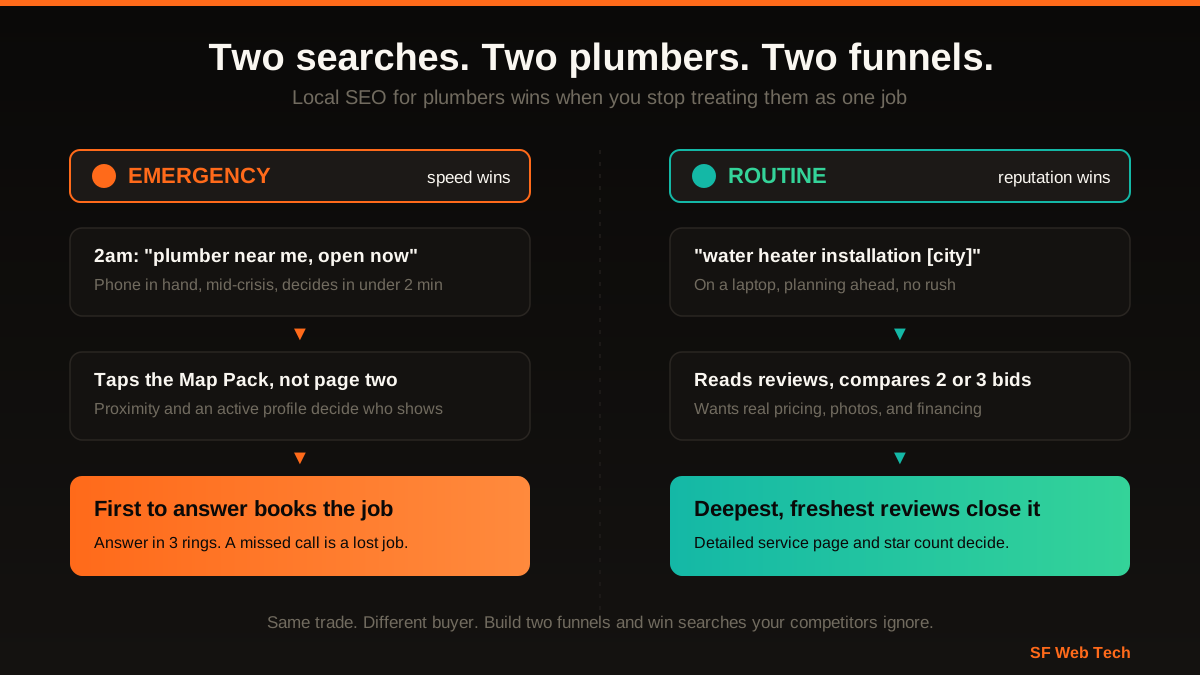
Separate emergency calls, scheduled service, and high-value replacement work by intent and economics.
Strengthen the wider plumbing campaign structureBuild a landing page around diagnosis and decision clarity
A sewer landing page should reduce uncertainty without diagnosing the pipe from a keyword. Explain warning signs, the first phone conversation, camera inspection or other diagnostic process, how findings are documented, who checks property responsibility, which repair methods are available, and what can change the estimate. Show relevant project photos with context, including the problem, access conditions, chosen method, and finished area, without inventing outcomes.
- A long list of every plumbing service
- One urgent call button with no project context
- Trenchless claims presented as universally suitable
- Stock photos and broad quality promises
- No explanation of inspection or responsibility
- Every form submission counted as success
- Clear symptoms, scope, and service boundaries
- Diagnosis presented before method selection
- Repair options explained with honest limits
- Relevant project proof and access details
- Simple next step with scheduling expectations
- Inspection, estimate, and sold outcome recorded
The form should collect only information that changes routing: service address, property type, owner or authorized manager status, active backup or nonemergency condition, known findings, prior cleaning or inspection, and the best contact method. Let a person handle nuance. A form cannot reliably determine line ownership, structural condition, code requirements, or whether a trenchless method is appropriate.
Route urgent problems and planned replacement opportunities without treating every call as equal.
Improve plumbing lead qualification after the clickTrack the call through diagnosis, estimate, and sold work
Google Ads Help says website call conversion tracking can identify and measure calls that follow an ad click. It can count a call after a minimum duration chosen by the advertiser. Duration is useful for filtering obvious noise, but it is not proof of project quality. A long conversation can concern a municipal line or an unsupported property, while a short call can schedule a well-qualified inspection. The dispatch or CRM outcome must complete the record.
- Capture the campaign, search theme, landing page, call, and form source.
- Deduplicate repeat contacts about the same property and sewer issue.
- Record service address, property responsibility, urgency, property type, and accepted scope.
- Separate scheduled inspections from completed inspections and no-shows.
- Record the diagnosis, recommended work, estimate status, and disqualification reason consistently.
- Connect accepted projects and known revenue with the original marketing source where lawful and permitted.
Google's documentation on offline conversion imports explains that outcomes completed away from the website can be connected with earlier ad interactions. It also describes importing call conversion information to see which ads and keywords result in valuable calls. That makes deeper reporting possible, but implementation must follow Google's policies, applicable consent and privacy requirements, and the promises in the contractor's own privacy policy.
Set budget from capacity and project economics
There is no responsible universal budget or cost-per-lead target for sewer replacement. Work backward from the contribution the accepted project can support, the percentage of qualified inspections that receive estimates, the close rate on those estimates, the mix of repair and replacement outcomes, and the number of additional projects crews can complete. Use the company's own figures rather than a national benchmark that ignores labor, access, equipment, permits, disposal, financing, and service radius.
Scale only after the office can answer and route demand, inspections happen promptly, findings are documented, and estimating capacity is available. Buying more calls during an inspection backlog can increase missed contacts and delay homeowners with active problems. Move budget toward the campaigns, locations, and search themes that produce suitable completed inspections and profitable work, not merely the lowest cost per form.
Review the campaign with dispatch and estimating
The ad dashboard cannot explain why a lead failed. Review search terms, actual service addresses, missed calls, appointment speed, inspection completion, diagnosis, estimates, accepted work, and crew capacity together. Marketing may be sending the wrong intent, dispatch may be misrouting planned projects, or the estimate process may be delayed. The owner needs those causes separated before changing bids or cutting a channel.
- Search terms behind qualified and disqualified sewer inquiries
- Lead addresses compared with real service and utility boundaries
- Calls and forms by symptom, diagnosis, repair, and replacement intent
- Contact rate and time to scheduled inspection
- Completed inspections, findings, estimates, and disqualification reasons
- Accepted work and acquisition cost by meaningful project class
- Inspection, estimating, equipment, and production capacity for the next period
Judge a sewer-line campaign with serviceable inspections, clear findings, suitable estimates, completed work, contribution, and capacity rather than plumbing conversion totals alone. Define the supported scope, separate materially different intent, control geography, explain diagnosis accurately, and reconcile project outcomes with the original inquiry.
Book a discovery call to review search intent, service areas, landing pages, qualification, and sold-job measurement.
Plan a sewer replacement paid search campaignSources and further reading
- Google Search: SEO Starter Guide
Crawlable links, descriptive page information and content organization. Practical trade examples are SF Web Tech recommendations.
Source checked .
- Google Ads: keyword matching options
How keyword match types relate to search intent; account strategy and examples are editorial recommendations.
Source checked .
- Google Ads: negative keywords
Negative keyword behavior and exclusions. The suggested service exclusions require account-specific review.
Source checked .
- Google Ads: advanced location options
Presence and interest settings and the limits of geographic targeting accuracy.
Source checked .
- Google Ads: average daily budgets
Platform budget and spending mechanics, not a trade-specific CPC or lead-cost forecast.
Source checked .