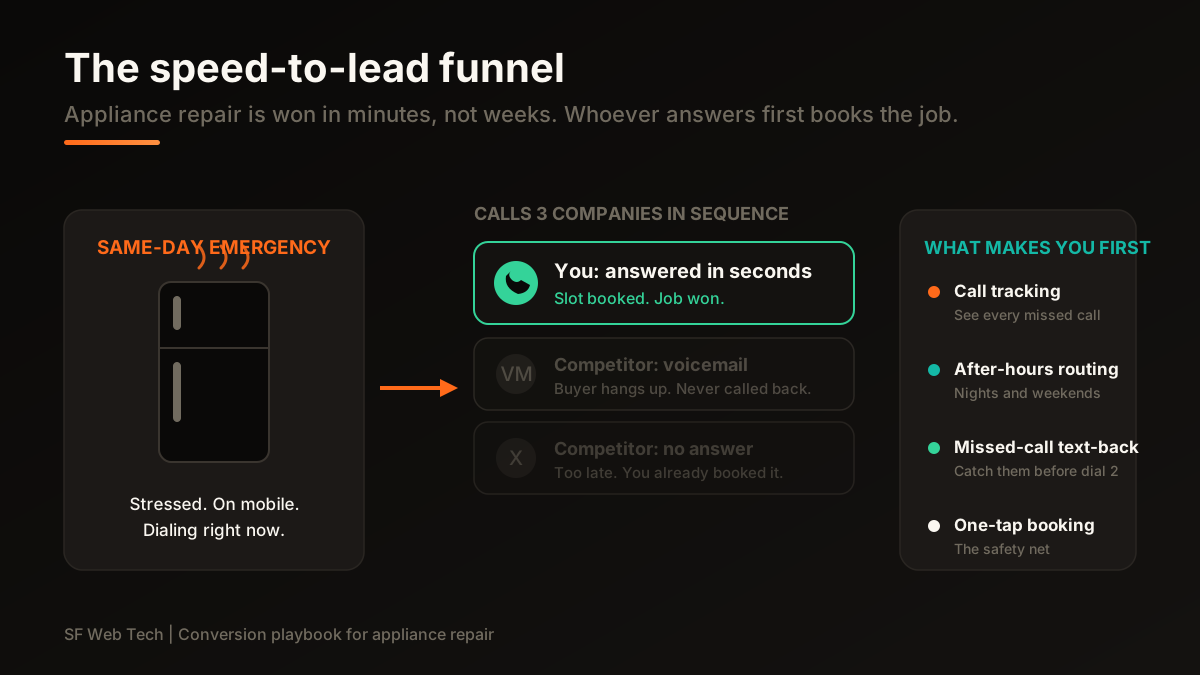
An appliance failure can create an urgent search, but response behavior varies by caller, time, service area, and availability. Make current hours, covered appliance types, service area, and the next contact step easy to find. Then compare answer rate, qualified bookings, completed repairs, and paid outcomes before claiming that live pickup or any page element wins the job.
That is the entire appliance repair conversion game in four sentences. Your website is not competing on design. It is competing on how fast a stressed person, standing in front of a broken machine, can reach a human and lock in a time slot.
Why this is a speed game, not a design game
General conversion guidance often emphasizes site speed, clear actions, permissioned proof, and mobile usability. Appliance-repair inquiries may also depend on actual availability and phone coverage. Publish the response process the business can support, then compare answered calls, scheduled visits, and completed work instead of assuming a fixed buying window or universal customer behavior.
The data behind speed-to-lead is not subtle, and it is brutal for slow operators.
Track the time from inquiry to first attempted contact and the eventual qualification outcome. Set a response target the office can support and test it against your own records. Historic cross-industry lead-response multipliers should not be presented as an appliance-repair forecast.
Use the company’s call, message, booking, completion, and response-time records to understand where inquiries are missed. Competitor response behavior cannot be inferred from the company’s own data. Test staffing and follow-up changes against accepted and completed repairs before claiming that speed created the job.
Build answer-the-phone architecture
Before you touch a single button color, fix the plumbing behind your phone number. If a call can hit voicemail during business hours, on a weekend, or after 6 p.m., you are quietly funding your competitors. For this trade, voicemail is a death sentence: the caller does not leave a message, they dial the next result.
Local SEO that puts your number in front of buyers at the emergency moment.
Get found and get the callThe booking page that converts a stressed mobile buyer
Design the booking path for real mobile conditions: limited attention, one-handed use, urgency and uncertain availability. Keep the supported phone or slot option clear, ask only for information the workflow needs, and test completion on representative devices.
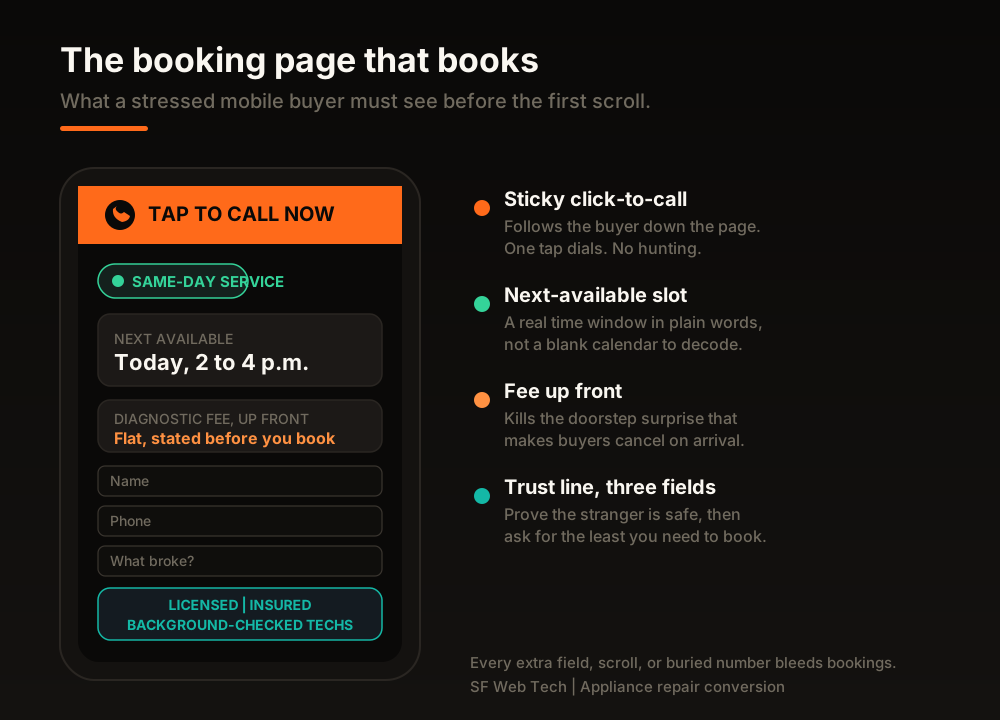
Above the fold, before any scroll, the buyer must see these five things or they bounce to the next search result.
- A sticky click-to-call button that follows them down the page, tap and the phone dials.
- The next available slot in plain words: next opening today, 2 to 4 p.m., not a blank calendar to hunt through.
- A same-day or emergency badge so they instantly know you can help now.
- The diagnostic or service-call fee stated up front, so there is no fear of a surprise on the doorstep.
- One trust line: licensed, insured, background-checked technicians.
- Phone number and click-to-call in the sticky header
- Next-available slot shown as a real time window
- Up-front diagnostic fee, no surprises
- Same-day service badge above the fold
- One-screen booking, three fields max
- Phone number hidden in a footer or contact page
- Empty calendar widget the buyer must decode
- Fee hidden until after a call or form
- Wall of stock photos before any action
- Ten-field form asking for the appliance model number
A template can create friction when it hides the phone route, asks unnecessary questions or fails to explain availability. Use call and form records to identify the actual constraint, repair it, and compare the same journey before buying more traffic.
Mobile-first appliance repair sites engineered around the tap, not the template.
Rebuild your booking page to convertThe trust-signal stack that closes in-home service
Speed gets you the call. Trust closes it. Remember what you are actually asking for: a stranger, entering someone's home, near their family and their expensive equipment. That is a bigger leap of faith than a homeowner buying a product online, and it needs specific proof, not generic badges.
“Homeowners are not hiring a repair, they are deciding whether to unlock the door for a stranger. Answer fast, show the fee, and prove the person is safe, and the booking is yours before the competition even calls back.”
Measure what books, not what clicks
If form submissions are tracked but phone outcomes are not, the reported website conversion rate is incomplete. Use appropriately disclosed call tracking, retain the source, and distinguish answered calls, qualified requests and booked repairs so the business can evaluate the full inquiry path.
The HVAC conversion playbook shares the same speed-to-lead DNA.
See how another emergency trade does itYour 7-day conversion fix
You do not need a six-month redesign. You need to stop the bleeding this week. In order:
- Verify tracking, disclosure and access controls, then review a sample of call and booking outcomes.
- Align supported after-hours routing with current staffing and service coverage.
- Use missed-call follow-up only with appropriate consent, ownership and response expectations.
- Make the current phone or booking path easy to use on representative mobile screens.
- Publish availability, same-day service and diagnostic-fee information only when current and accurate.
- Show current, supported trust information and permissioned reviews near the relevant decision.
- Reduce form fields to those required for routing, qualification and follow-up, then test delivery.
These seven changes create a testable path from visit to staffed call or confirmed booking. Measure each route on representative devices, reconcile inquiries with accepted jobs, and improve the observed friction before buying additional traffic.
Review the supported call and booking paths, identify observed friction, and leave with a prioritized test list.
Book a free conversion auditSources and further reading
- Google Search: SEO Starter Guide
Crawlable links, descriptive page information and content organization. Practical trade examples are SF Web Tech recommendations.
Source checked .
- Google Search: creating helpful content
People-first writing, useful original information and the absence of a preferred word count. Does not substantiate a client result.
Source checked .
- Google Maps: prohibited and restricted content
Rules against fake engagement, incentives and selectively soliciting positive reviews.
Source checked .