A homeowner just had a break-in two streets over. That night she searches for a security system installation company, lands on your site, and sees a clean hero image, a tagline about peace of mind, and a contact form asking for her name, email, and phone. She closes the tab. Not because your work is bad, but because you asked her to hand over her details before you answered the only question on her mind: can I trust the people I am about to give keys and camera access to my home?
This is the quiet failure of most alarm and security integrator websites. The design is modern, the photos are sharp, and the form still sits there untouched. The problem is not the form. It is that a security buyer carries more suspicion than almost any other home-service customer, and a page that leads with a contact field instead of proof of legitimacy is asking for commitment before it has earned a shred of trust.
Why the Generic Contact Form Fails a Trust-First Buyer
Every home-service template ships with the same conversion path: a hero, a few service blurbs, and a contact form that says get a free quote. For a lawn crew or a handyman, that works, because the risk of a bad hire is low and easily reversed. For a security company it backfires. You are asking a nervous buyer to raise their hand before you have shown a license number, named your monitoring station, or explained what happens in the seconds after an alarm fires.
There is a second reason it fails. A quote form frames the decision as a price shop, and price is the wrong first conversation for security. The buyer is not trying to find the cheapest alarm. They are trying to find the company they can trust with their home, then worry about the plan. Lead with a form and you filter for the price-only shoppers while the higher-intent, trust-driven buyers, the ones who close and stay on monitoring for years, quietly leave.
Show verifiable credentials, the actual monitoring provider and the terms that apply to the offered system. Do not publish an alarm-response interval or certification badge unless the provider confirms it for that service. Explain the steps from consultation to installation and what support is included; test whether customers can find those answers easily.
The structural reasons a good-looking site still stays invisible and quiet.
See why your contractor website is not rankingThe Trust Questions a Buyer Answers Before They Call
Before a security buyer will pick up the phone, they run a silent checklist. Every question on it is about risk, and every one of them has to be answered on the page, not promised on a call you have to earn first. Miss even one and the tab closes. Answer all of them above the fold and the call becomes the natural next step.
“The security company that wins the job is rarely the cheapest. It is the one that answered the trust questions on the page before the buyer had to ask them out loud.”
What Belongs Above the Fold
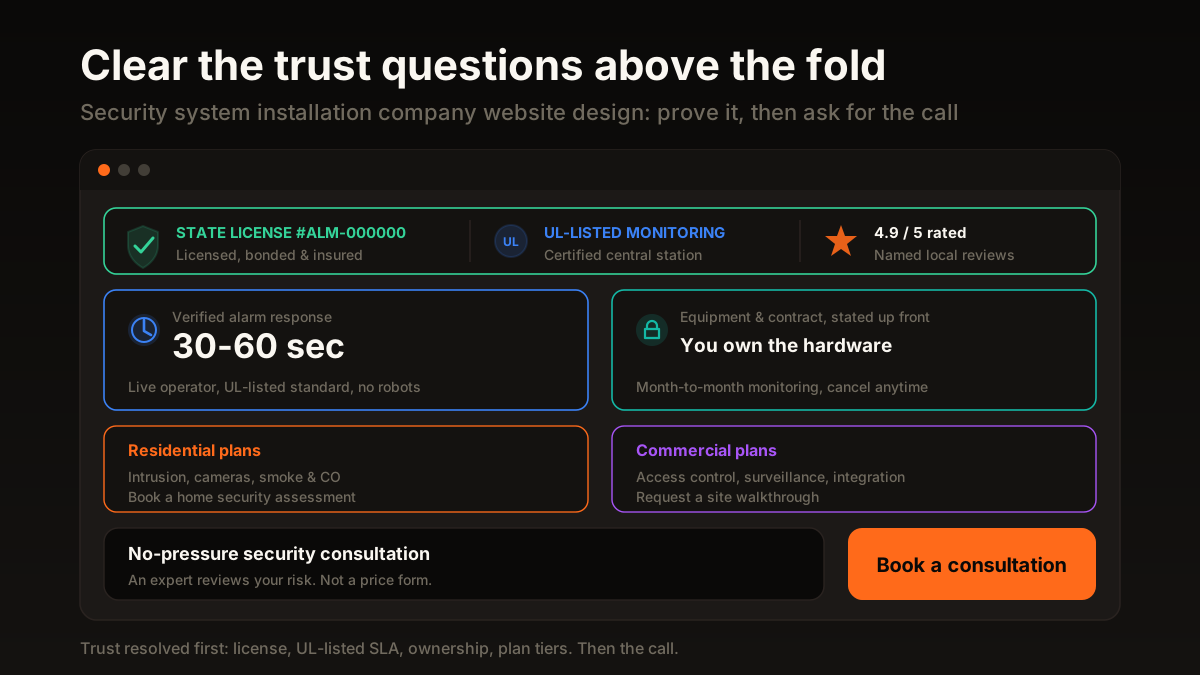
Above the fold is the most expensive real estate on your site, and most security companies waste it on a hero photo and a slogan. The buyer decides whether to keep scrolling in the first few seconds, so the trust proof has to be there, not buried on an about page three clicks deep. Treat the top of the page as your one chance to clear suspicion before anything else loads in their mind.
- A trust bar with your license number, state, and a UL-listed monitoring badge, visible the moment the page loads.
- A response-time callout that states, in seconds, how fast a verified alarm is answered by a live operator, not a robot.
- One clear line on equipment ownership and contract length, so the buyer's biggest fear is handled up front.
- A consultation call-to-action, not a price-quote form, positioned as a no-pressure security assessment.
- One or two named reviews or recognizable manufacturer logos near the CTA, where the credibility question peaks.
Trust-first layouts engineered around how your buyers actually decide.
How we design contractor websites that convertResidential vs Commercial Plan Tiers
A homeowner protecting a three-bedroom house and a facilities manager wiring access control across a warehouse are two different buyers with two different budgets, timelines, and fears. When your site funnels both into one generic form, each one assumes you are built for the other. Show clear plan tiers instead, and each buyer sees a path that was obviously designed for them.
- License number and UL-listed monitoring badge above the fold
- Stated response time in seconds on a verified alarm
- Clear equipment ownership and contract terms
- Separate residential and commercial plan tiers
- Consultation CTA framed as a no-pressure security assessment
- Hero photo and a peace-of-mind slogan, no proof
- No monitoring station named, no response time stated
- Contract and ownership terms hidden until the sales call
- One form for homeowners and facility managers alike
- Get a free quote button that filters for price shoppers
A related low-voltage trade where trust and licensing drive the call.
How electricians win with website designReplace the Quote Form With a Consultation CTA
The single highest-leverage change on a security site is retiring get a free quote and replacing it with an invitation to a consultation. A quote asks the buyer to commit to a purchase they are not ready to make. A consultation offers help with a decision they are actively trying to make. One creates pressure, the other removes it, and the low-pressure path is what a cautious buyer will actually click.
Another high-trust, high-ticket trade that lives on the same design principles.
See how solar installers rebuilt for conversionThe Trust Elements Checklist
Before you ship a single change, run your site against the list below. Each item is a trust question a real buyer is asking, and each one your page fails to answer is a reason for them to leave. This is the difference between a security site that looks the part and one that actually turns a scared visitor into a booked assessment.
- Is your alarm or low-voltage license number visible without scrolling or clicking?
- Is your monitoring station named, and is the UL-listed status stated plainly?
- Do you give a real response time in seconds for a verified alarm?
- Is equipment ownership and contract length explained before the sales call?
- Are residential and commercial buyers given separate, clearly labeled paths?
- Are your reviews attached to real names, and are manufacturer certifications shown?
- Is the primary CTA a consultation, not a price quote, with trust signals beside it?
Named, recent reviews are the trust proof your security site runs on.
Build the review engine that fuels these signalsNone of this is a redesign. It is a re-sequencing. The photos can stay, the brand can stay, the pages can look nearly identical. What changes is the order the page speaks in: prove you are licensed, prove help arrives fast, prove the contract is fair, show the right plan tier, then invite a consultation. Answer the trust questions before you ask for anything, and the form you thought was broken starts to fill in on its own.
The same trust-and-transparency layout applied to another home-access trade.
How garage door companies win with website designWe surface your licensing, monitoring SLA, and plan tiers, then route buyers to a consultation that converts.
Book a call and get your security site rebuilt trust-firstSources and further reading
- Google Search: SEO Starter Guide
Crawlable links, descriptive page information and content organization. Practical trade examples are SF Web Tech recommendations.
Source checked .
- Google Search: creating helpful content
People-first writing, useful original information and the absence of a preferred word count. Does not substantiate a client result.
Source checked .
- Google Maps: prohibited and restricted content
Rules against fake engagement, incentives and selectively soliciting positive reviews.
Source checked .