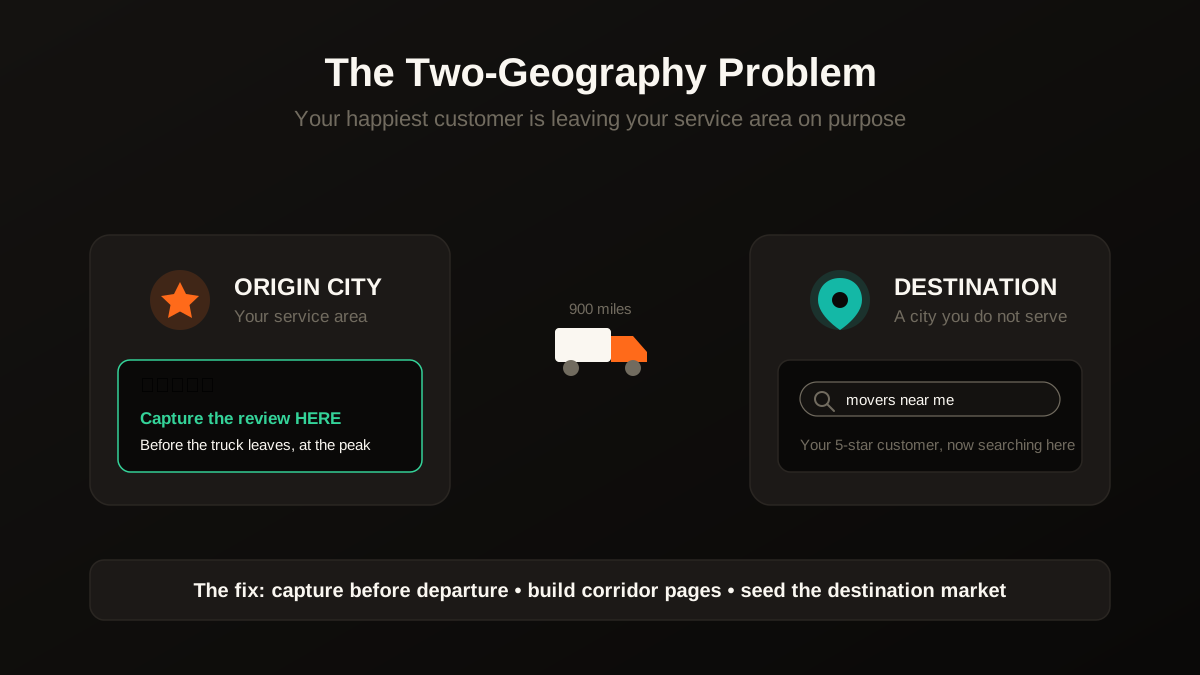
A customer who moves out of the service area may still be willing to review the origin crew, but the business should request and display feedback in line with platform rules. Treat the review as customer evidence rather than assuming where the customer will search later.
This is the problem no plumber, roofer, or electrician has to solve. Their happiest customer stays put and keeps feeding the local ranking machine: one great job leads to one local review leads to better visibility for the next house on the street. For movers, the customer who loves you most is leaving your service area on purpose. The standard local SEO playbook does not just underperform for moving companies. It inverts.
The two-geography problem no plumber has
A moving inquiry can include both an origin and a destination, while local moves may be researched differently. Explain the routes and services actually offered. Customers can leave honest reviews after a move even when they no longer live locally; relocation does not invalidate their experience.
Use inquiry forms that capture the information needed to assess coverage and scope. Invite feedback after the actual service without assuming a former resident is less relevant. Route pages should add real operational information rather than duplicate every origin-destination combination.
Fix 1: Capture the review before the truck leaves
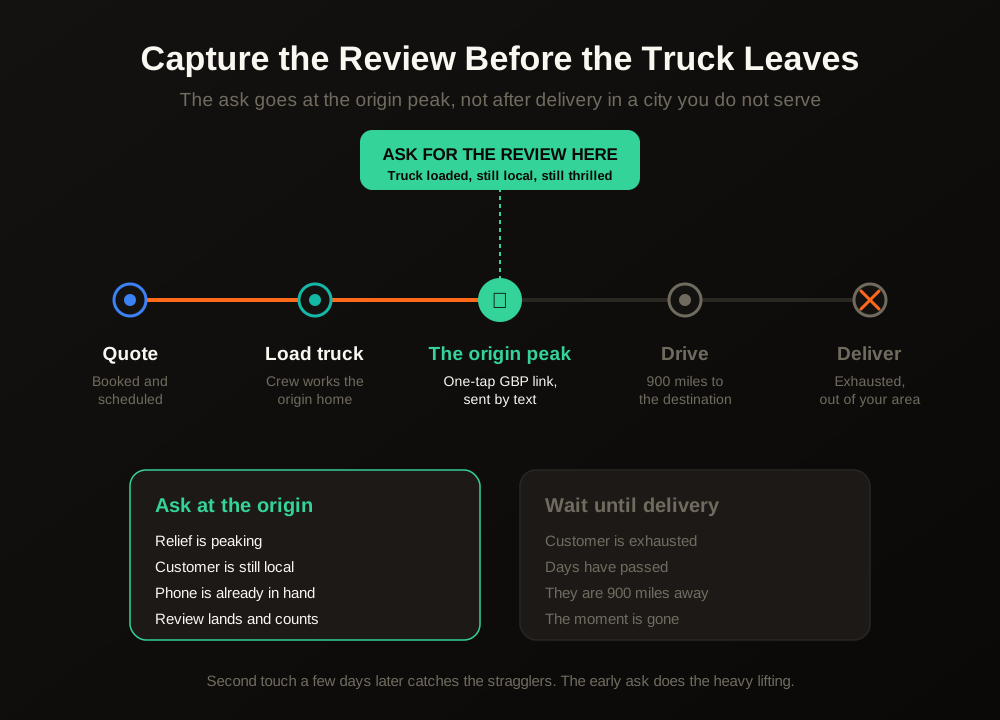
Timing is the whole game. The traditional advice is to request a review once the work is complete. For a long-distance mover, completion happens in the destination city, often days later, when the customer is exhausted, unpacking, and mentally done with you. You have lost the moment. Move the ask earlier.
The emotional peak of a move is not delivery. It is the moment the loaded truck is secured and pulling away from the old house, when the hard part visibly went well and the customer feels relief. That is when you ask. Hand them a card, send the text, or have the crew lead prompt it on the spot at the origin, while they are still standing in your service area and still your happiest.
The review-timing playbook for local service businesses
Get more reviews before the truck leavesFix 2: Build origin/destination city-page pairs
The single most common mover SEO mistake is a stack of identical city pages: 'Movers in Denver,' 'Movers in Boulder,' 'Movers in Fort Collins,' each one a find-and-replace of the last. Google sees near-duplicate doorway pages and ranks none of them. Worse, not one of those pages answers the corridor search a long-distance customer actually types.
Consider a corridor page when the company repeatedly serves a route and can provide distinct operational details, eligibility, timing factors, and proof. Compare search demand, competition, qualified inquiries, and booked moves before expanding the pattern.
- A URL and title that name both cities, for example /movers-denver-to-austin
- Real route specifics: drive time, what an interstate move on that lane actually involves, seasonal timing
- Genuinely unique copy, not a template with the city swapped, so it reads as its own page
- Pricing signals and an instant-quote path for that distance, not a generic contact form
- A few testimonials from customers who actually ran that corridor
- Internal links to the origin city hub and to related lanes out of the same origin
GBP setup for movers: the dual-city problem
Your Google Business Profile is built around one verified address, and Google shows one primary category and one service area. For a mover that runs corridors out of a single hub, that is workable: hide the address, set a service-area radius, and let the profile anchor your origin market. The trap is trying to fake a physical presence in every destination city.
The GBP setup checklist for service businesses
Optimize your Google Business ProfileFix 3: Turn completed moves into permissioned evidence
Here is the move that flips the two-geography problem from a liability into an advantage. Your departed customer is now living in a destination city you want to rank in. They know people there, they will refer friends who move along your lanes, and their review, if you captured it, already carries your name into that market. Instead of losing them, wire them into your growth in the new city.
“The customer who leaves your service area is not a dead end. They are a seed you planted in a market you want to grow.”
- Capture the review before they leave so your name shows up in searches near their new home
- Send a referral offer that works cross-market: reward them for connecting friends who move along your lanes
- Ask for a destination-city referral, since they now know locals who will need a mover
- Build a reciprocal referral network with reputable movers in your top destination cities for moves you cannot run
- Track which corridors send the most referrals and build corridor pages for those lanes first
The three-part architecture, together
None of these three fixes works alone. Early review capture feeds the profiles that referral seeding relies on. Corridor pages give the referral traffic somewhere specific to land. The GBP hub ties the whole thing to a real, trusted origin. Run them as one system and the two-geography problem stops being the thing that breaks your SEO and becomes the thing your competitors cannot copy.
A clear service-area and route explanation can reduce unsuitable inquiries. Measure what customers actually request and confirm fulfillment capability before expanding pages or campaigns.
We build corridor architecture and review systems for moving companies
Book a free strategy callLocal SEO built for home-service businesses
See our Local SEO serviceSources and further reading
- Google Search: SEO Starter Guide
Crawlable links, descriptive page information and content organization. Practical trade examples are SF Web Tech recommendations.
Source checked .
- Google Business Profile: local ranking guidance
Google’s broad relevance, distance and prominence guidance. No exact ranking weights or guaranteed service-area coverage are stated.
Source checked .
- Google Maps: prohibited and restricted content
Rules against fake engagement, incentives and selectively soliciting positive reviews.
Source checked .